

Our last stop for the day would be a temple where they filmed the Lara Croft: Tomb Raider, starring Angelina Jolie. This was of special interest to me, since I worked with some of the original developers of the game at my first job in Derby. This place is known for the trees that have burst forth from the ground and displaced the stones that make up the temple.
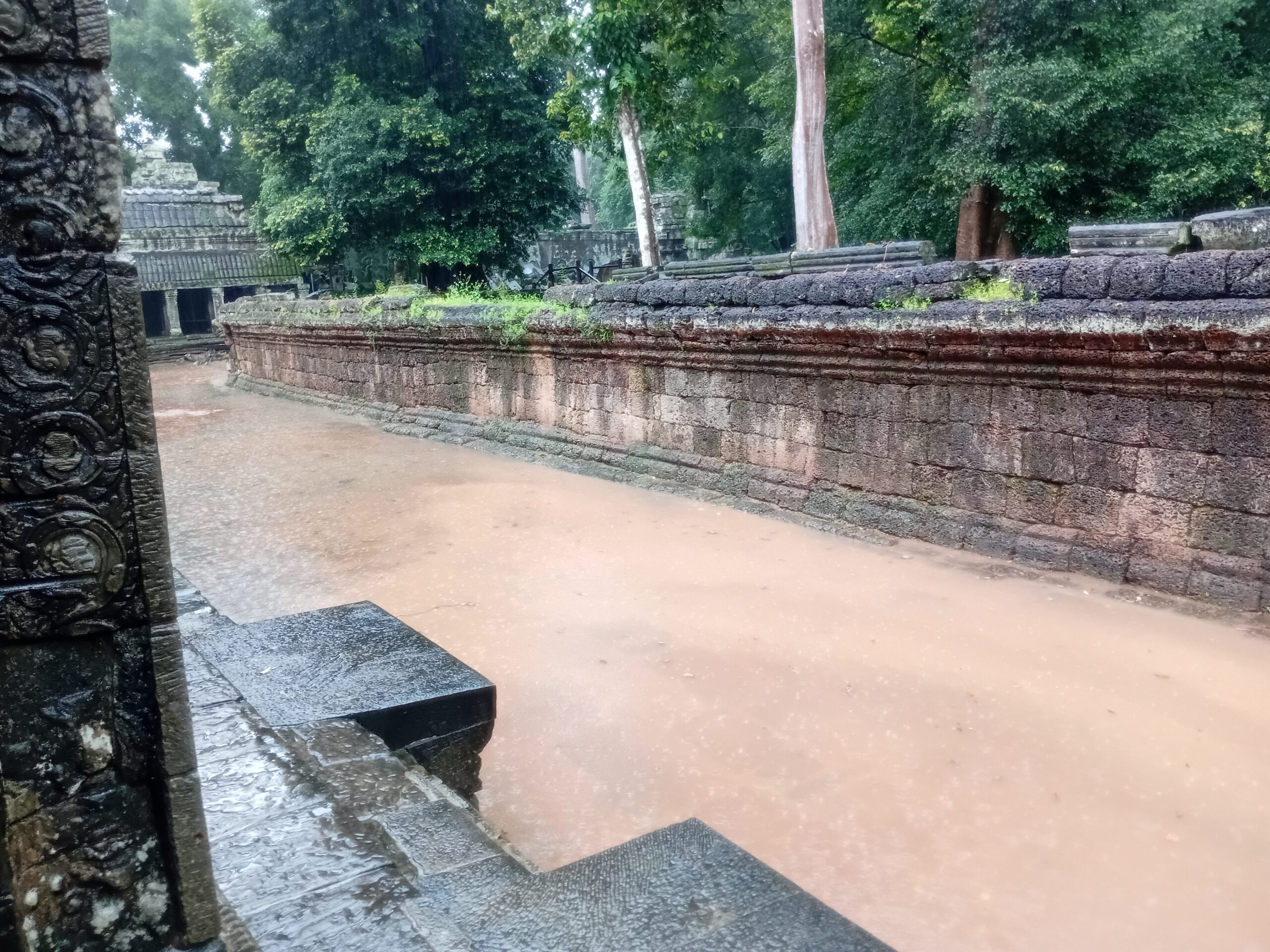
When we arrived at our last stop for the day, the rain was torrential. Thankfully I was wearing waterproofs and my guide had an umbrella. I enjoyed the rain. It made coming here feel like more of an adventure. It made me feel like I was Indiana Jones or Lara Croft, ready to uncover the ancient mysteries of this long-dead temple.
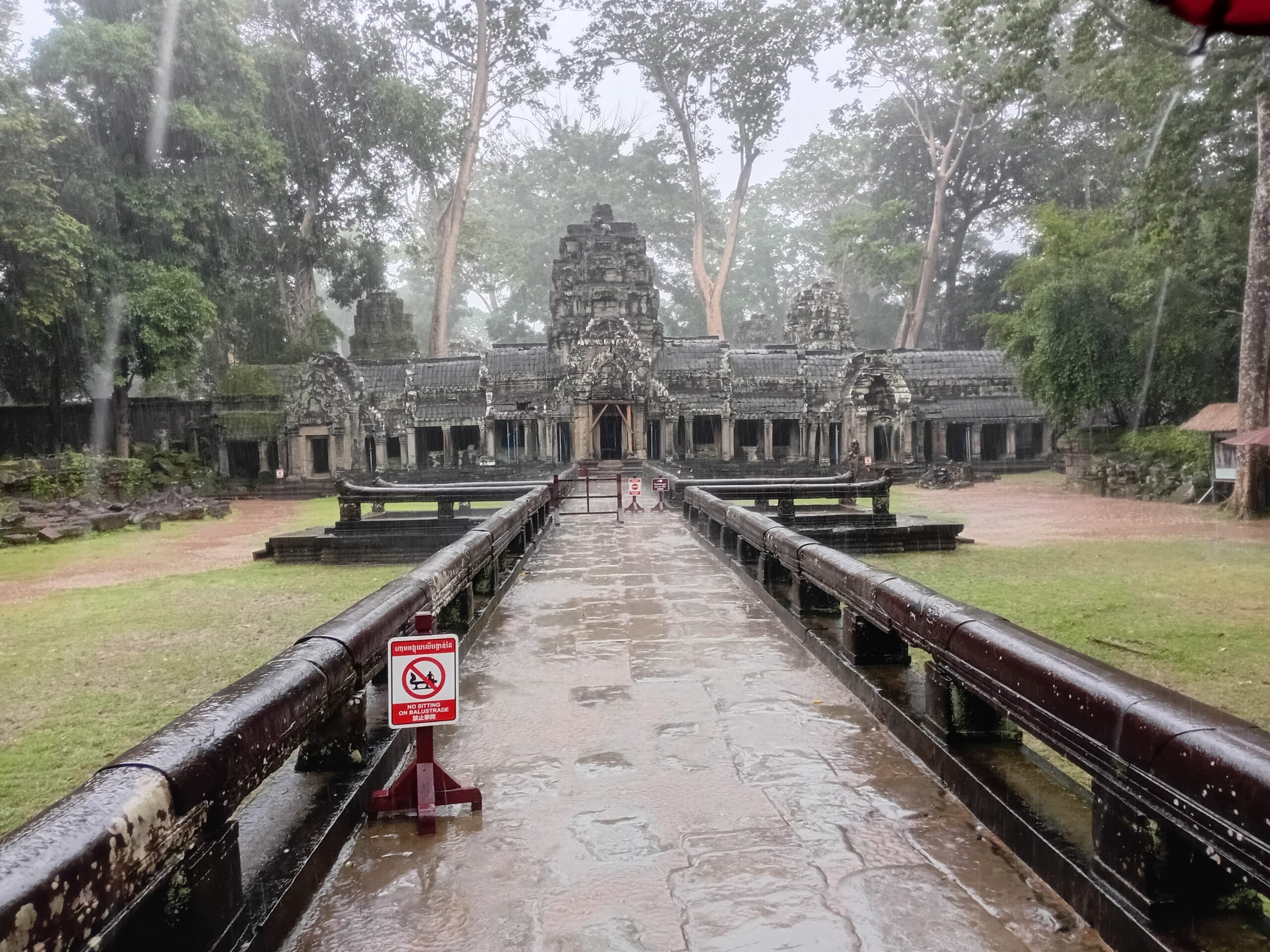
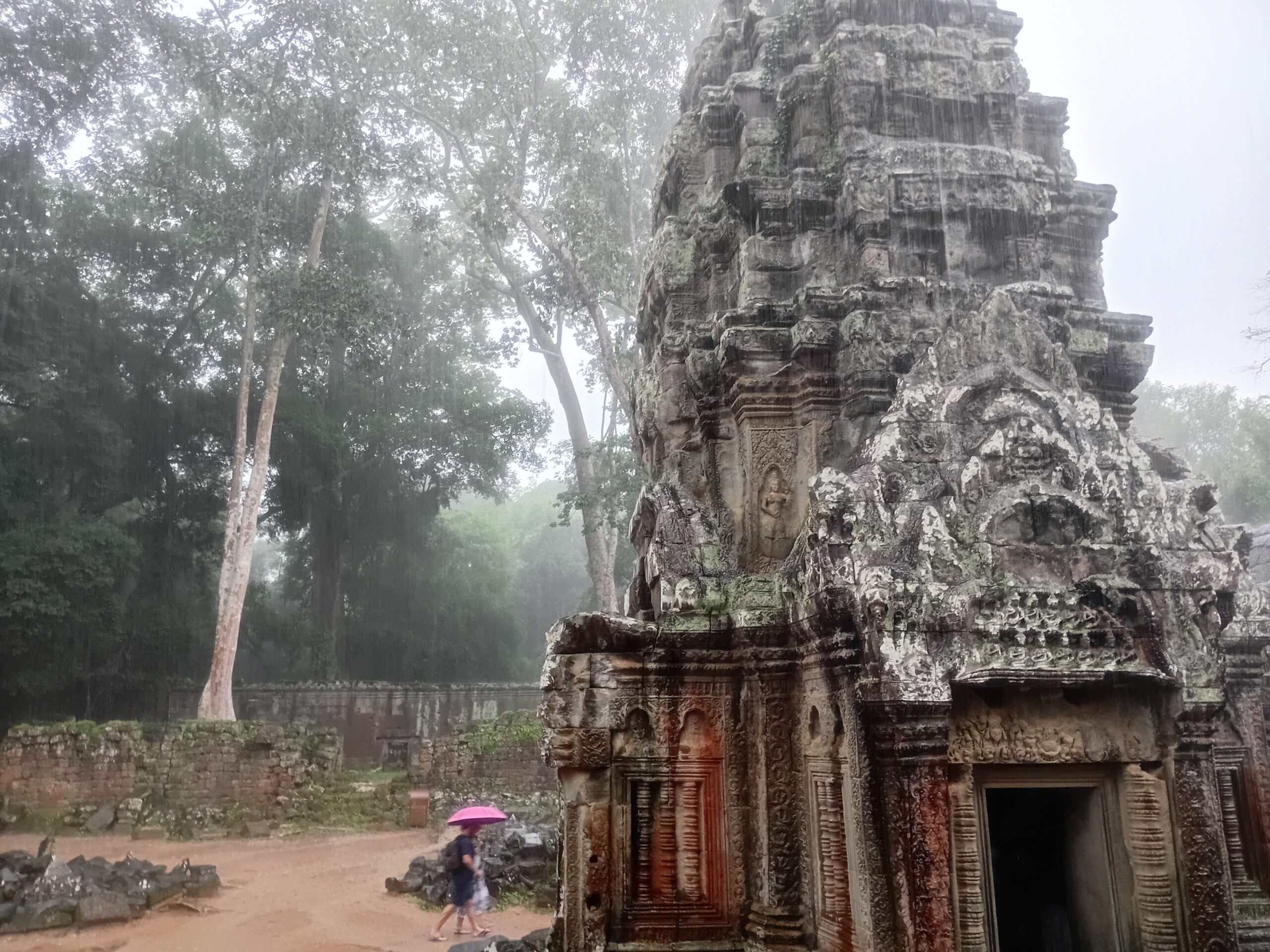
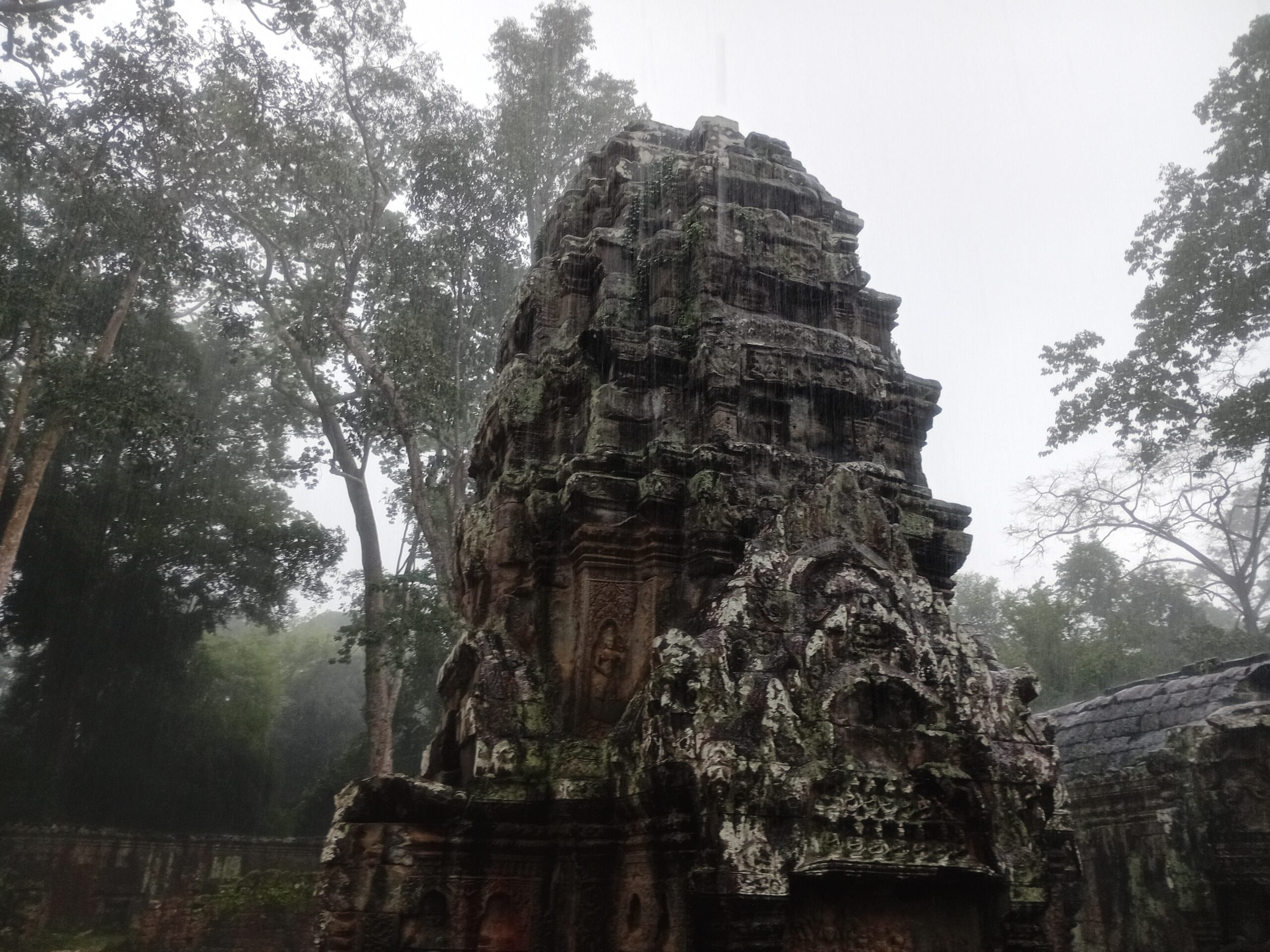
This temple isn’t a temple-mountain. Rather, it is a flat temple with a small moat. It is a smaller temple that doesn’t feature many carvings about the myths or stories of the people. It has a moat around it, one which was filling up with water on this day. In a way the rain was a blessing because I got to see the moat this way, something not everyone gets the chance to.
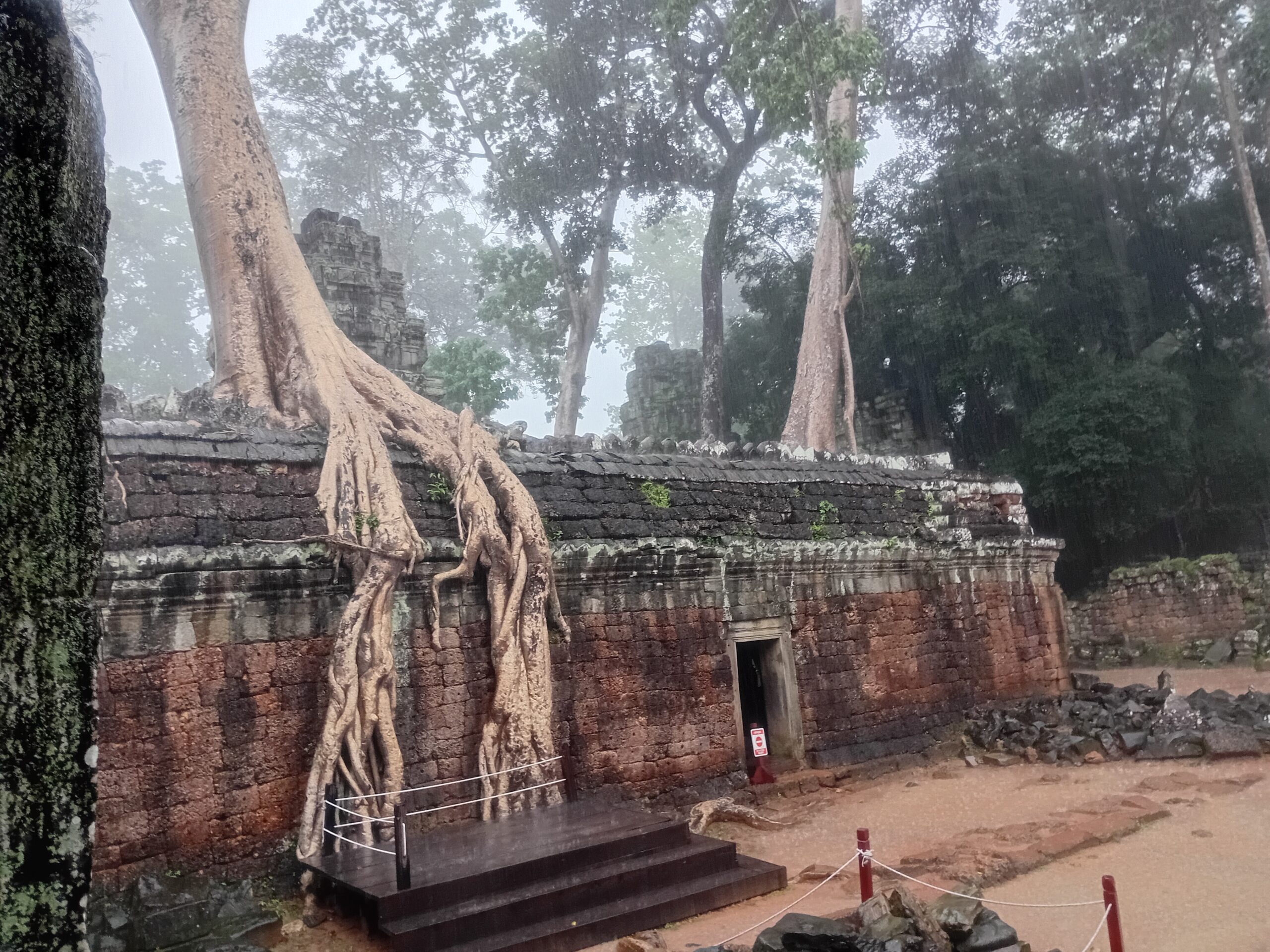
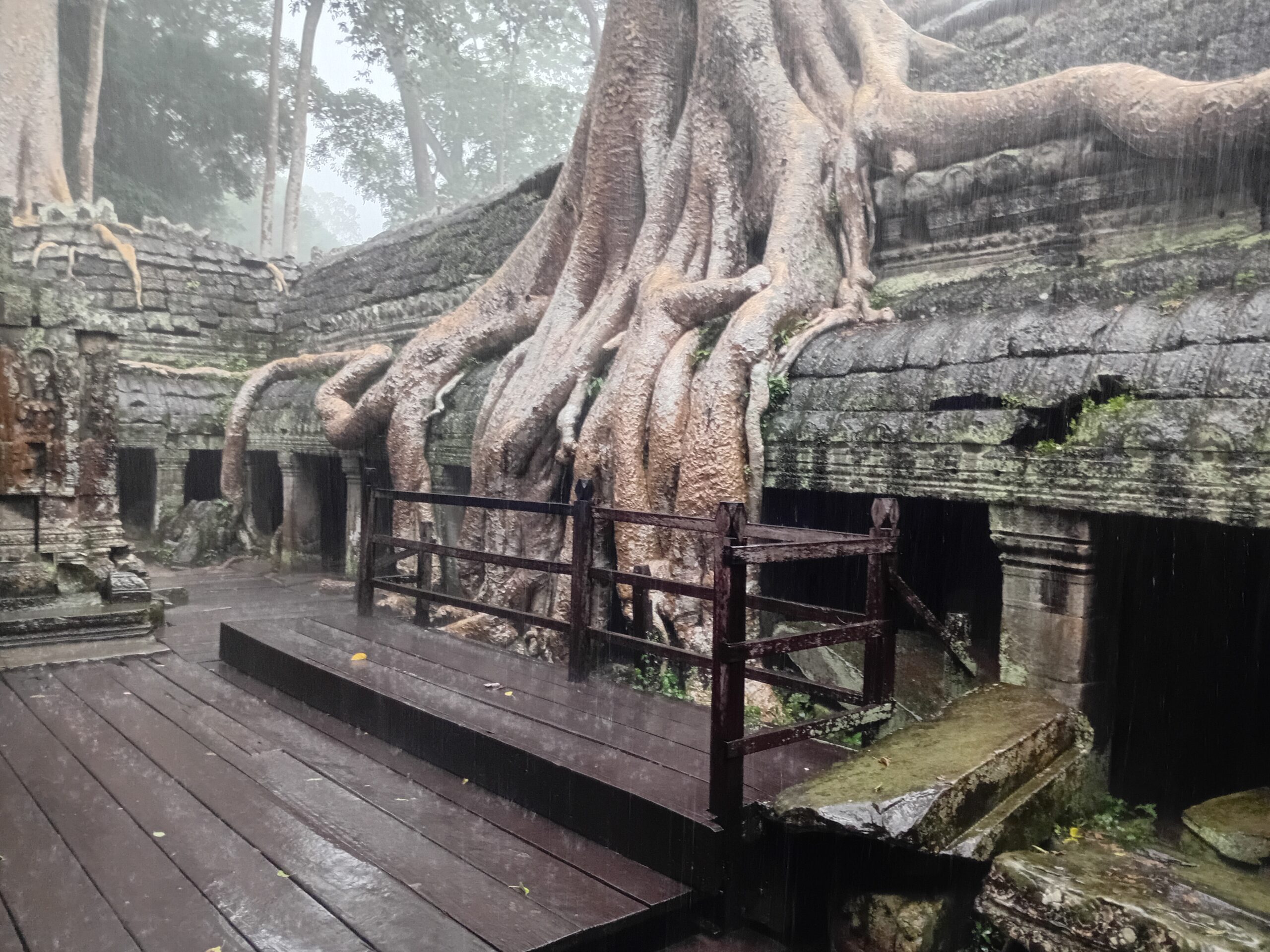
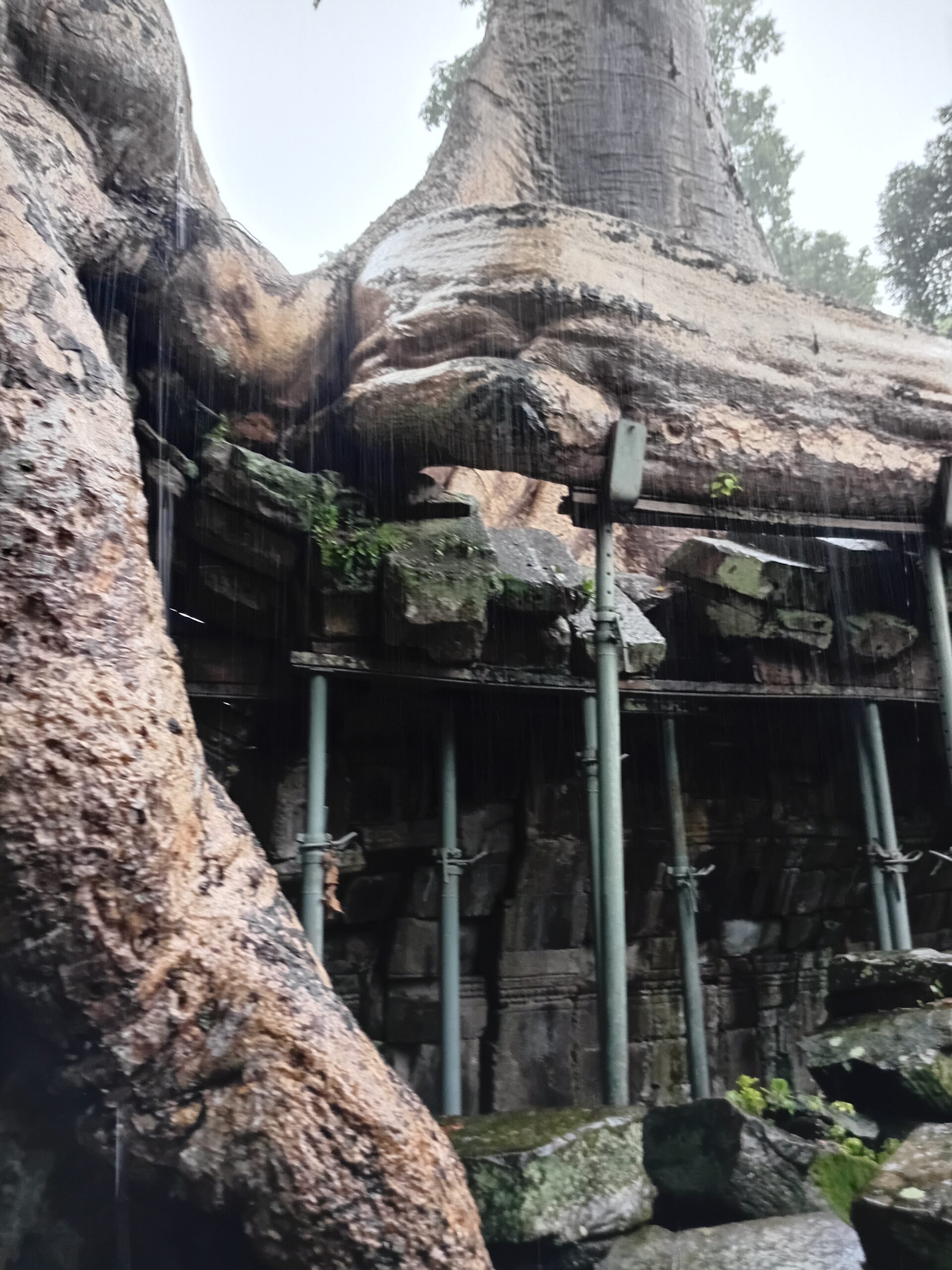
For tourists this would probably be one of the less popular temples were it not for the huge silk-cotton trees that have burst out of and through the walls. These make the temple look unique amongst the others, and are spectacular displays of nature reclaiming land that once belonged to it.
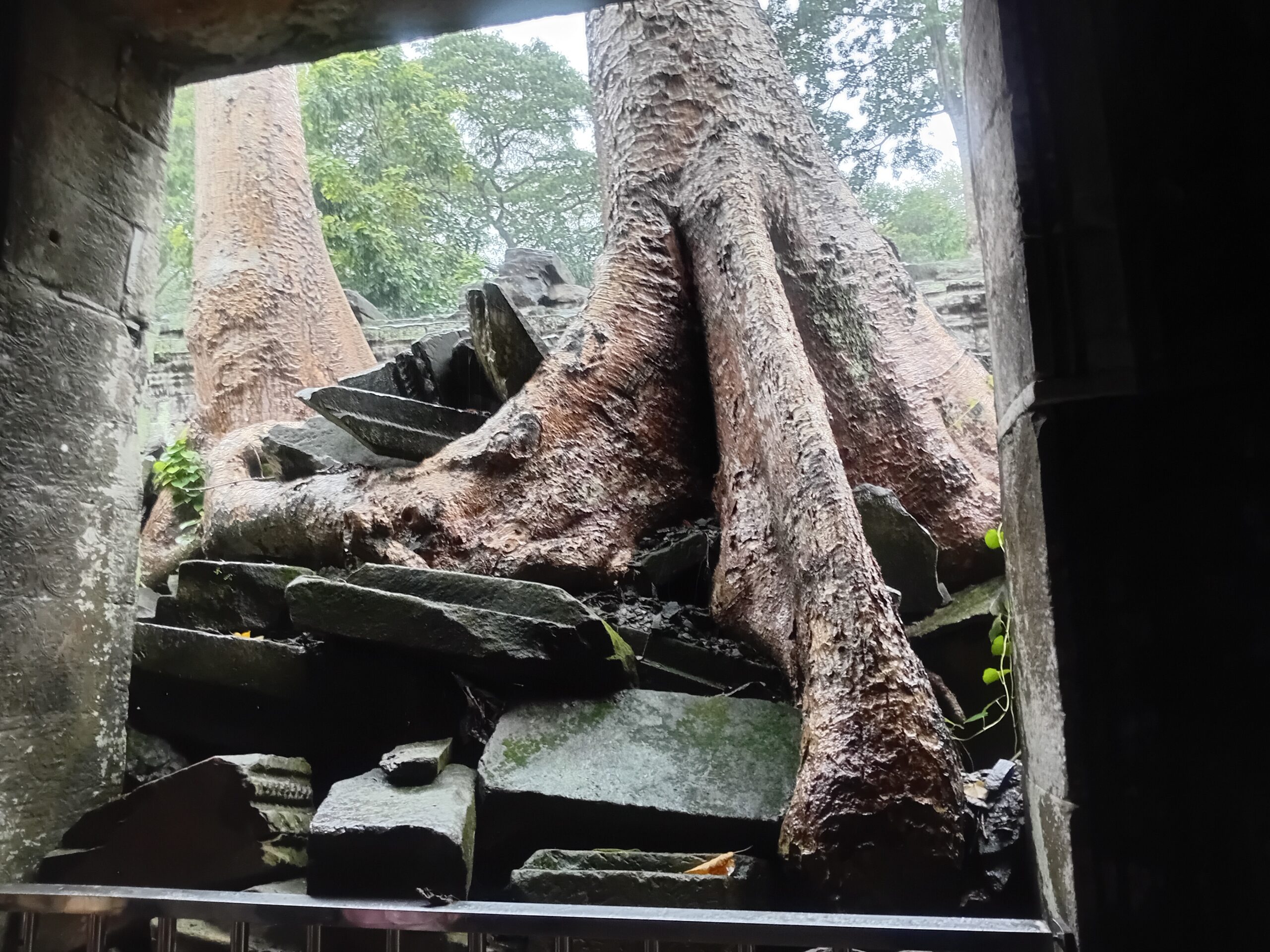
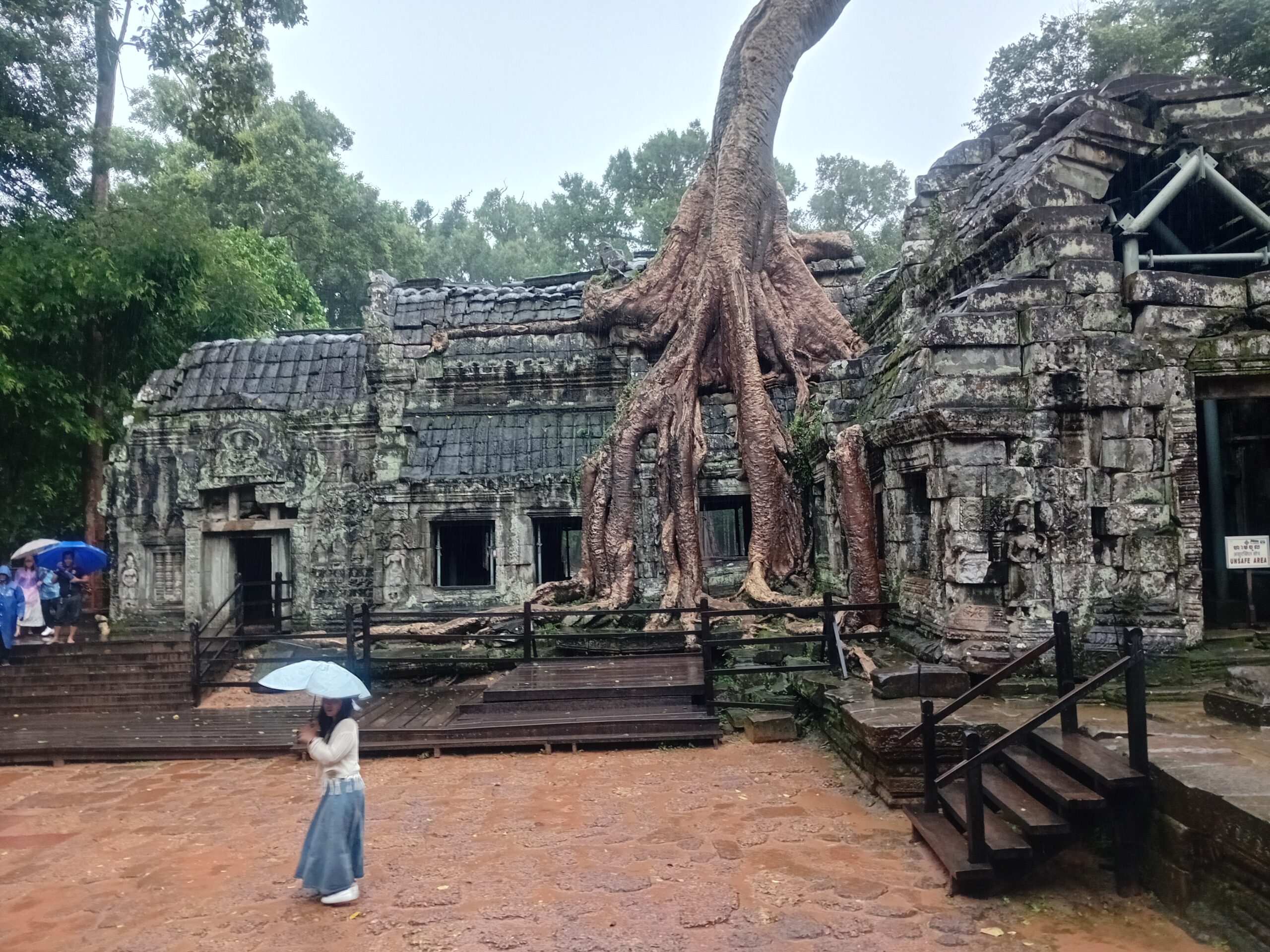
Drenched, but satisfied, I returned to the tuk-tuk to go to our last stop for the day: back to the hotel.
The Fall of Angkor Wat
This place reminded me of a story I heard a about Angkor Wat when I was a child. I can’t remember where I heard it, and I believe it is more of a myth than a legend given the fact it calls Angkor Wat a “city.” Still, it was one of the things that made me want to visit this place. I can’t remember the exact words of the story. Nevertheless, I’ll recount the story as I remember it.
Angkor Wat1 was once a great city-nation. It became a hub for trade and culture and attracted many people. As the city grew, it expanded into the jungle, chopping down the trees and laying down large stone streets that connected its many buildings. It became a grandiose representation of human achievement, a beautiful city crafted by the greatest architects and artists of its time.
But it was destined not to last. The people of the city didn’t realise that the damage they had caused to the jungle would be their undoing. When the rains came, it couldn’t drain into the ground through the carved stone streets, and there were no tree roots to absorb the water. When the winds came there was no forest to dissipate them. The city was met with huge floods and storms over the years destroying it from within.
Those that survived the floods abandoned the city, leaving it in ruin. But then, a peculiar thing happened. Dirt was blown in by the wind and slowly piled up. Seeds would be blown in, slipping into the cracks in the paths, or landing on the dirt that was growing. Nature encroached on the city slowly reclaiming it. Leaves, flowers and vines grew on the walls while trees burst forth from the ground, destroying the city that once was.
Even though humanity didn’t survive here; even after all the damage humanity had done; Nature still found a way to flourish.
The Fall of Angkor Wat
I always remember this story as a warning. On this day I was reminded of it. True or not, we are repeating the mistake in this story. We are destroying our environment. One day humanity could be wiped off the face of the planet due to our ignorance.
At least we can take solace in the thought that nature will survive.
- Obviously Angkor Wat is just one temple not the city, but this is how I remember it being told. ↩︎


