

While Code of Honor is considered by many to be the worst episode of Star Trek: The Next Generation, Emancipation is often considered to be the worst of Stargate SG-1. Both episodes follow the same outline and come from the same writer, but is Emancipation really as bad as Code of Honor?
History
Emancipation was written by Katharyn Powers and bears a striking resemblance to Code of Honor which she also co-wrote. The story follows many of the same beats, placing Samantha Carter in the role Tasha Yar followed in the original: the foreign warrior woman kidnapped and forced into a fight to the death by a primitive culture.
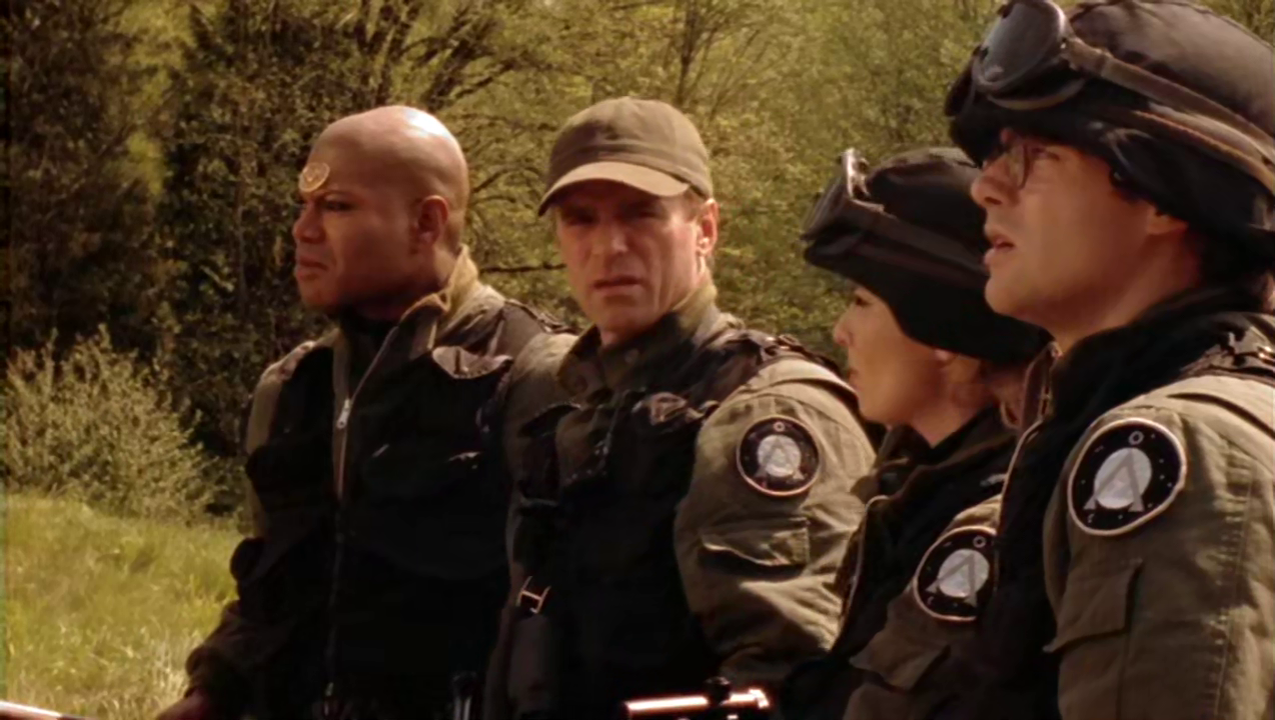
There are, however, many key differences in the story that elevate it above Code of Honor. However, this is a low bar to beat. While the story may have better structure, it still suffers from the civilised west versus an orientalist stereotype, and it fails spectacularly as an attempt to push a feminist message.
We can only guess why Stargate SG-1 decided to use essentially the same story for its third episode. Perhaps Powers was trying to improve her script and seeing who would adapt an updated version. Maybe the studio just wanted to re-use a story and save production time. The real reason seems to have been lost to time.
Emancipation
We start the episode with SG-1 exploring a new planet. At first it seems to be abandoned, but then they come across a young man being attacked by dogs. After saving his life, he introduces himself. When Carter talks, Abu is shocked, exclaiming, “She is a woman!”
Abu’s father, Moughal, then arrives with members of his clan and they point arrows, threatening to kill Carter since women are meant to cover their faces and remain silent. After learning Carter saved his son’s life, he declares this is reason enough to exempt her from the death sentence.
After accepting an invitation to visit the tribe’s village, Daniel determines that they resemble a Mongol tribe that maintained strict laws to control women. Moughal says that Carter can talk freely, as she saved a life, and explains that he doesn’t agree with the old ways. Despite this he requests that Carter dress appropriately while she is their guest, which she reluctantly agrees to.
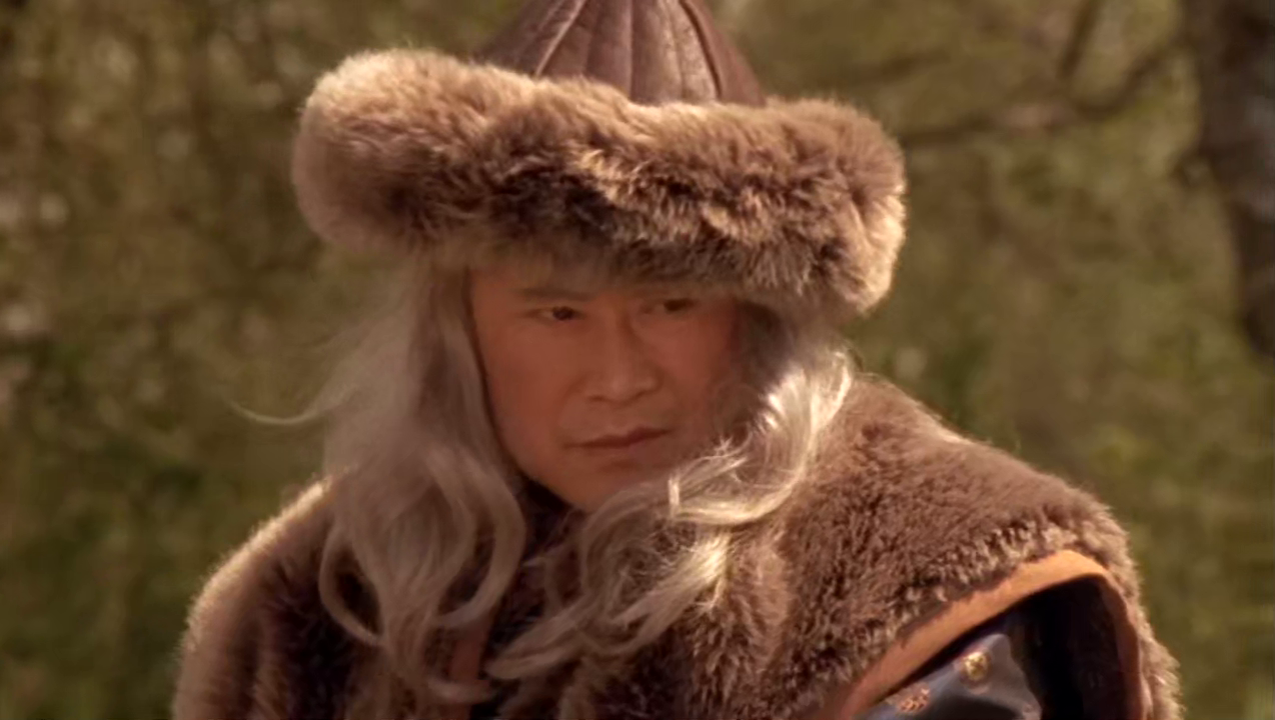
Abu is impressed with Carter’s beauty and later kidnaps her. He tells her that he intends to trade her with Turghan, a rival tribe leader, for something he desires. After discovering the kidnapping, the rest of SG-1 confront Moughal, who immediately guesses it was his son and joins them in their pursuit of Abu.
Turghan studies Carter as if she was livestock, resorting to violence when she constantly talks back at him. Abu asks for the hand of Turghan’s daughter Nya, but Turghan refuses. He forces Abu to accept gold instead, threatening his death if he doesn’t take the offer.
In Turghan’s compound, Carter learns that Nya is in love with Abu, and that she will be married off to a rival clan leader soon. Abu sneaks into the compound and tells Nya he will wait for her in the forest if she can escape.
SG-1 arrives at the camp, and decides they cannot wait for fear of Carter being “used” by Turghan overnight. They enter the camp and ask for Carter back. Turghan refuses an offer of gold, but accepts the M9 Pistol from O’Neill as it is a powerful weapon. They leave before Turghan realises it has limited ammo.
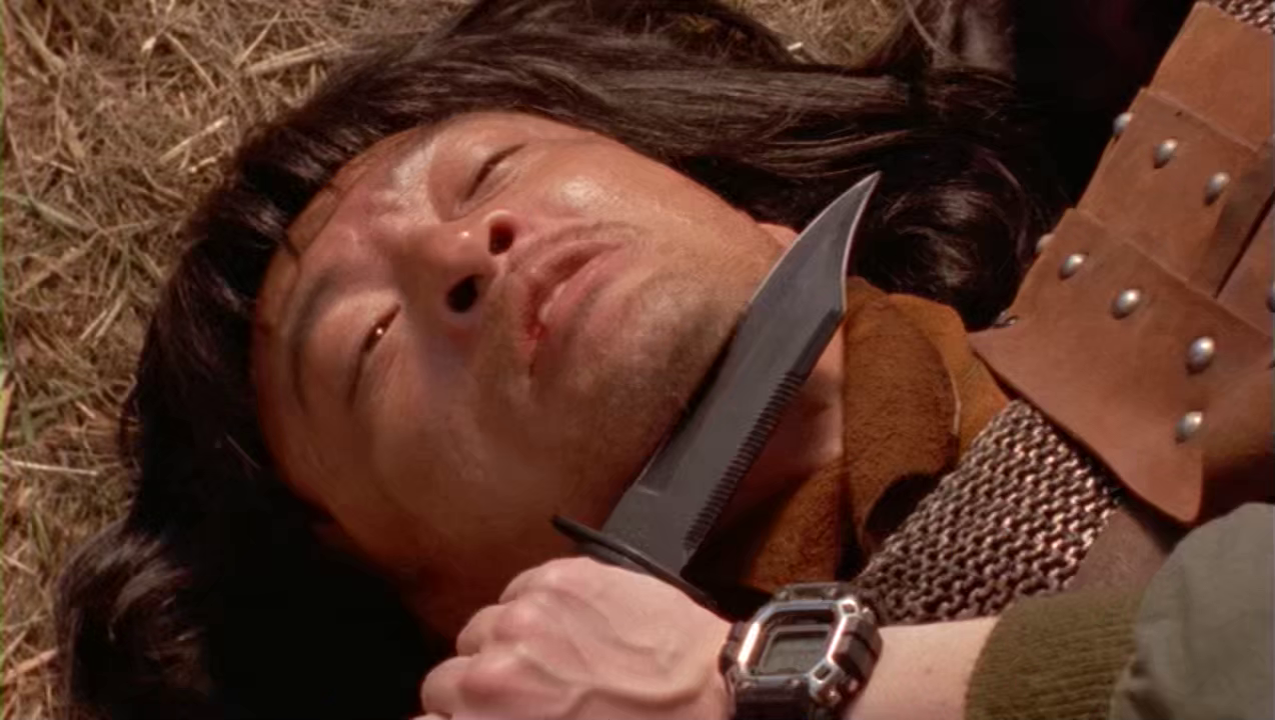
Abu catches up with SG-1 and begs them for help. Nya tried to escape while they conducted their trade, and now she is to be stoned to death for betraying her father. They decide not to use force, as this could bring war between the two tribes. Moughal then explains there is a law that allows a clan leader to challenge another leader to halt a stoning.
Carter, claiming to be her clan’s chieftan, challenges Turghan to a duel. Learning too late that it is a fight to the death, O’Neill allows the duel to go ahead, but keeps his weapon ready in case things go south. Carter defeats Turghan but refuses to kill him, making him swear that Nya can leave and that there will be no war between the two tribes.
Back at Moughal’s camp, the chief declares that the old laws are over, allowing women to walk freely with their faces revealed. They return to Earth with a sample of a plant that is used as an anaesthetic.
Is It Really That Bad?
This isn’t a great episode of Stargate. Structurally it’s tighter than Code of Honor, but politically it replaces one set of racist stereotypes with a muddled mix of orientalism and white feminist saviour fantasy.
It improves the story structure in some key areas. The medicine aspect is left as a background detail so we can focus more on the actual plot. The idea of a primitive human culture on an alien planet makes more sense in the SG-1 universe.
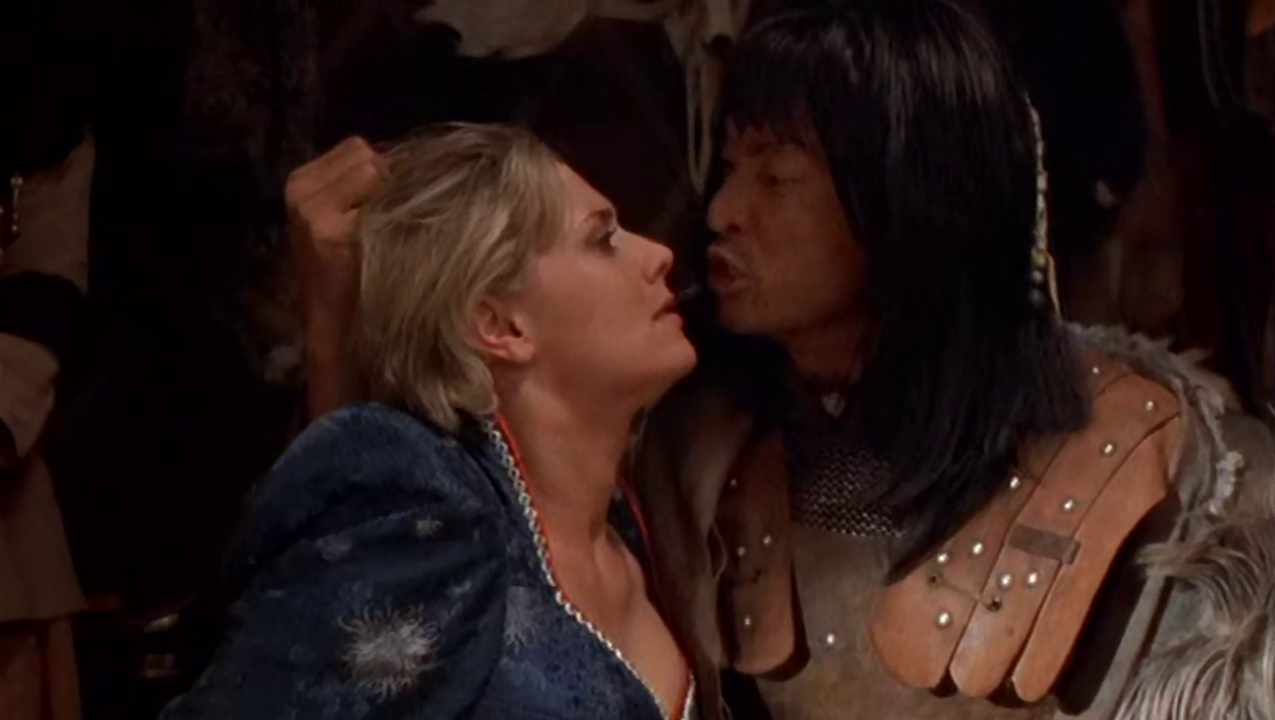
But as an attempt at telling a story about a strong female character, it ends up failing to make the point. Carter spends much of the episode being humiliated, treated as property and physically abused. There are some scenes that can be difficult to watch.
Carter appears to gain more autonomy near the end of the episode: she chooses to go back for Nya, and she challenges Turghan to save her life. But can just as easily be read as a white saviour complex, with the enlightened Westerner swooping in to “fix” the savage non-Western-coded culture. This is reinforced by the ending, where Moughal decides to renounce the old laws thanks to Carter’s influence.
This cultural coding is another issue. The idea of a primitive culture on another planet fits well within the SG-1 universe, where humans on other planets have their development controlled by the Goa’uld. This could have been a great way to explore the effects of this kind of oppression, but the episode instead chooses to make the local culture the probem. There is no getting around that the “Mongol culture” boils down to a simple non-Western tribal culture that treats women with little respect.
Without the Prime Directive, there is a lot less talk about being forced to not use violence. In Code of Honor non-intervention is a result of restraint and guilt, which seems hypocritical. SG-1 is a military unit, presented as heroic. The show drops the pretense of non-interference, but still frames cultural change as something that should be delivered by the Earth team, the white saviours.
This is why Emancipation is often considered one of the worst episodes of SG-1. Other episodes are sometimes cited, such as Hathor, with its Goa’uld sex-vampire premise; or One False Step, which many consider to be boring and dull. But Emancipation often tops the list of worst Stargate episodes, and even if you personally disagree, it’s easy to see why.
But Wait! There’s More…
Katharyn Powers is remembered for writing the worst episodes of both TNG and SG-1. But she actually had a lot more involvement in the creation of SG-1’s mythology. Her writing brought us alien species such as the Tollan or the Asgard, and some of the best episodes of SG-1 ever written. Such episodes include Brief Candle playing with accelerated aging and the ethics of Goa’uld experiments on human populations, or Thor’s Hammer that introduces the Asgard race.
It’s ironic that the writer who helped seed major pillars of the show’s lore is mostly remembered for one early misfire. So I’m going to take a look at some of the other episodes she has written. And if you don’t know already, you might be surprised at the great stories she brought to the franchise.