
Ever since I was a small child I had wanted to explore the ancient ruins of Angkor Wat. During my travels around South East Asia I was finally able to live that dream. I found myself a guide in Siem Reap, and he took me around the ancient site.
A Childhood Dream
When I was a child I developed an interest in dinosaurs and archeology, as was typical for someone growing up in the 90s. I was inspired by films like Indiana Jones, Jurassic Park; by nature shows; and TV shows like Stargate SG-1.
This inspiration also came from video games. When I was a young teenager I played a SNES game called Illusion of Time (also known as Illusion of Gaia). I remember this being the first time I was ever sucked into a game’s story, and was fascinated by the setting. The game takes you to many real-world places, including Incan Ruins, Egyptian Pyraminds, the Great Wall of China, the Nazca Lines, and Angkor Wat (spelled Ankor Wat in the game).
I still fondly remember the game’s simple story, and how exciting it felt to explore these ancient places. The ending of the game has the world “return to the way it should be,” and shows that the world you’ve been exploring was, in fact, the real world. The main character turned out to just be a kid in school. A kid like me.
I knew then that one day I would explore the world and go to these places. I would be able to see them for real. Angkor Wat especially stuck in my mind. I knew I’d get there some day. And around 30 years later I finally made it.
Preparation
Before you can visit Angkor Wat you need two things: a pass and a tour guide. As it turns out, Angkor Wat is just one temple in a huge area of ruins around this area of Cambodia. This was once home to a huge city that now lays in ruin, populated mostly by monkeys.
I opted for a 3-day pass from the official website so I could spend some time visiting other temples and ruins in the area around Siem Reap. I had a friend who worked at one of the local schools, and he helped me to connect to a local guide that he trusted.
Everything was set. The guide would pick me up from my hotel with his driver the next day, and he would guide me around the more restrictive areas of the ruins. I was finally about to achieve a goal I had set for myself when I was still in school.
The Temple
Siem Reap disappeared behind us as we rode up the road from the Angkor National Museum. Instead of paved roads surrounded by shops and bars we were driving down a dirt path lined with tropical trees. Eventually the jungle would give way to the ruins and we drove along the moat that surrounded the temple.
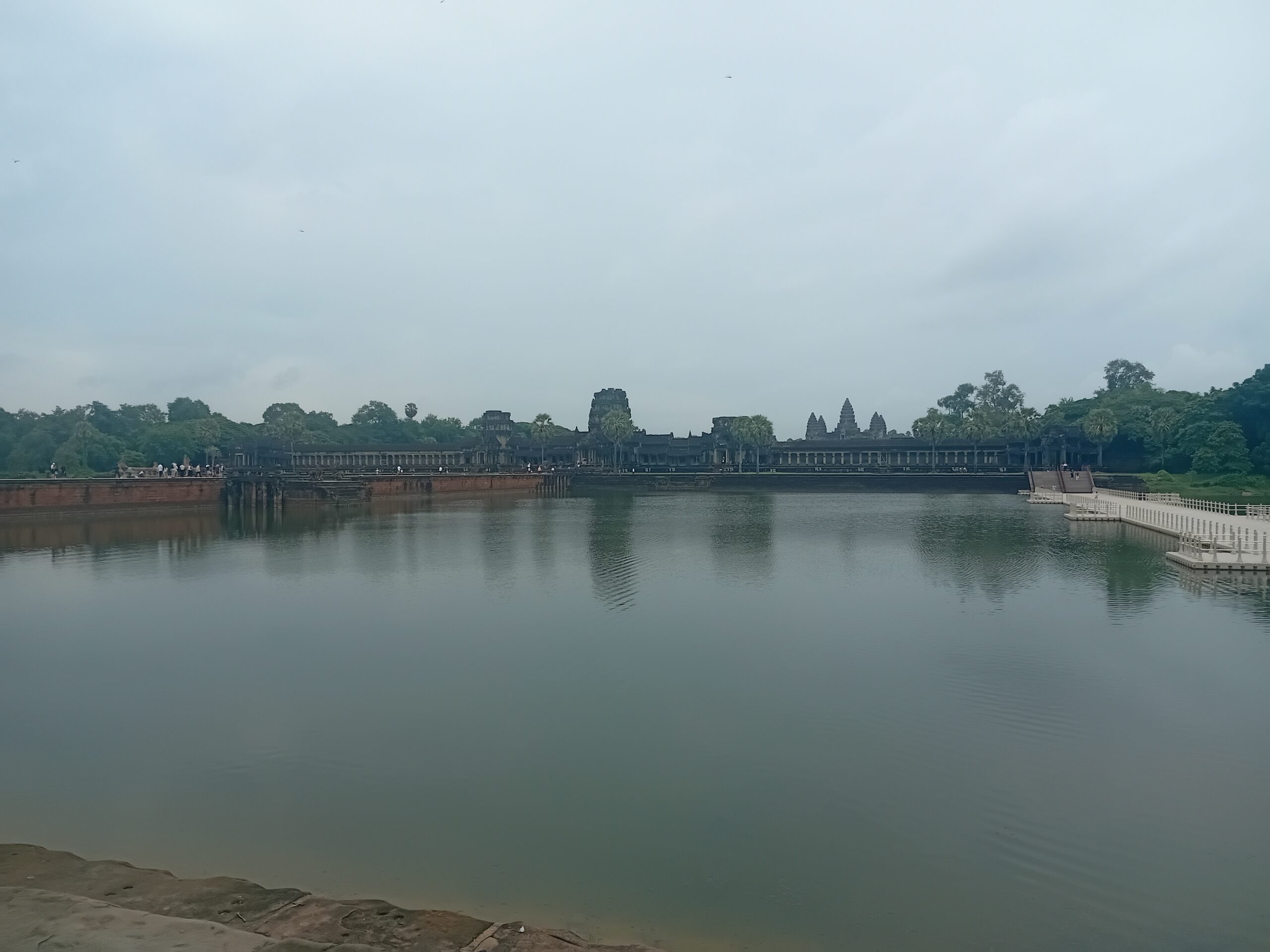
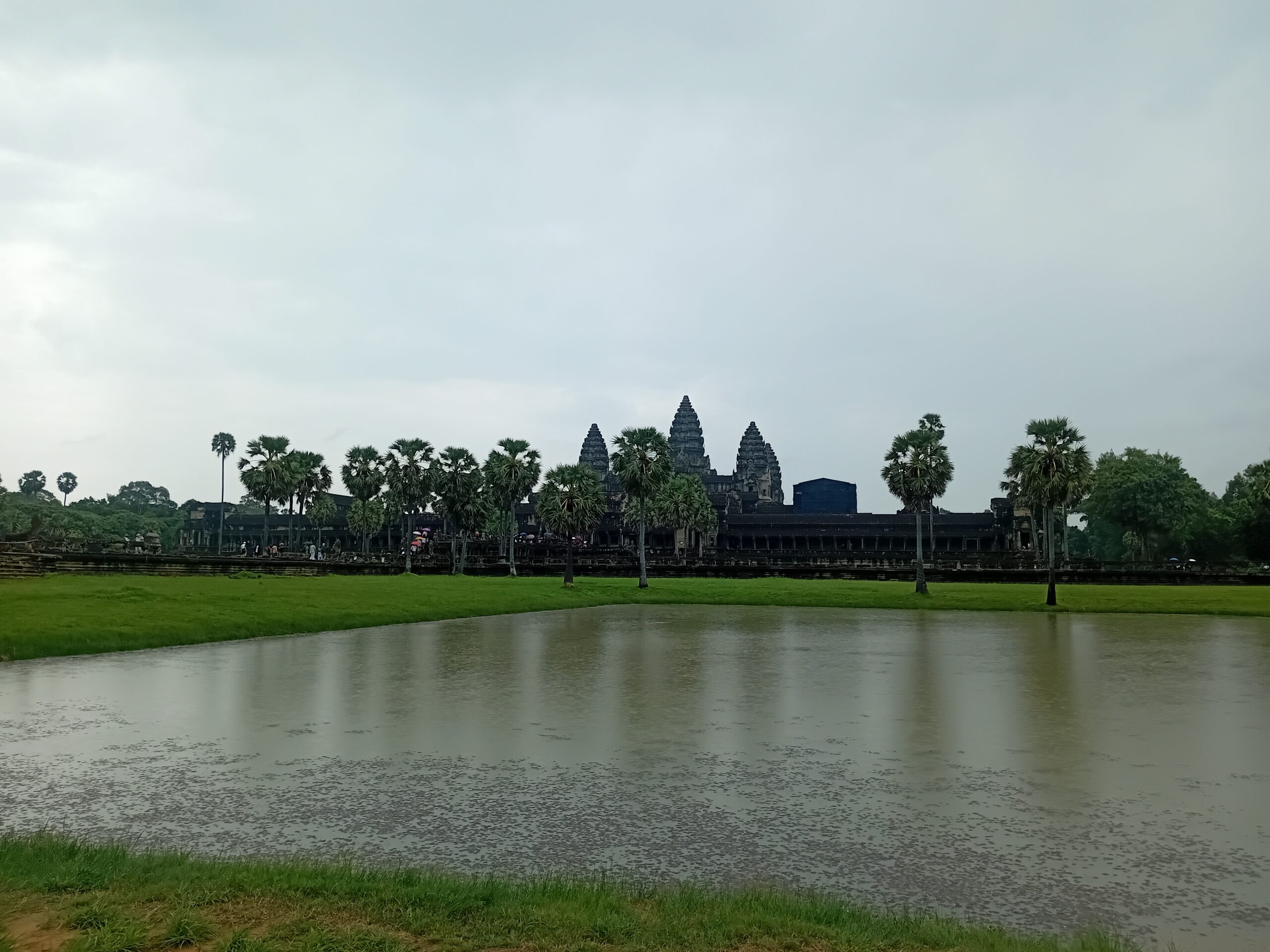
The size of the moat was incredible. In the west, castle moats were generally redirected rivers into large ditches. They were impressive, but compared to this they were nothing. This looked more like a square lake with a small, forested island rising out of it. I’d never seen a moat this big before.
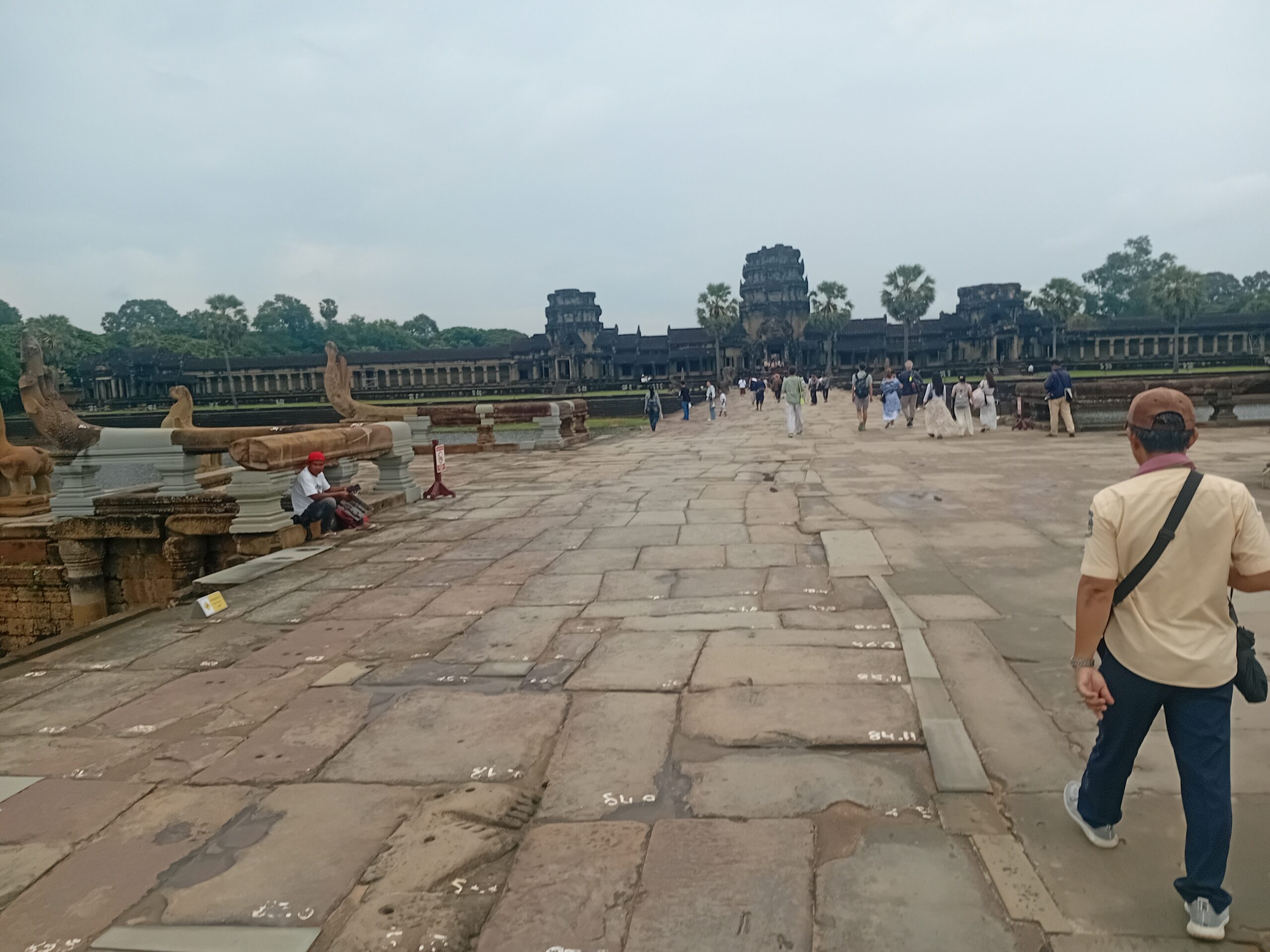
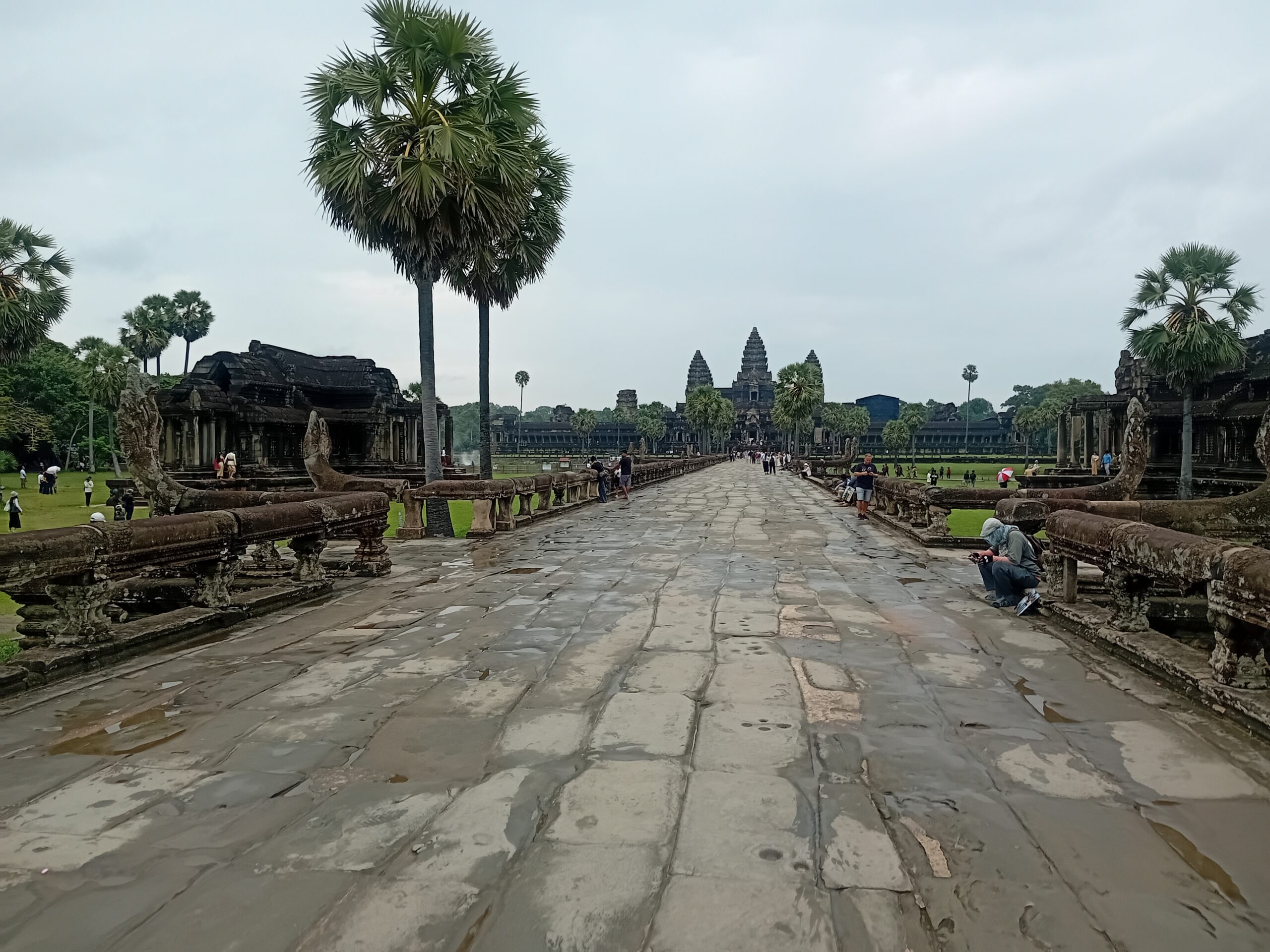
The tuk tuk took us around to the front, where long stone bridge led to the entrance of the temple. Several stone naga lined the bridge, protecting the temple from intruders. Many of them had been weathered over the years, but you could still make out the distinct form of a serpent with seven heads.
At this point we had to confirm we had passes and a guide before the staff would let us through. There were many other tourists here, each with their own guide. Cambodians don’t need a guide, or a pass, so they were waved through without any checks.
After the due process, the guide led me across the bridge to the temple. Three towers standing there in all their glory. Despite their ruined state they still towered over everyone entering the temple.
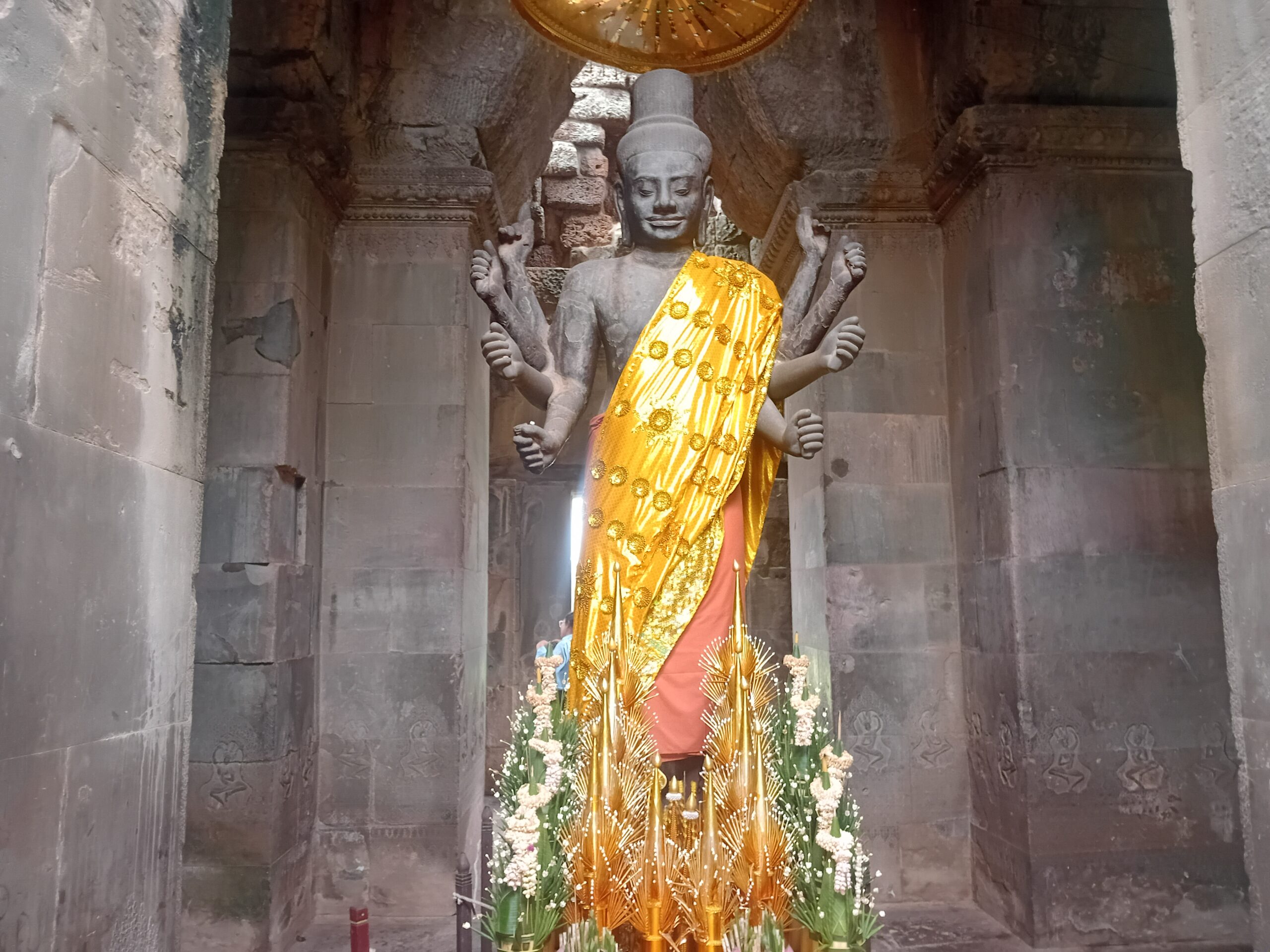
The guide took us to the south entrance so we could see Ta Reach, a restored statue of Vishnu with eight arms. He may have originally been placed in the temple’s central shrine, now he stands here to welcome visitors to Angkor Wat.
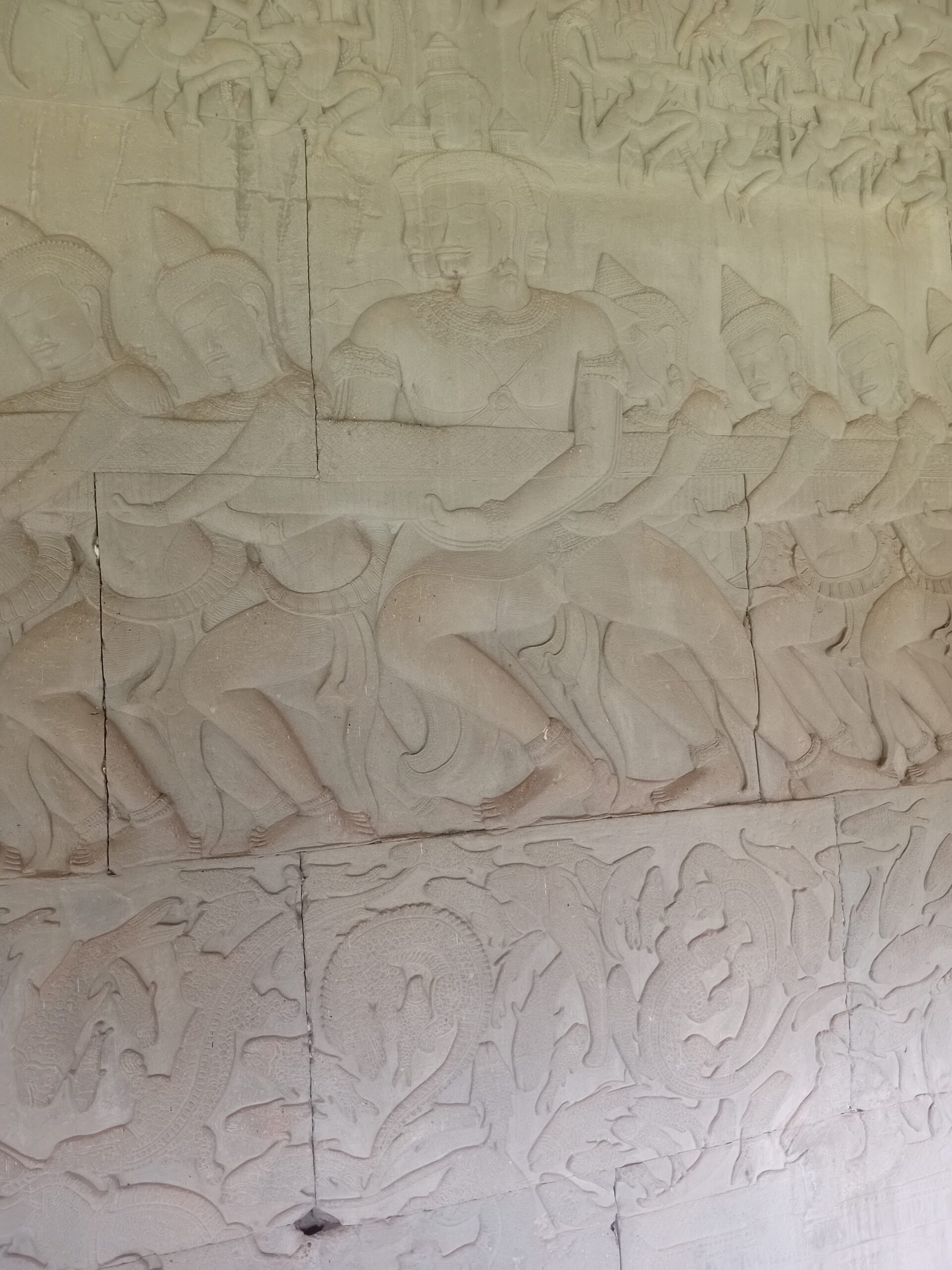
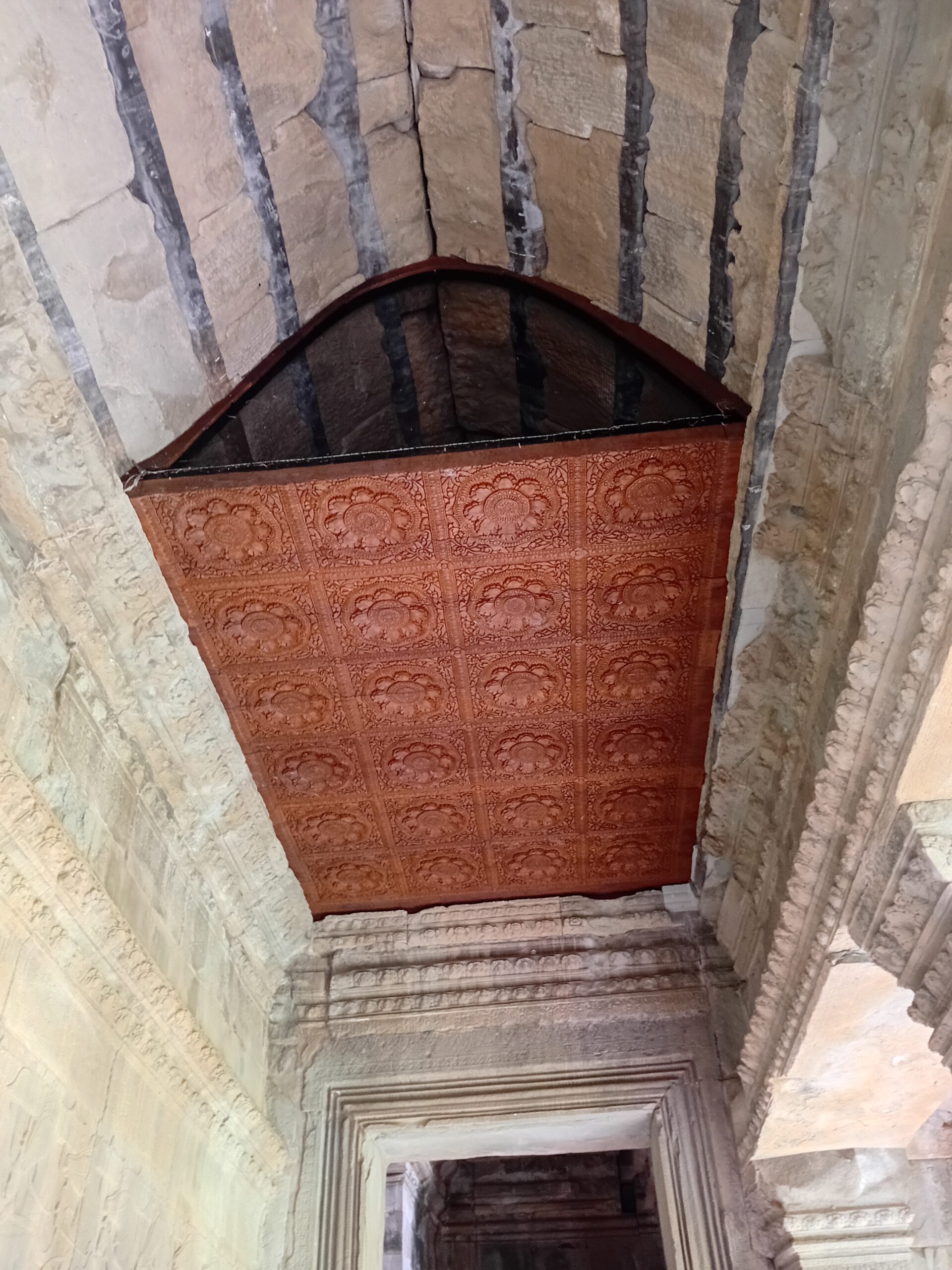
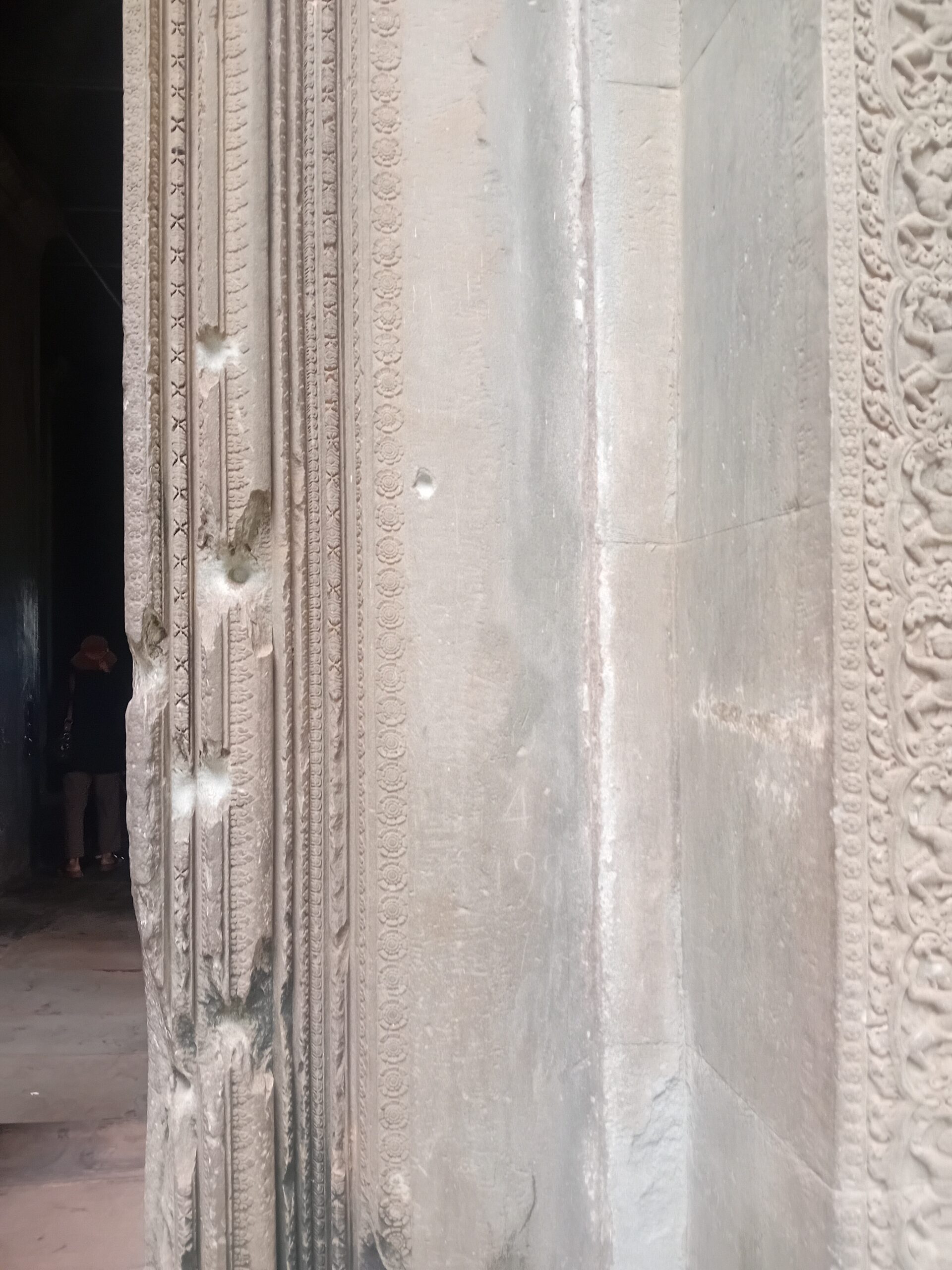
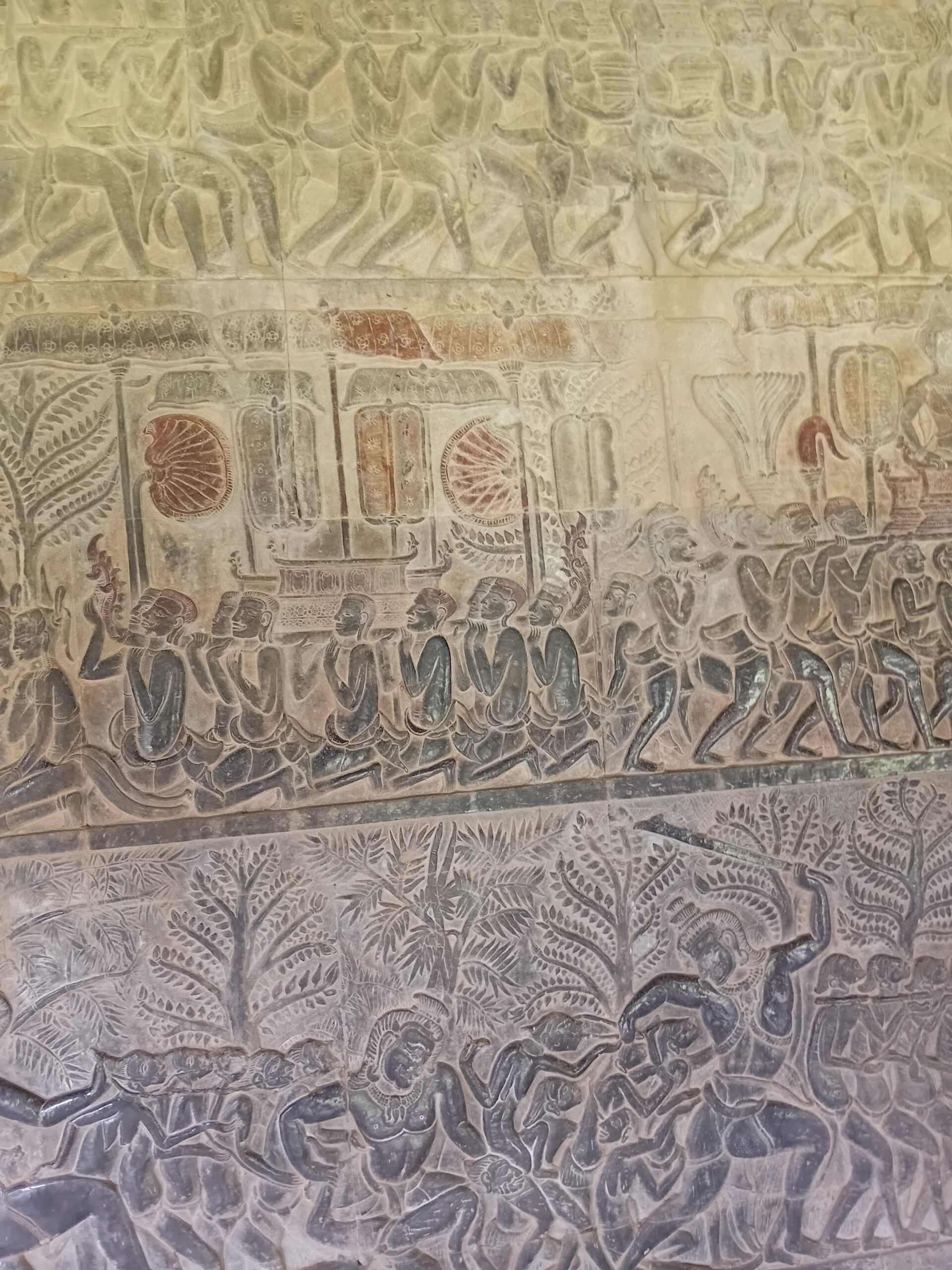
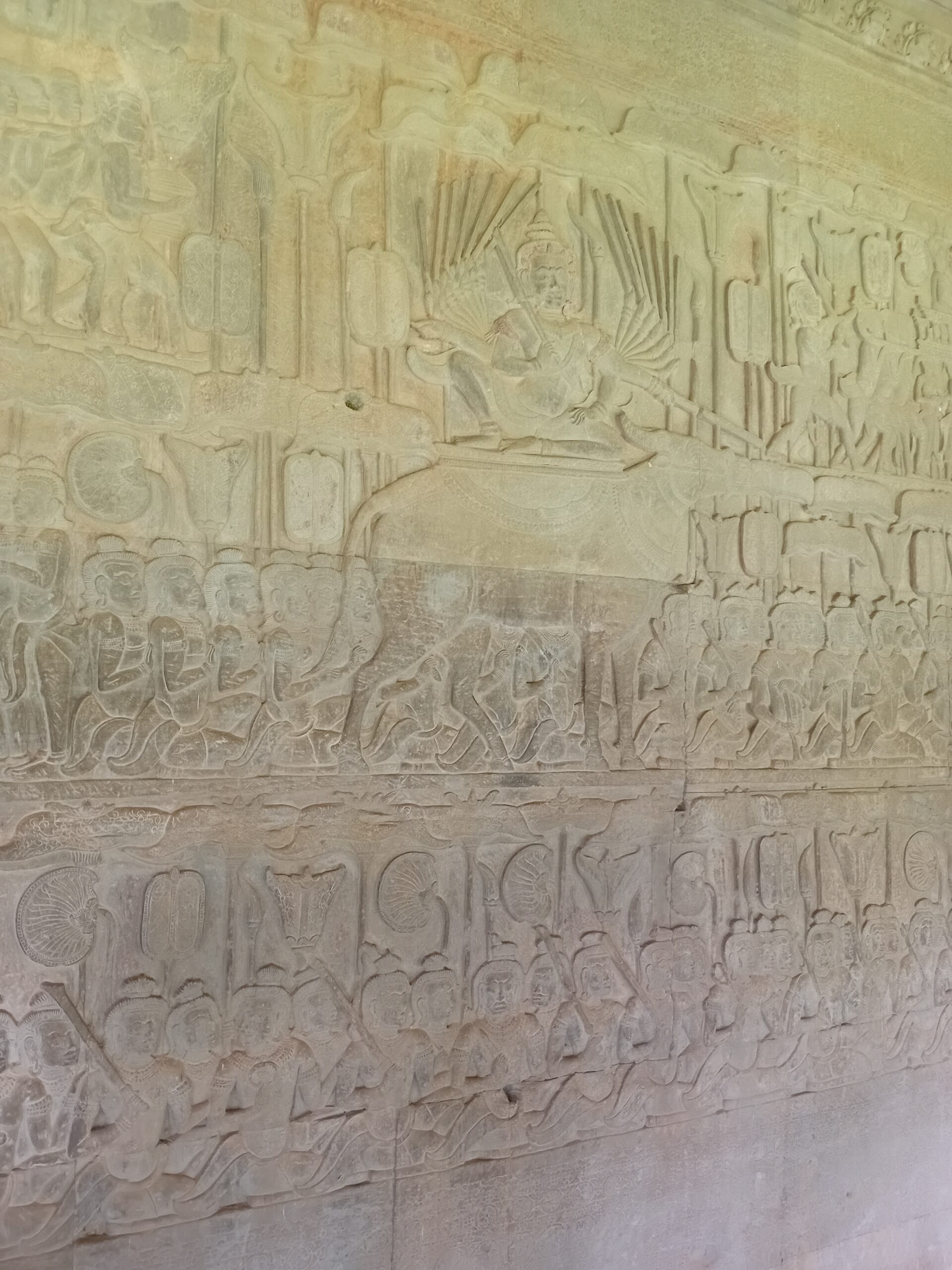
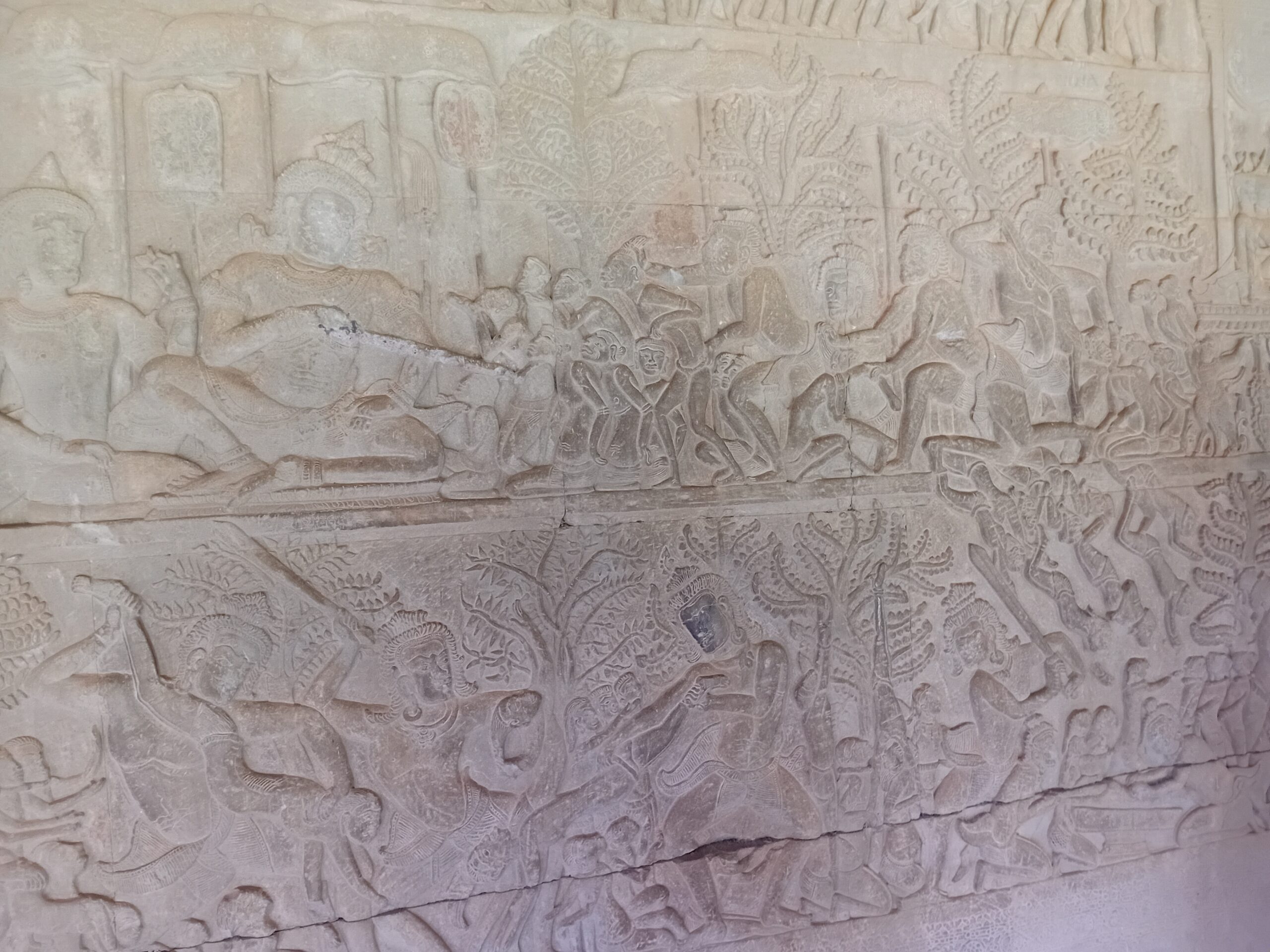
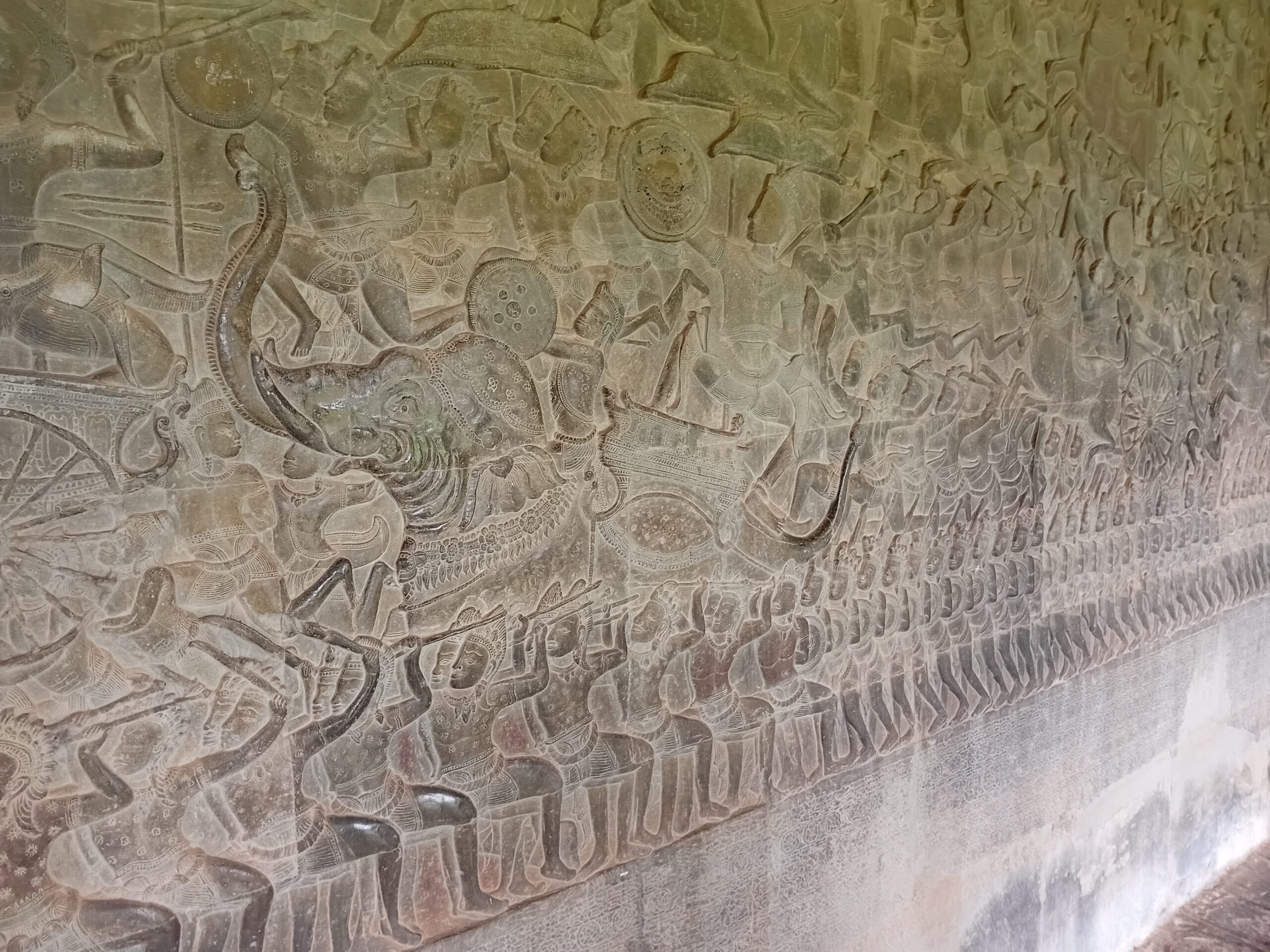
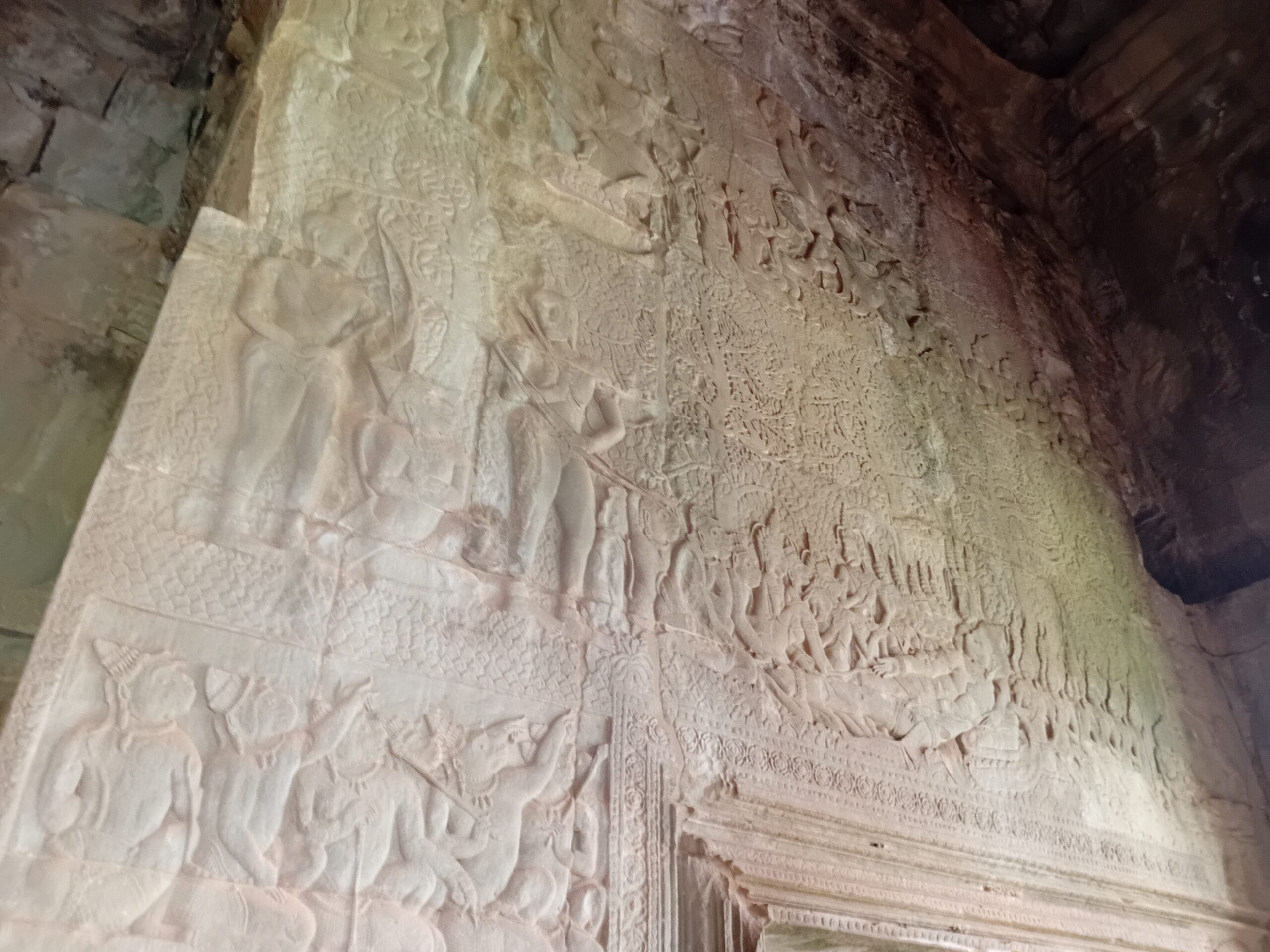
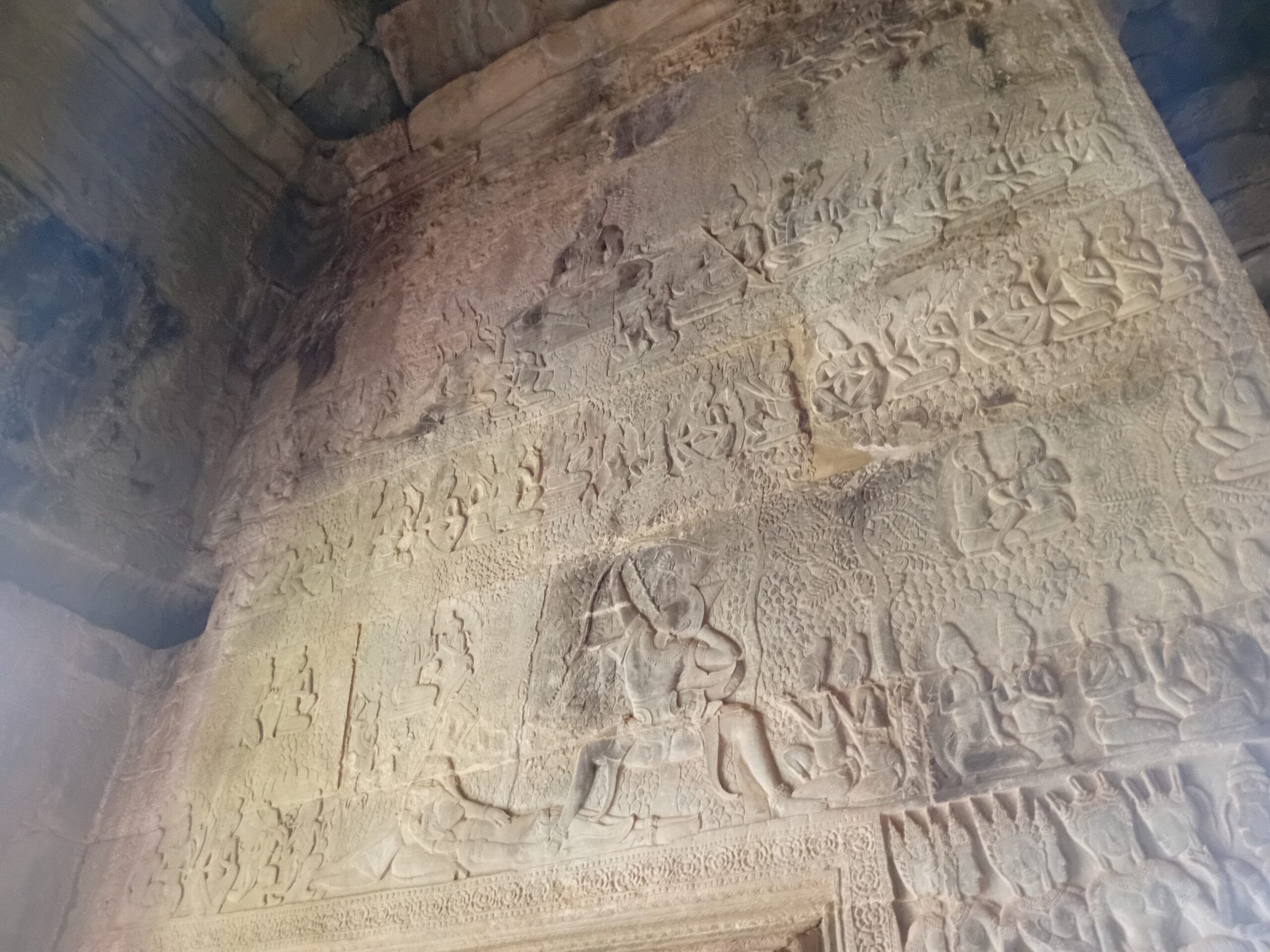
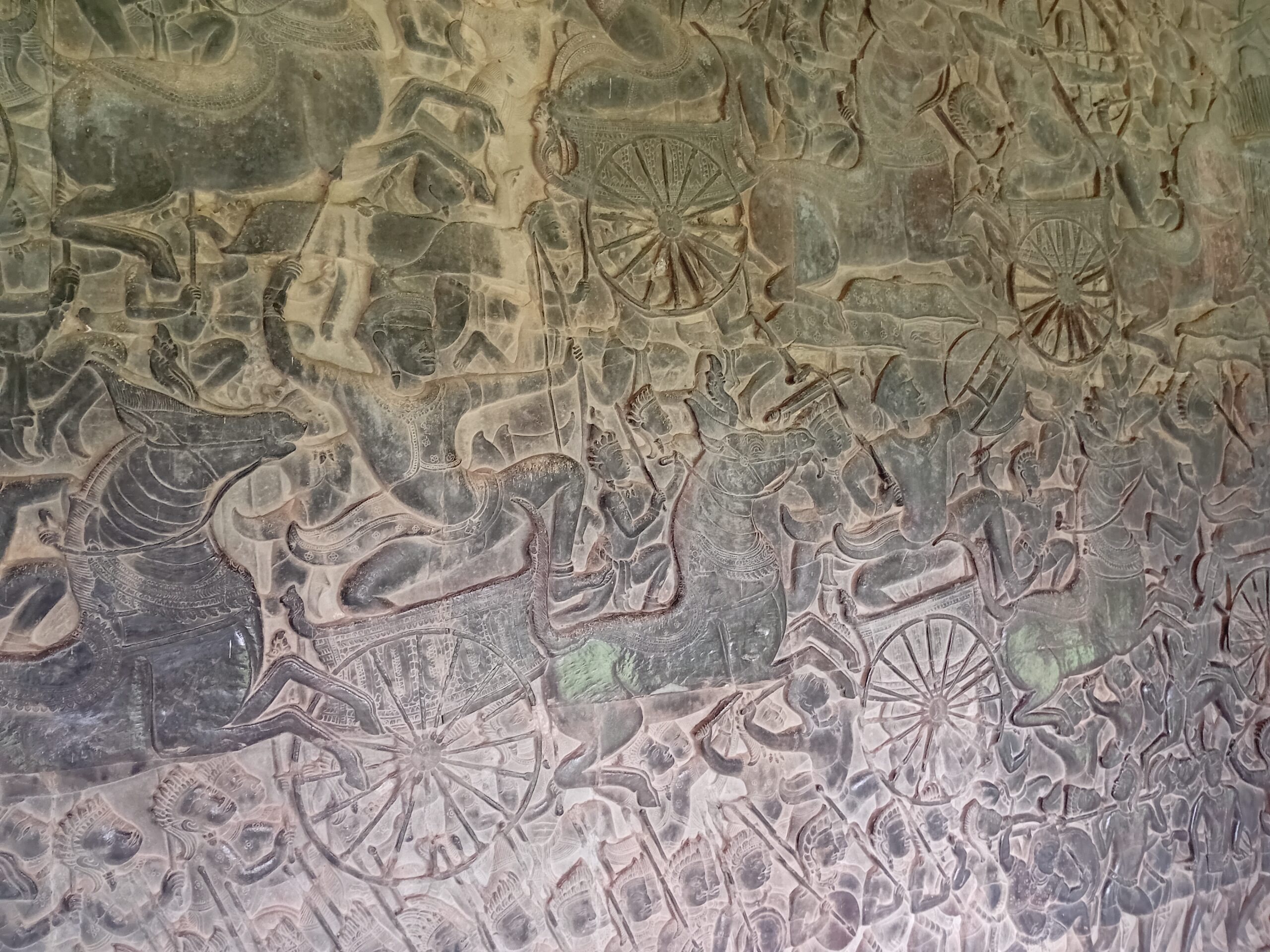
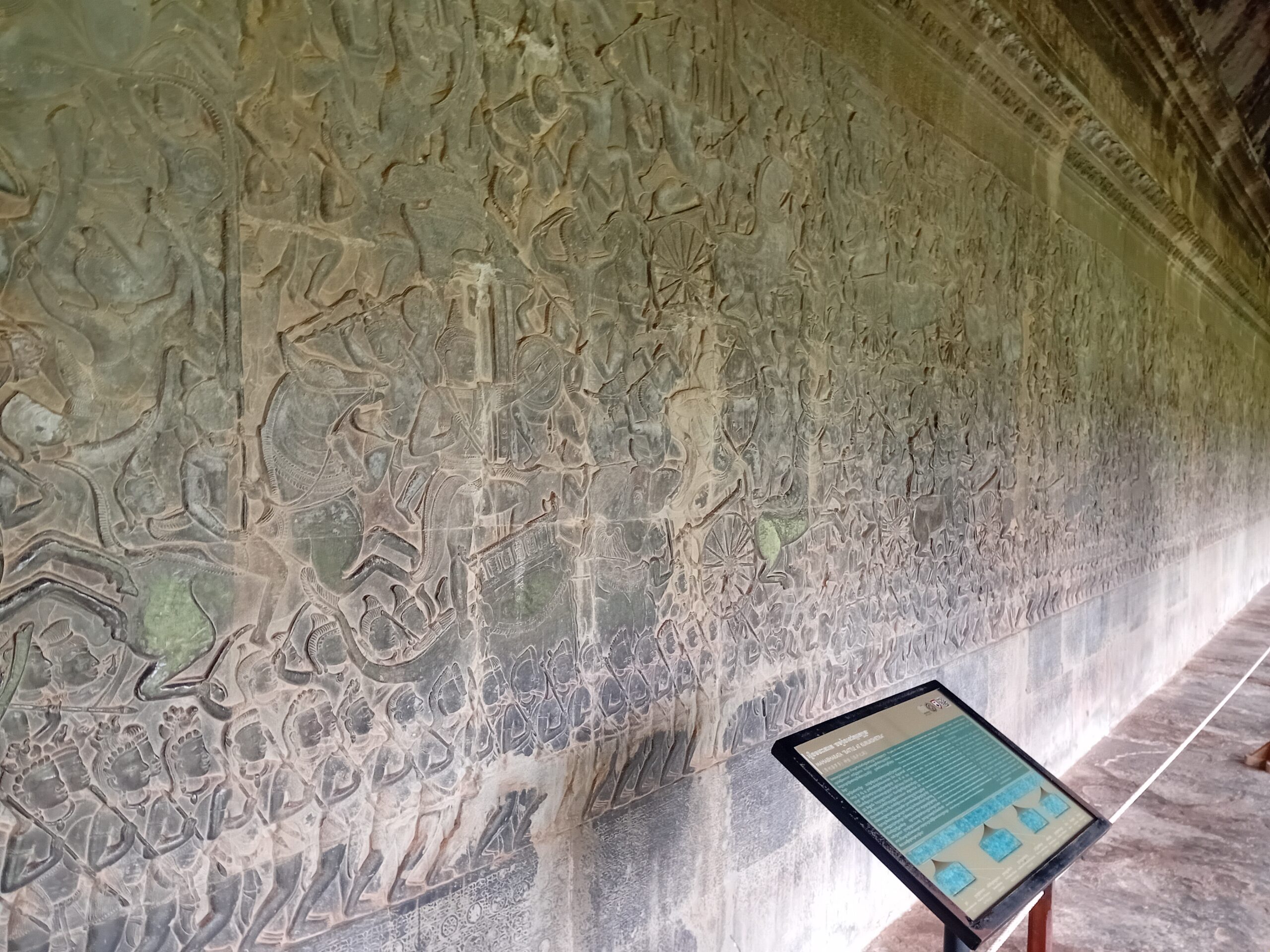
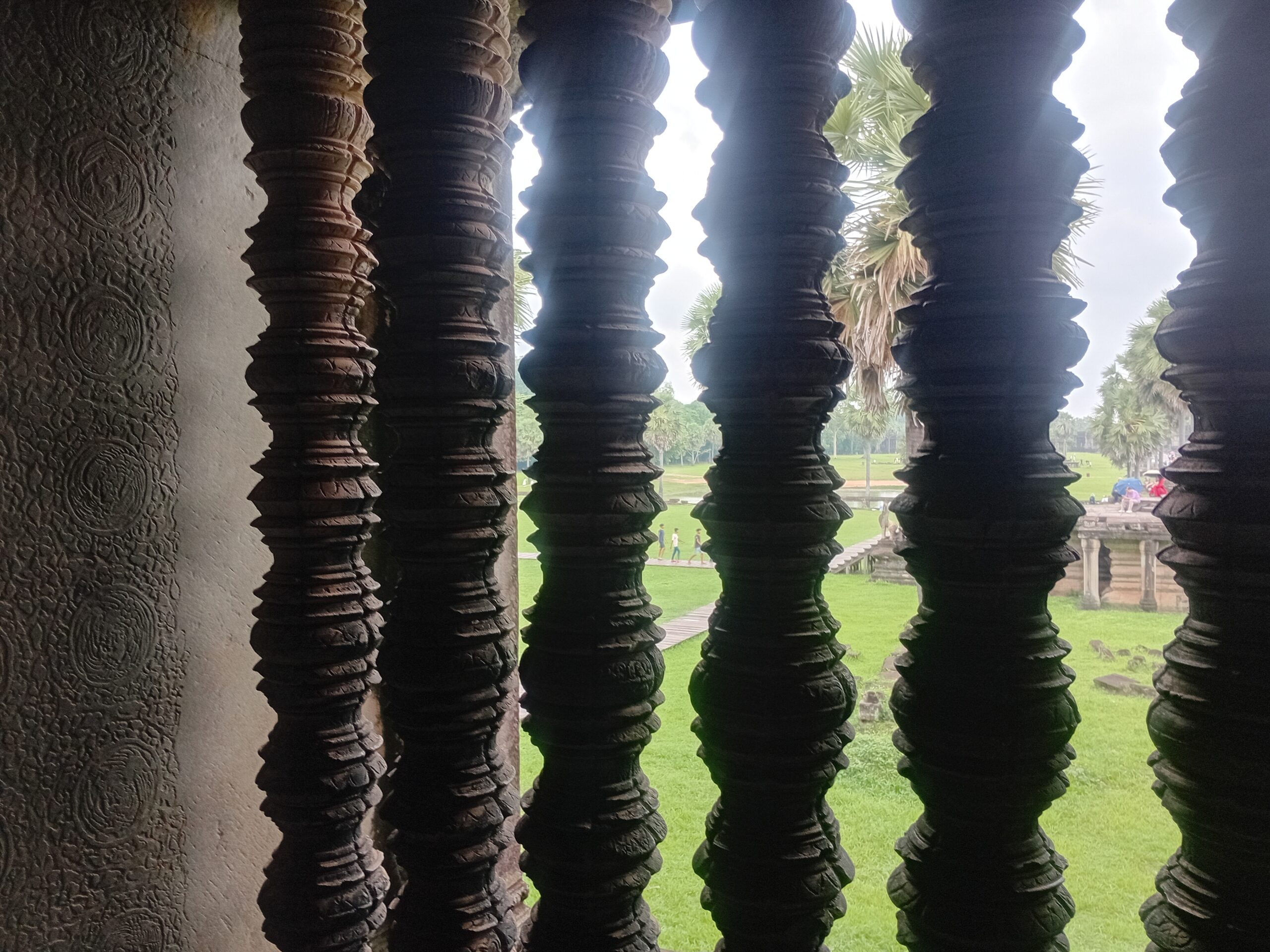
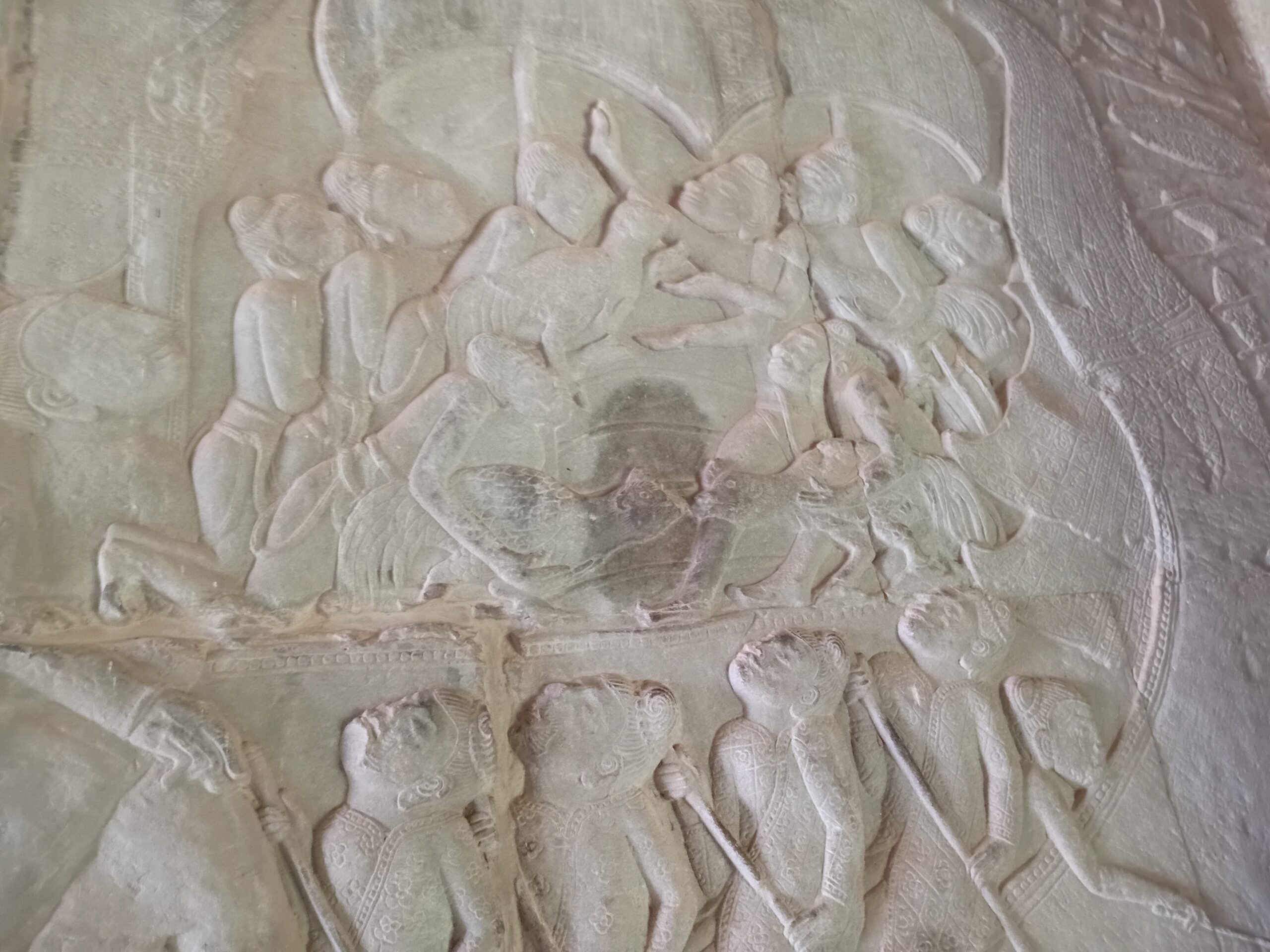
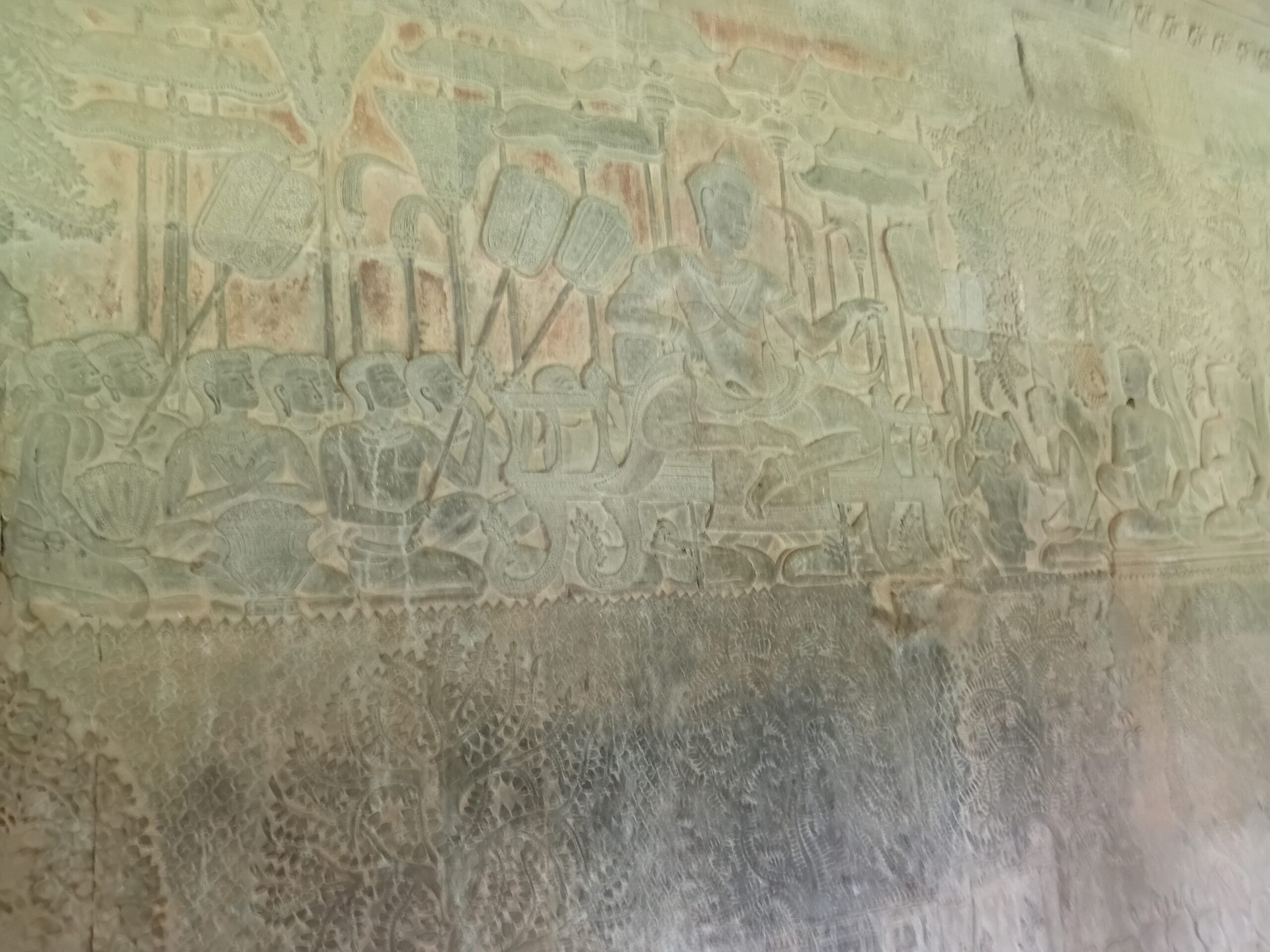
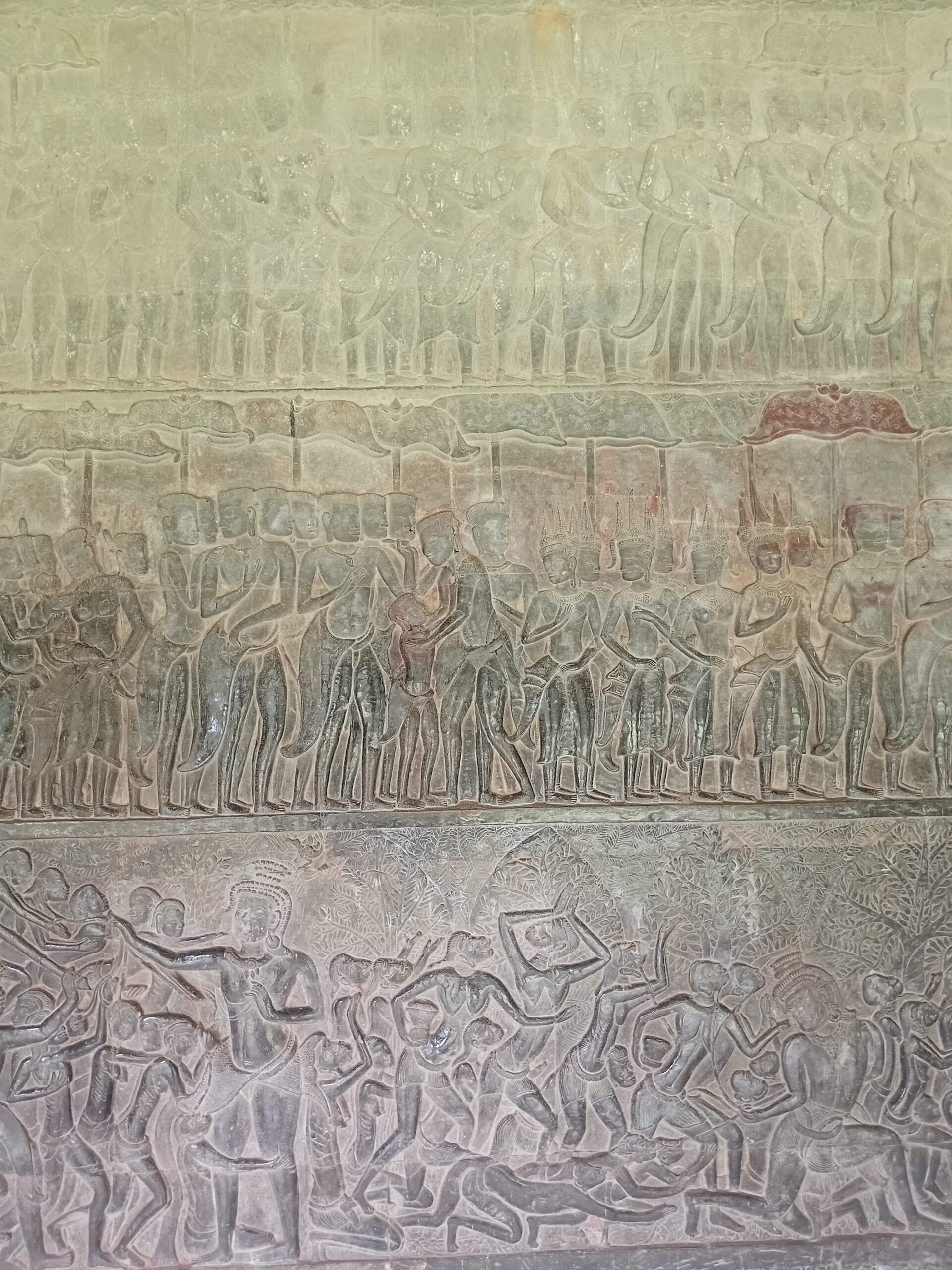
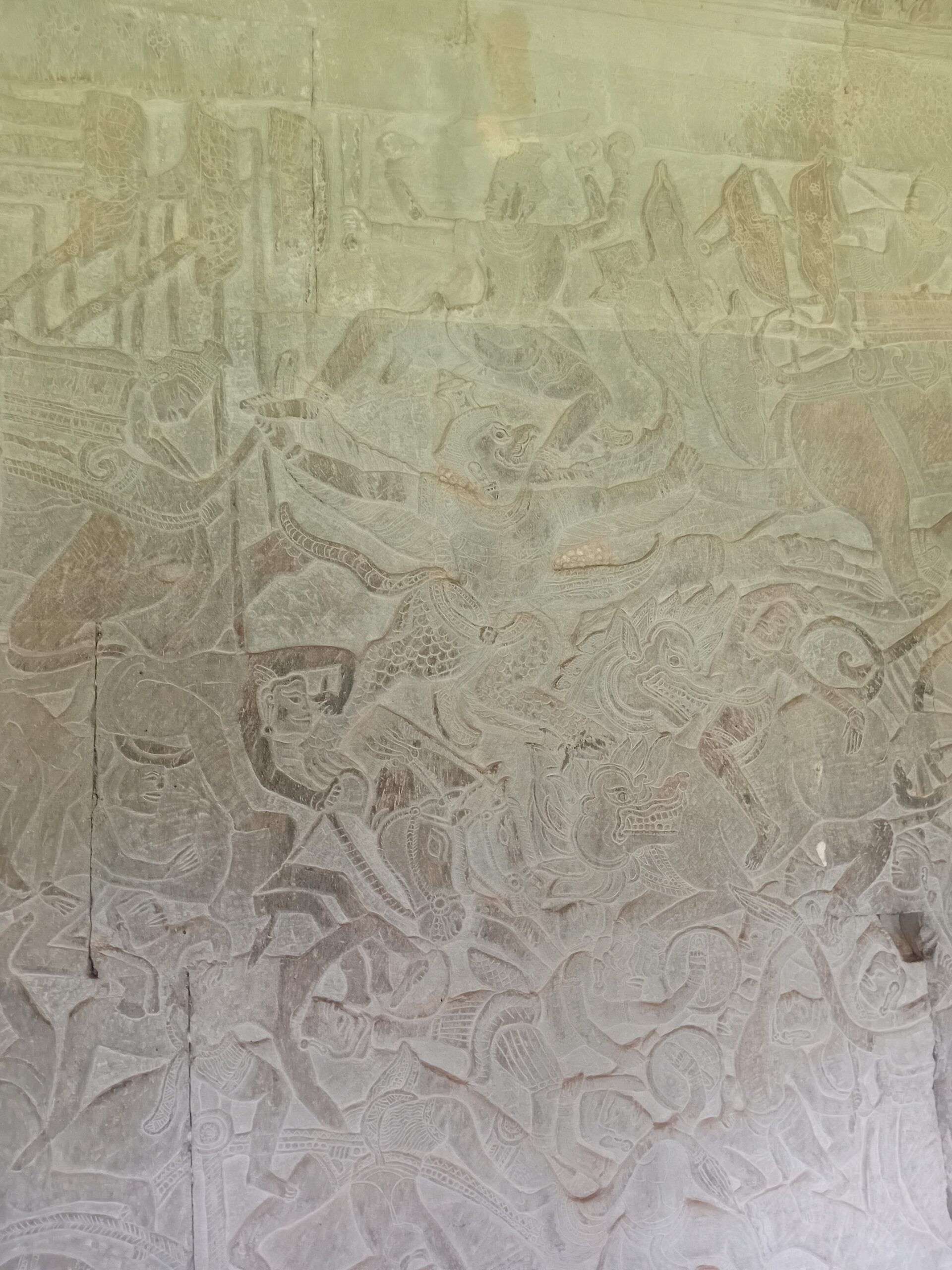
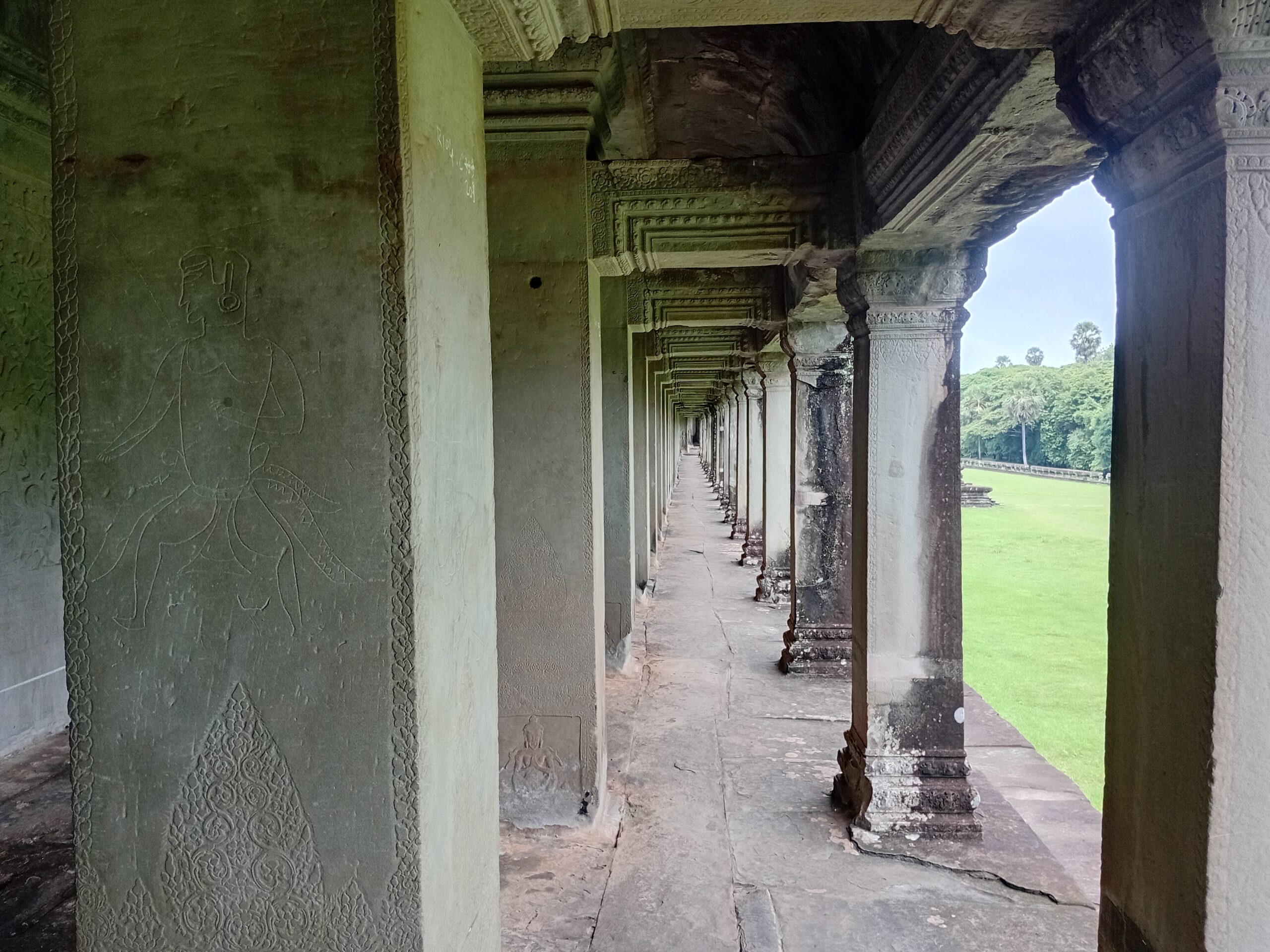
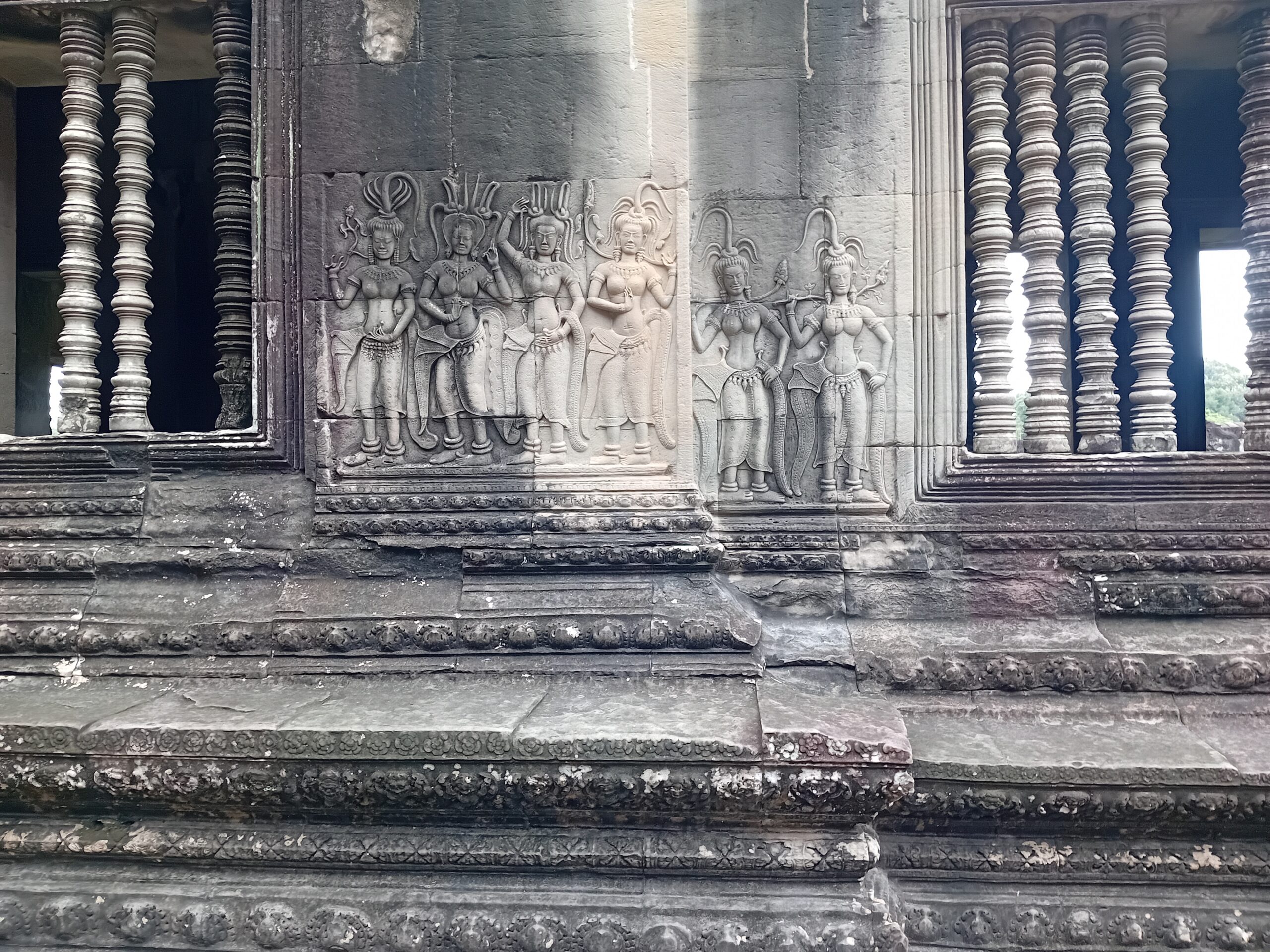
Something I picked up on early is that every single piece of this structure has been carved in intricate detail. Patterns adorn every pillar and every ceiling and floor tile. Murals and figures from Hindu mythology are carved into every wall. Careful attention has been paid to every piece of stone that was placed here.
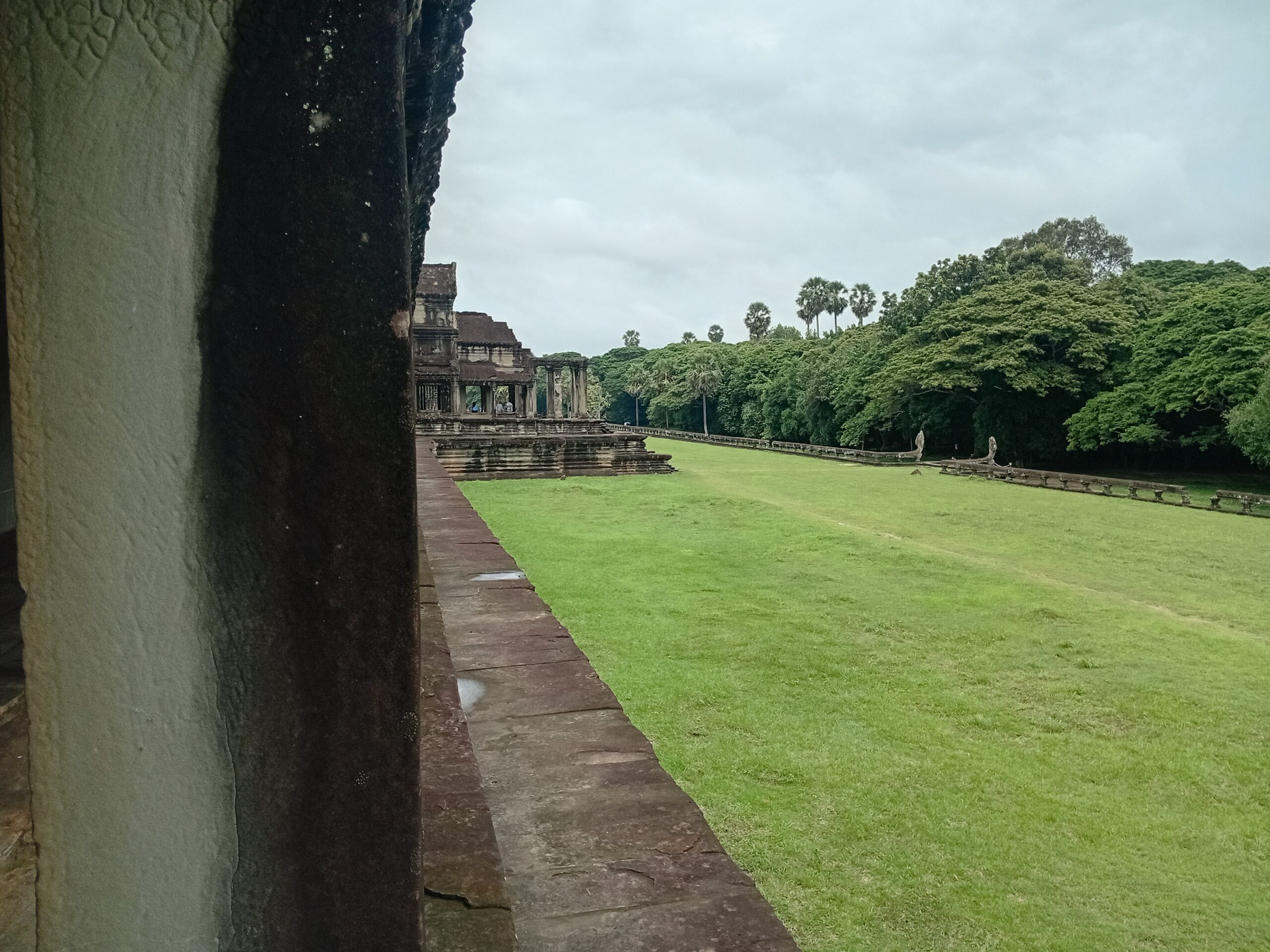
Once inside the walls we were in a huge courtyard. The main temple lay before us at the end of a long stone path. A huge grassy area filled the courtyard. Many of the locals were enjoying the sun, while tourists wandered around them taking pictures.
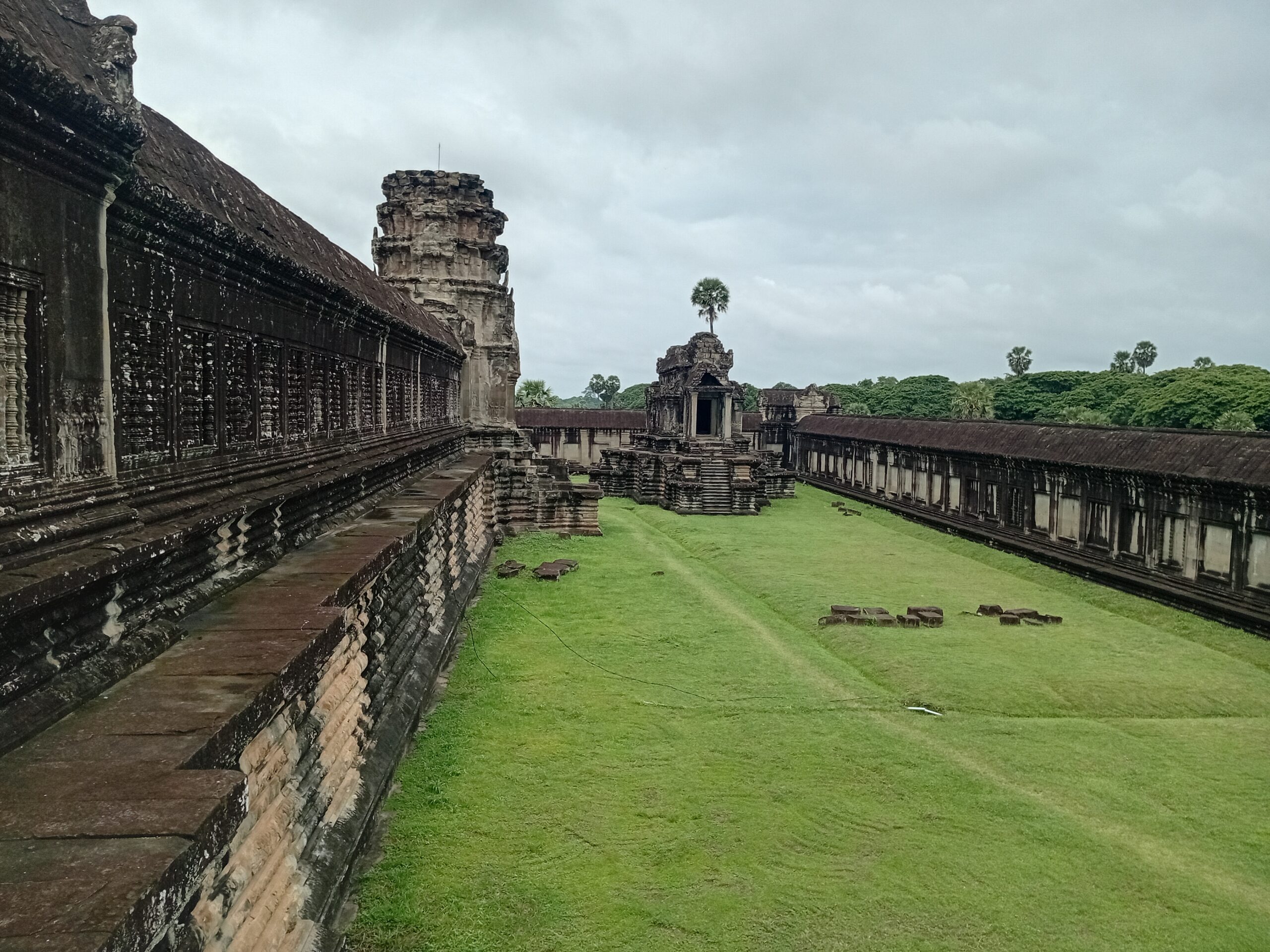
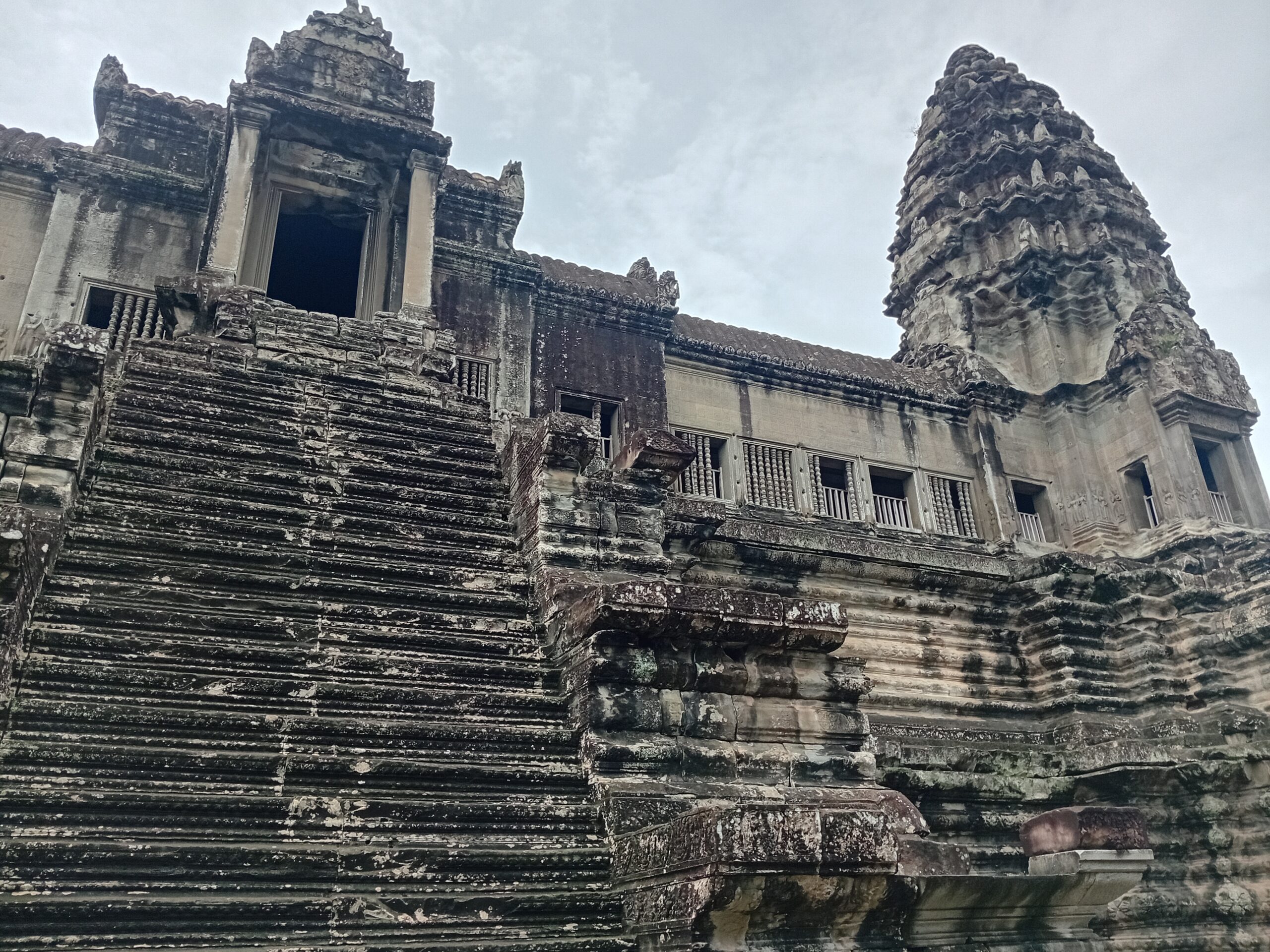
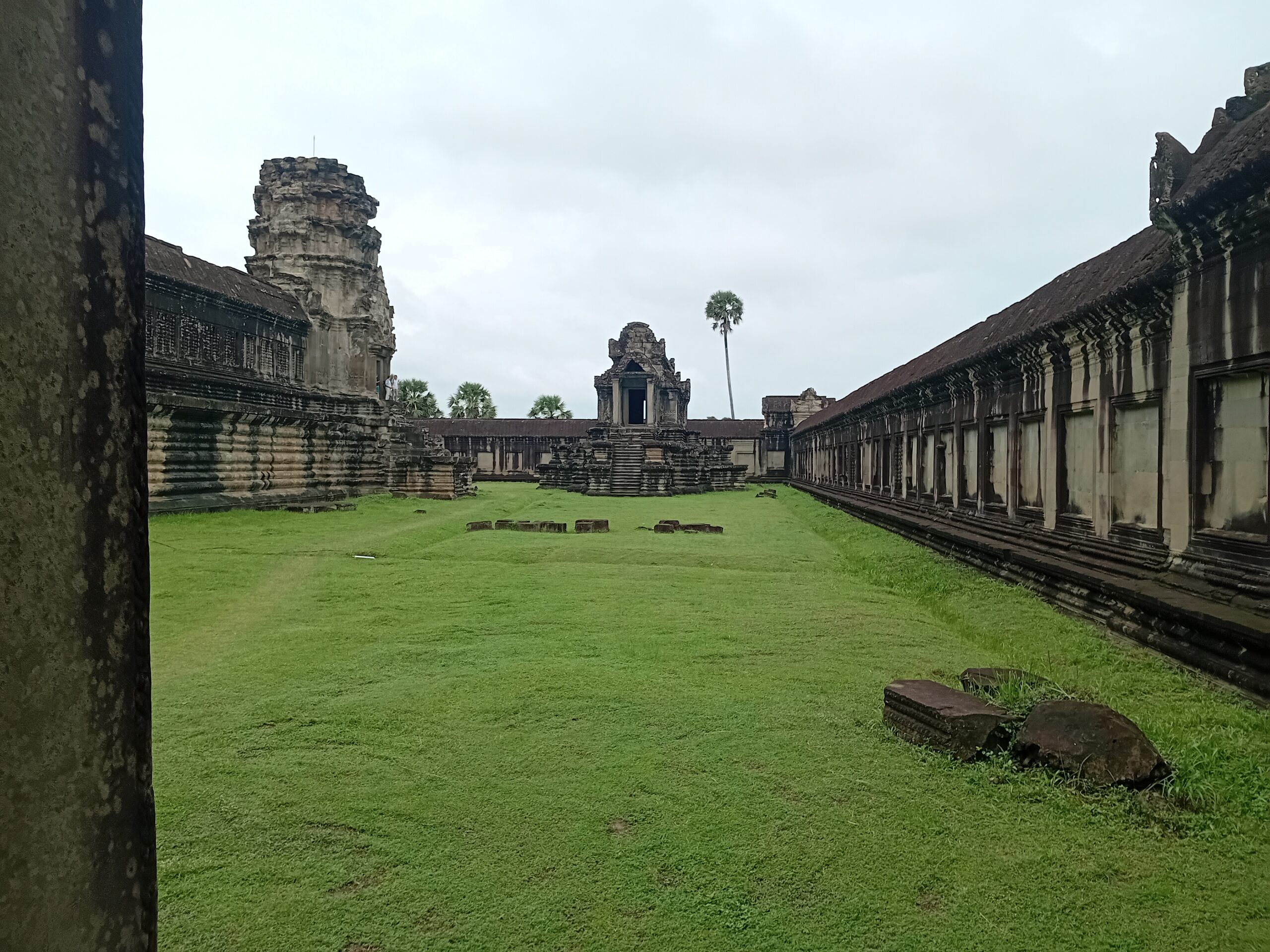
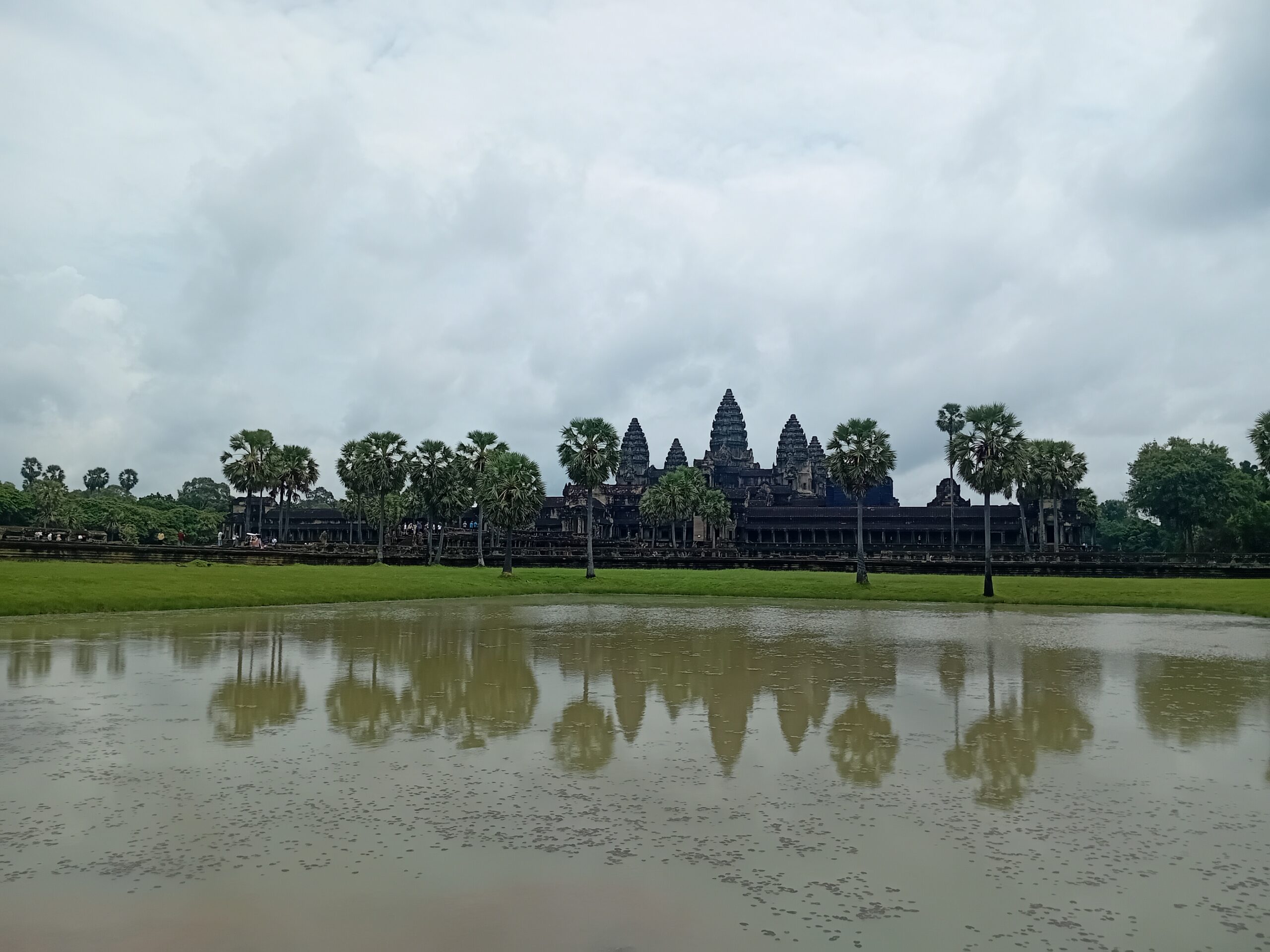
Either side of the path were two buildings. My guide told me that these were libraries. After we walked past them, he pointed out a large pond. He told me that in the right light you can see a clear reflection of the temple. Unfortunately it had recently rained so we were unable to see it this time.
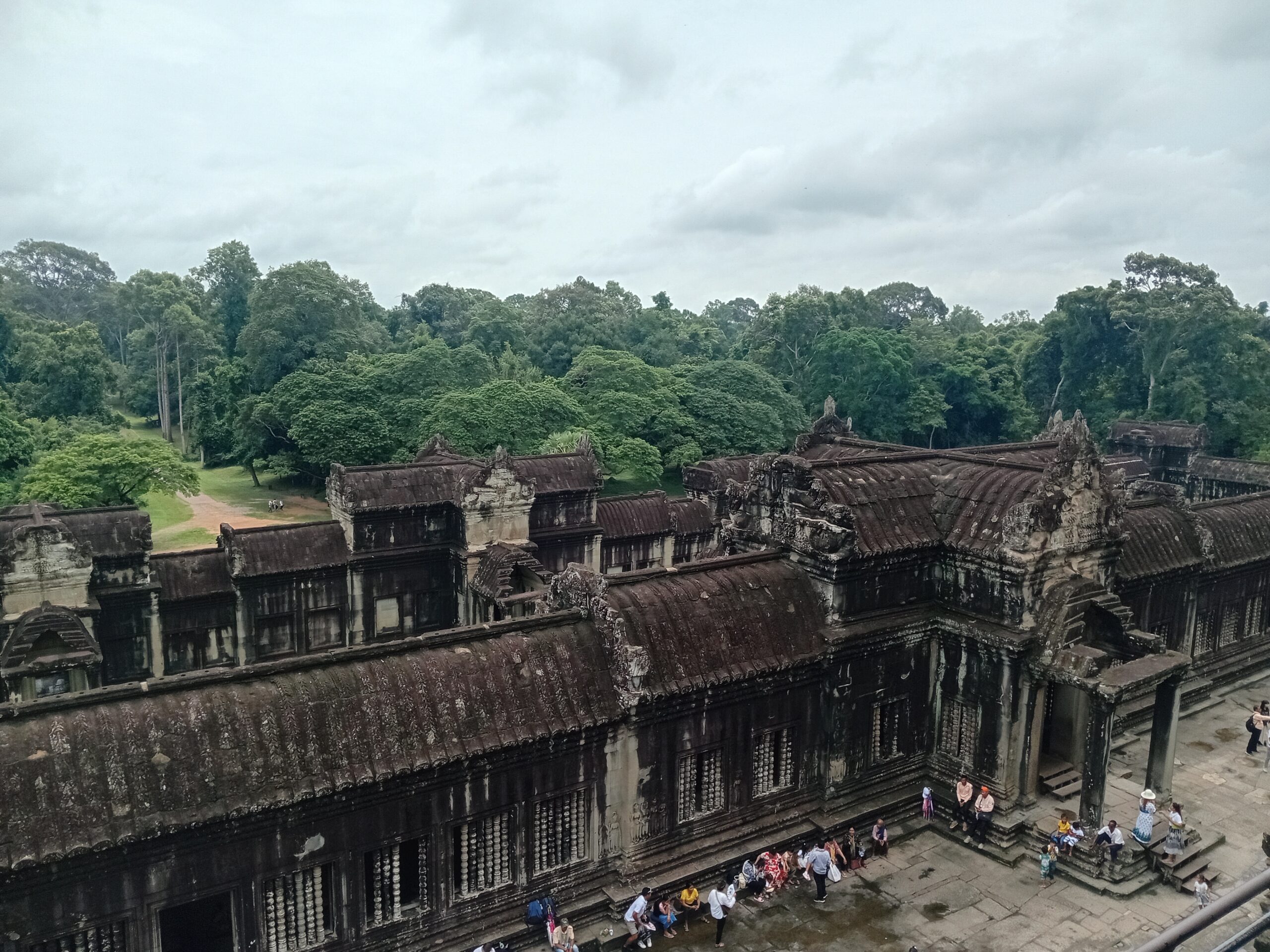
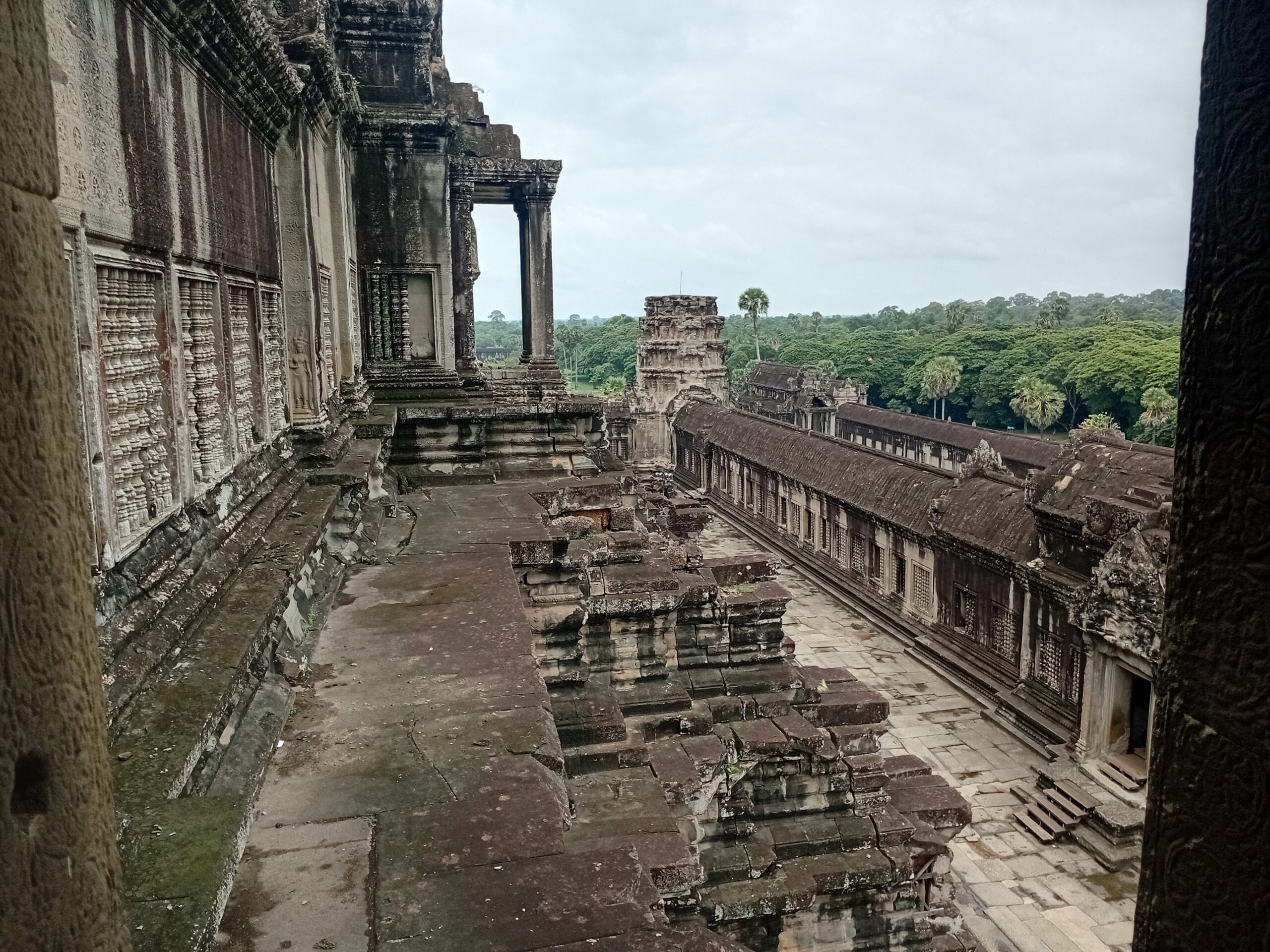
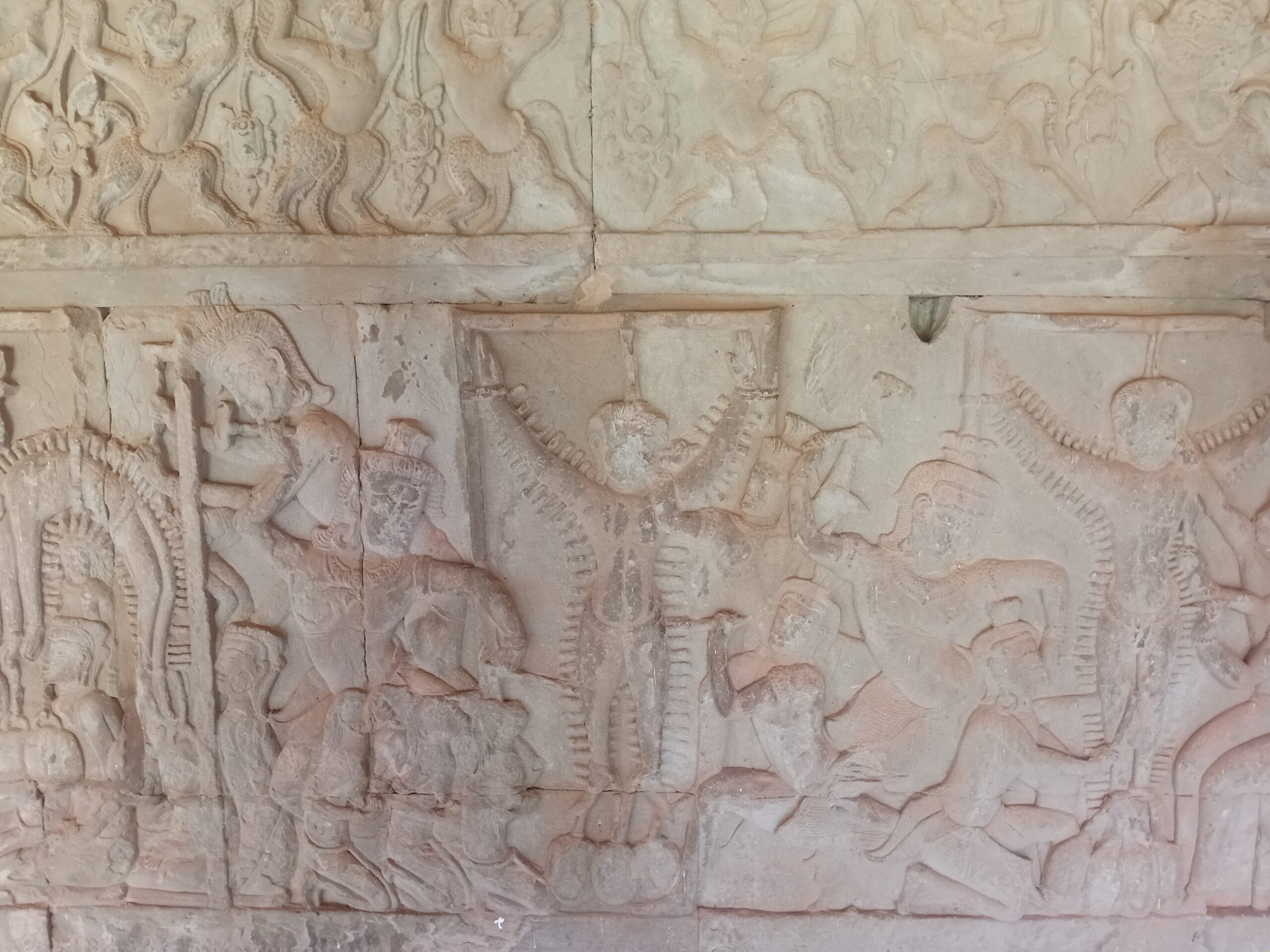
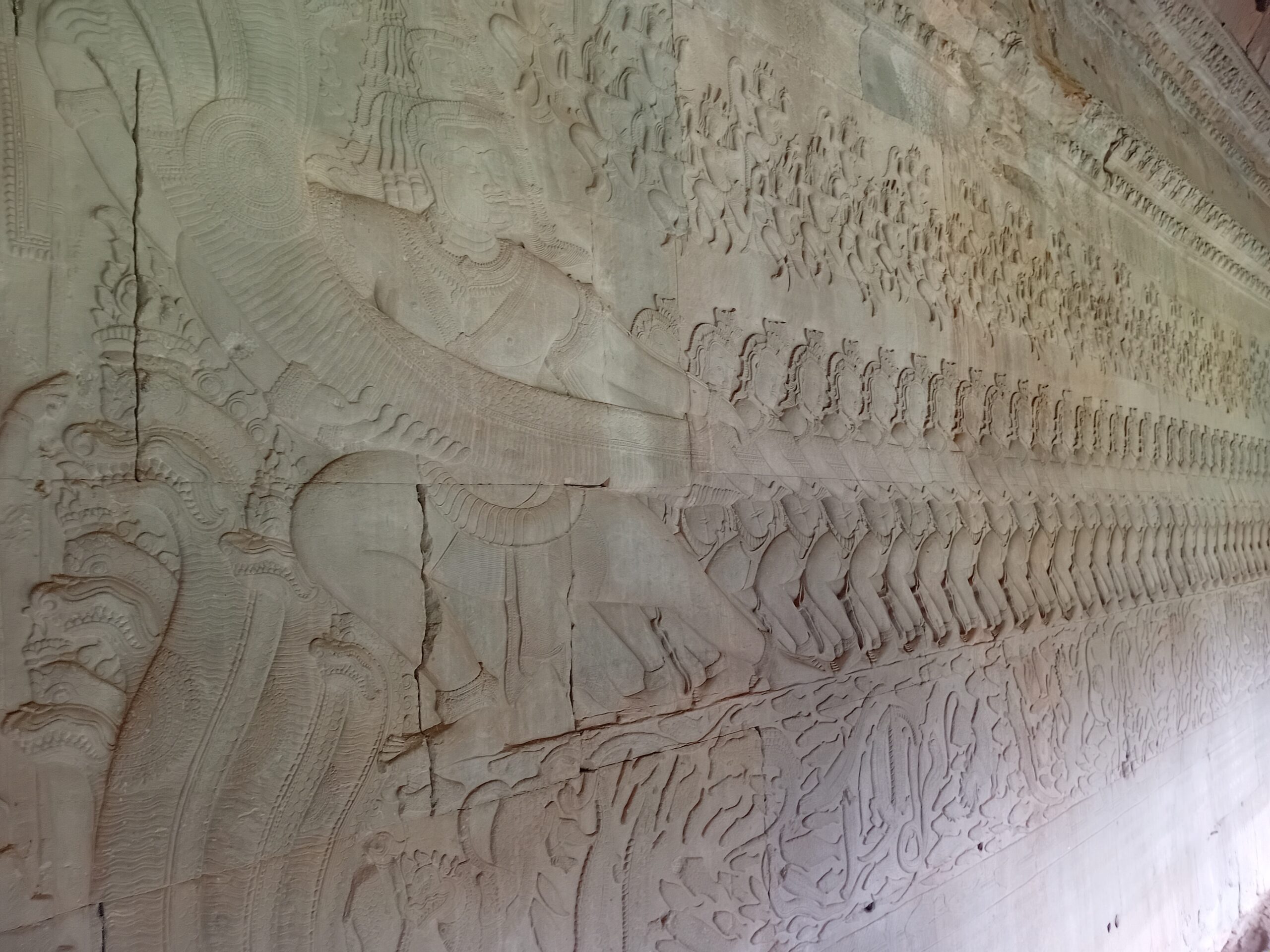
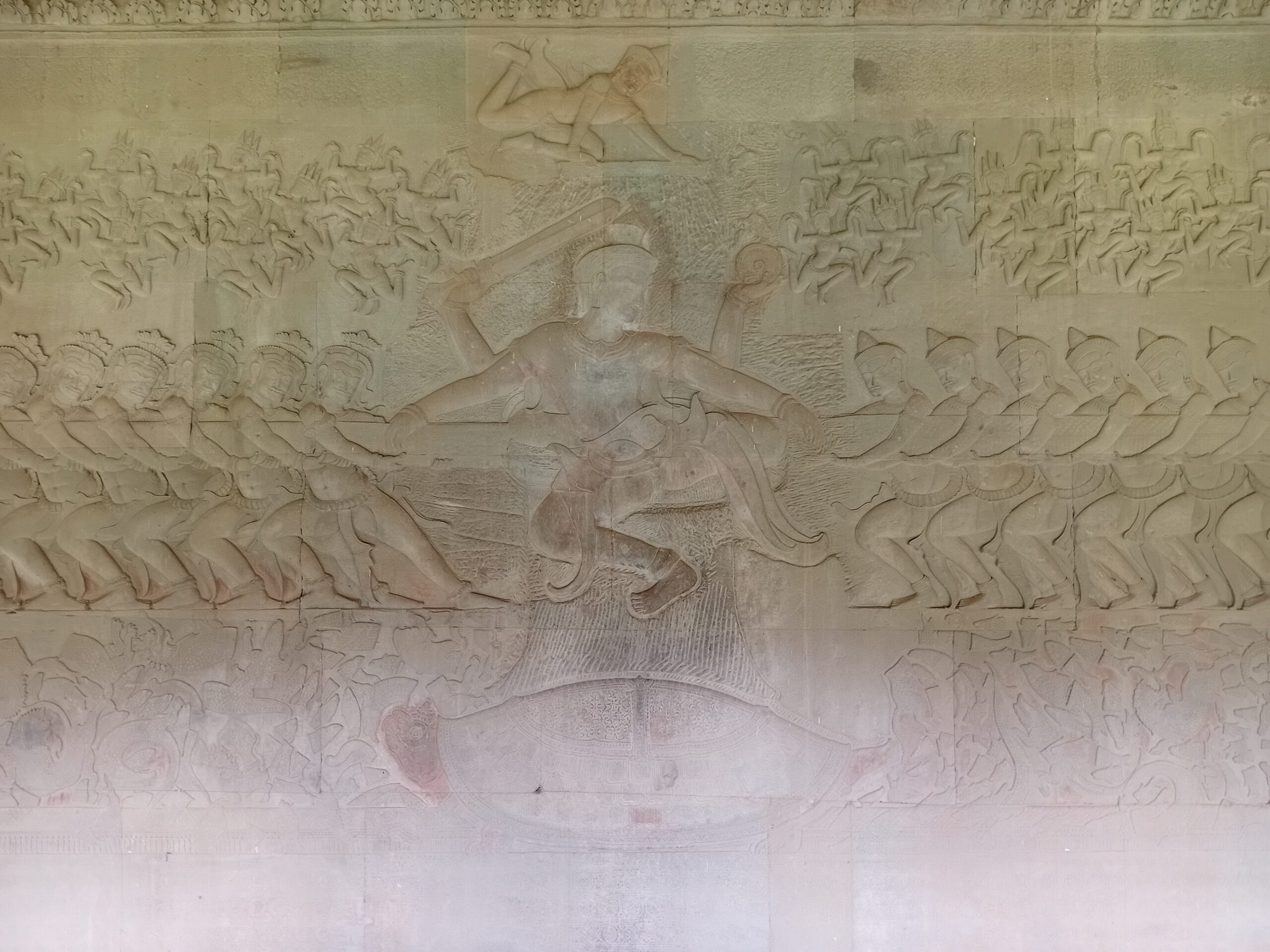
We made it to the central structure, but it wasn’t time to go inside yet. First we walked along the southern wall to see the mural depicting the Churning of the Sea of Milk. I first saw pictures of this in the Angkor National Museum, and now I could see the real thing. I was excited to be able to get close and see how each asura and deva was carved, and the serpent stretched across the piece.
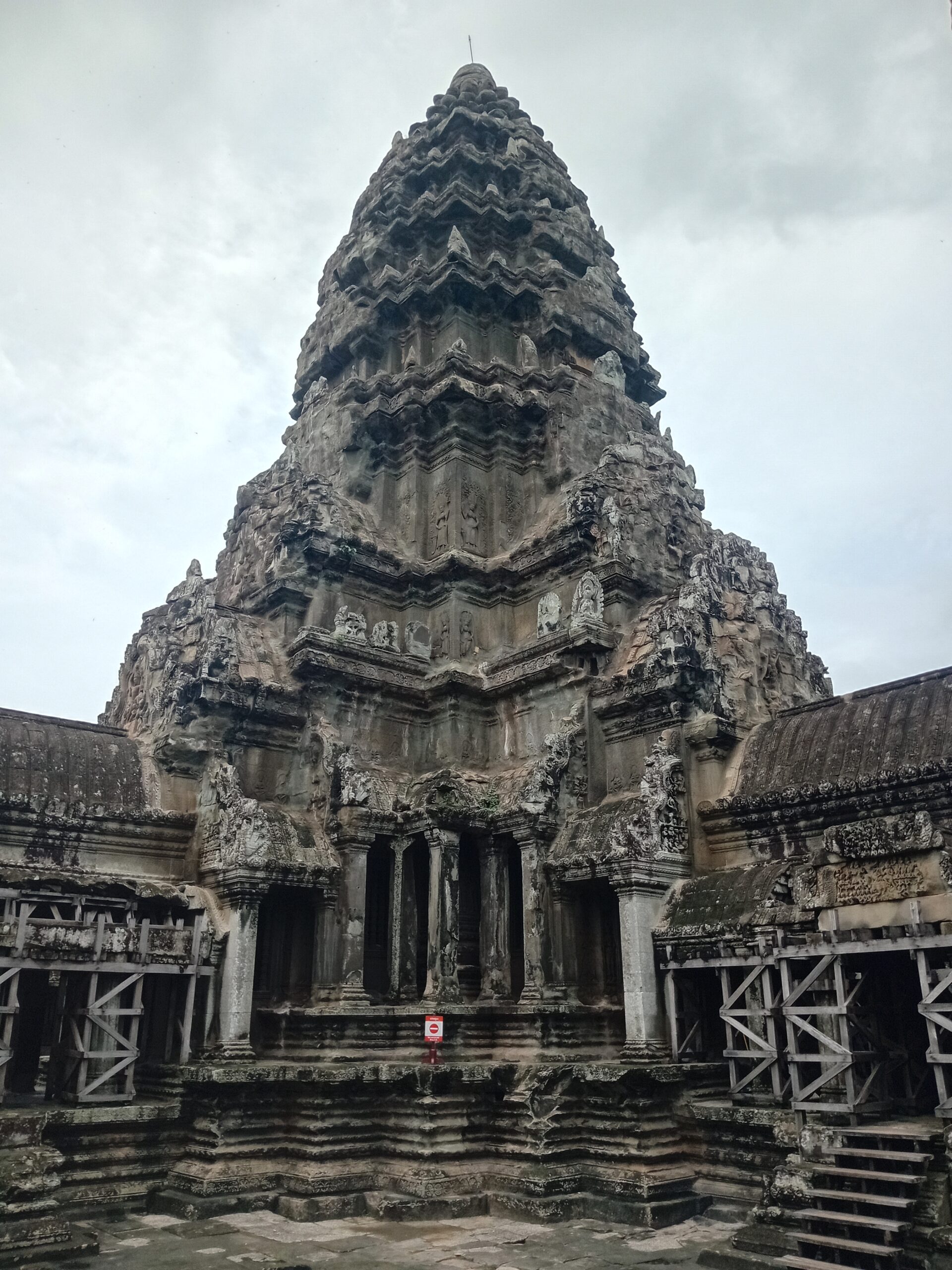
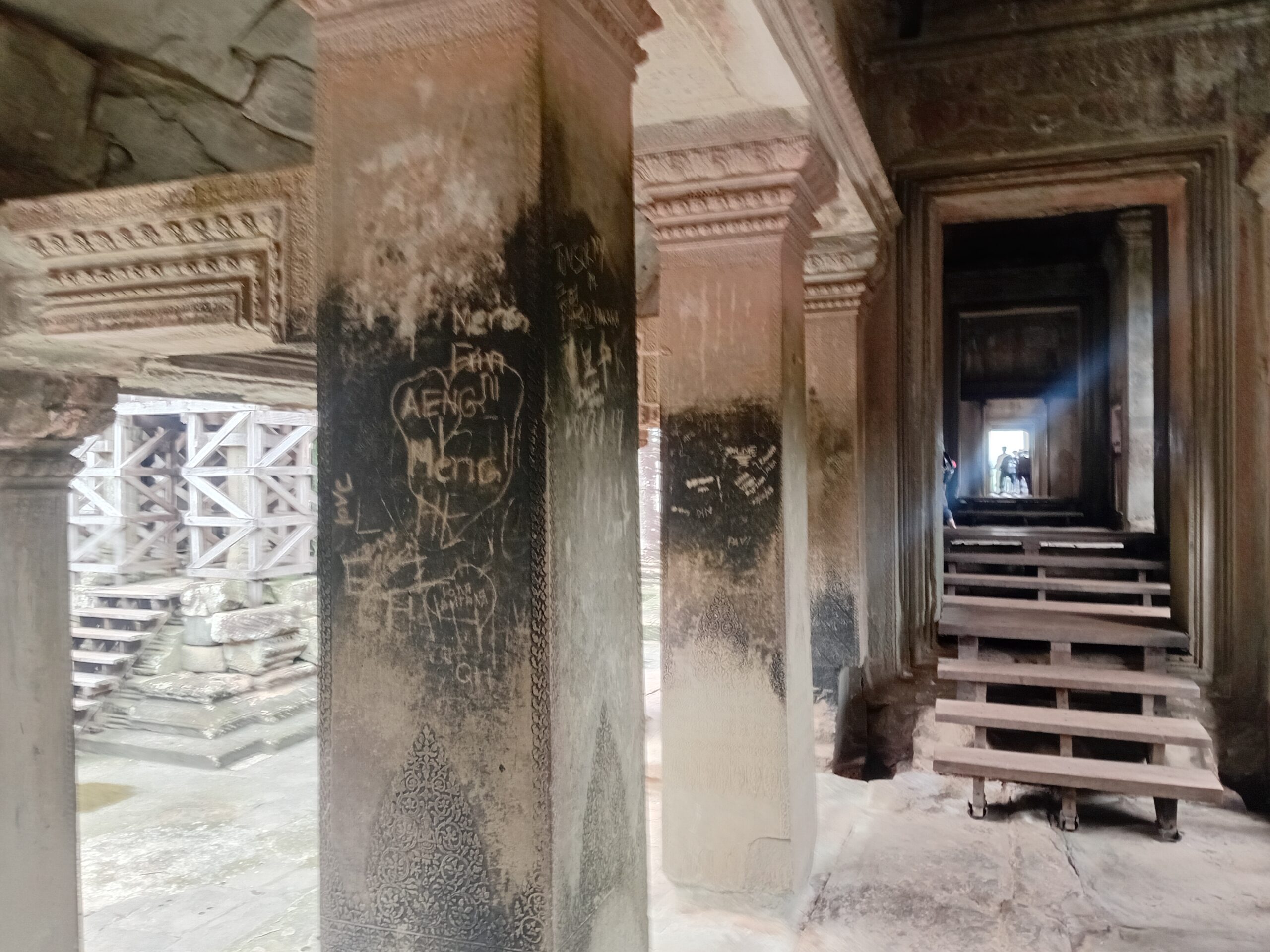
Here they also had a reconstruction of the wooden roofs that would have lined the temple back in the day. Today they have all rotted away, so this is the closest we will get how it would have really felt to walk these walls.
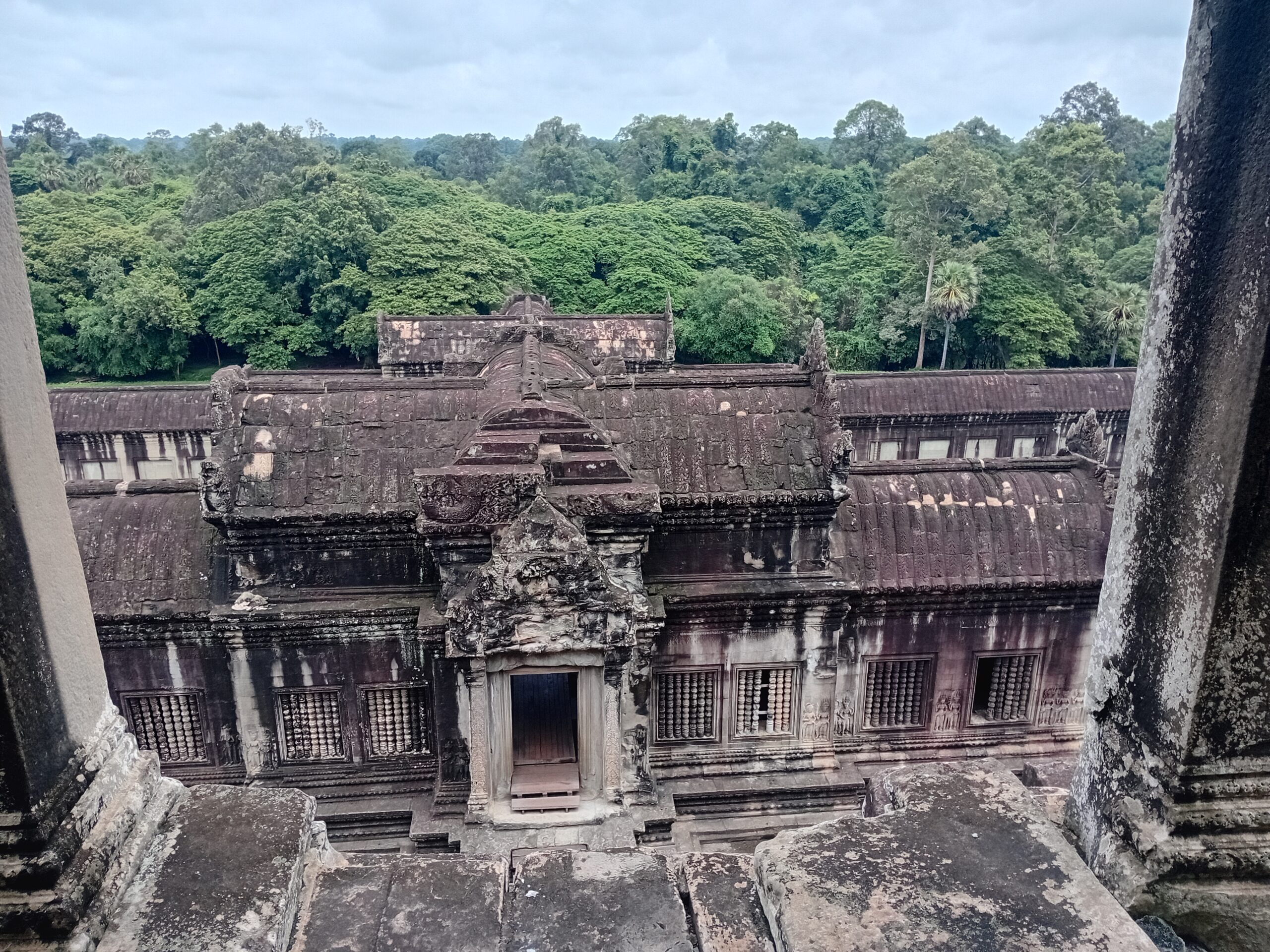
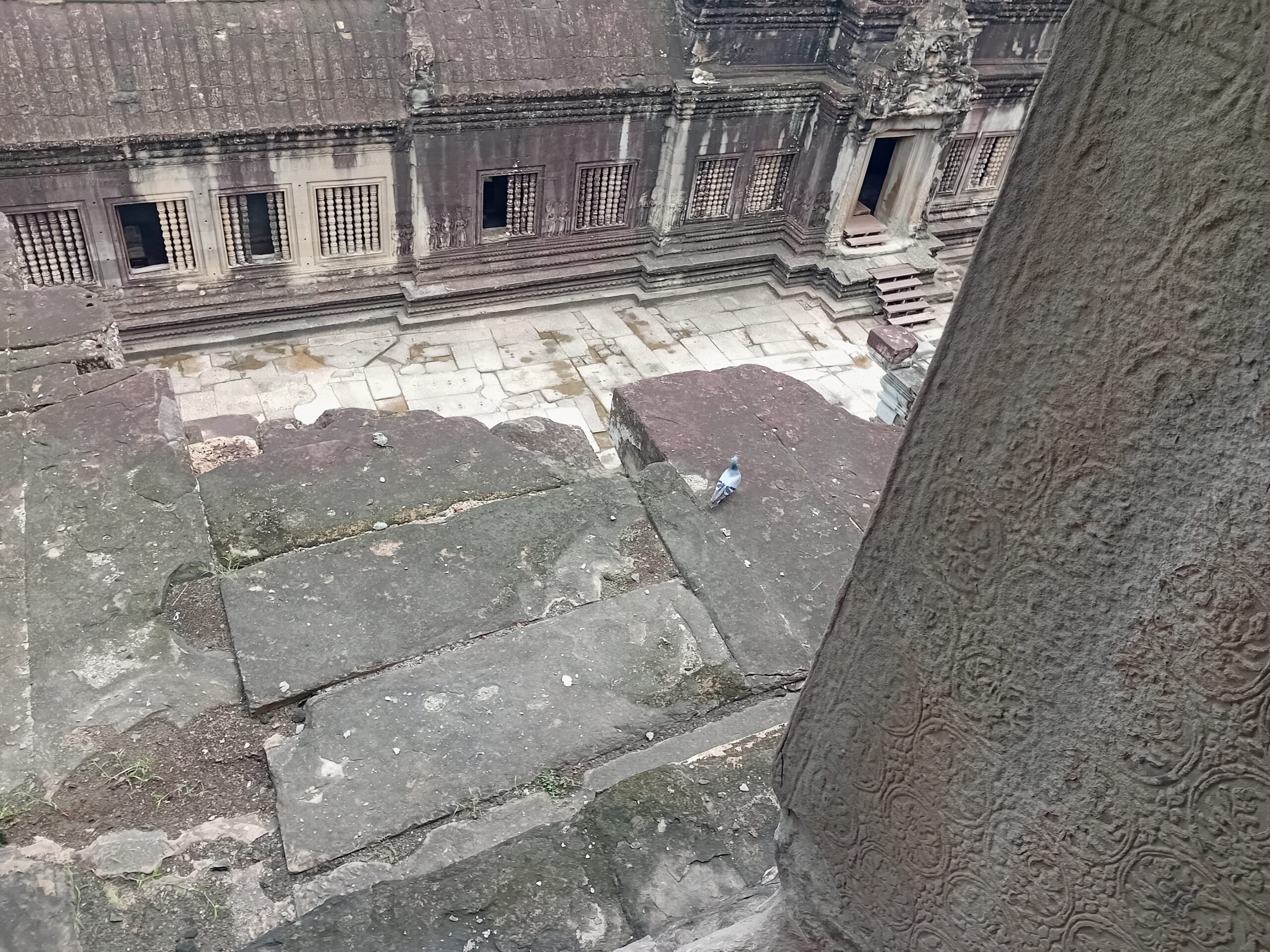
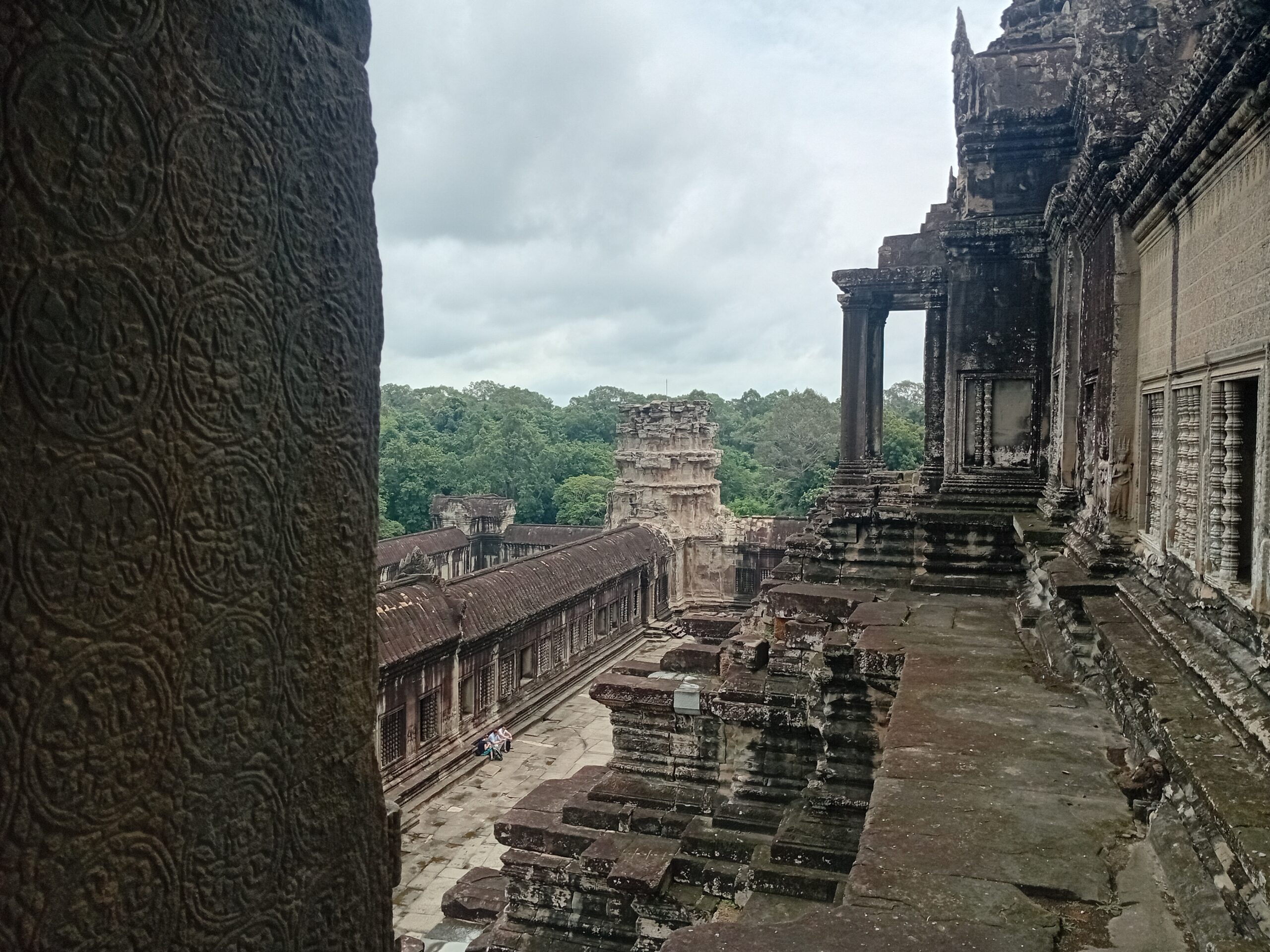
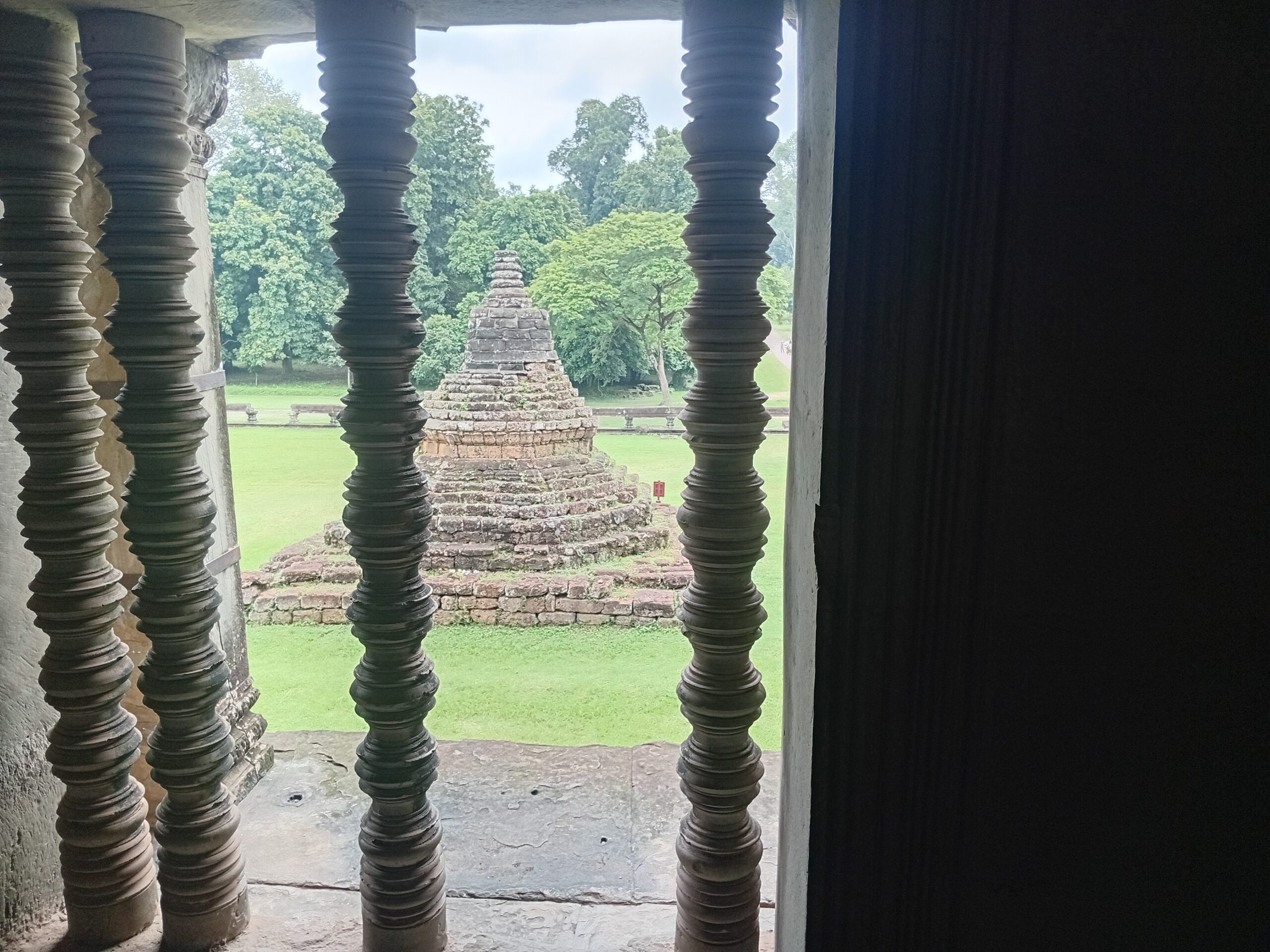
As we walked along I noticed a stupa outside, a common site in temples in South East Asia. This one was as old as the rest of the temple, showing how far back this tradition goes in Khmer culture.
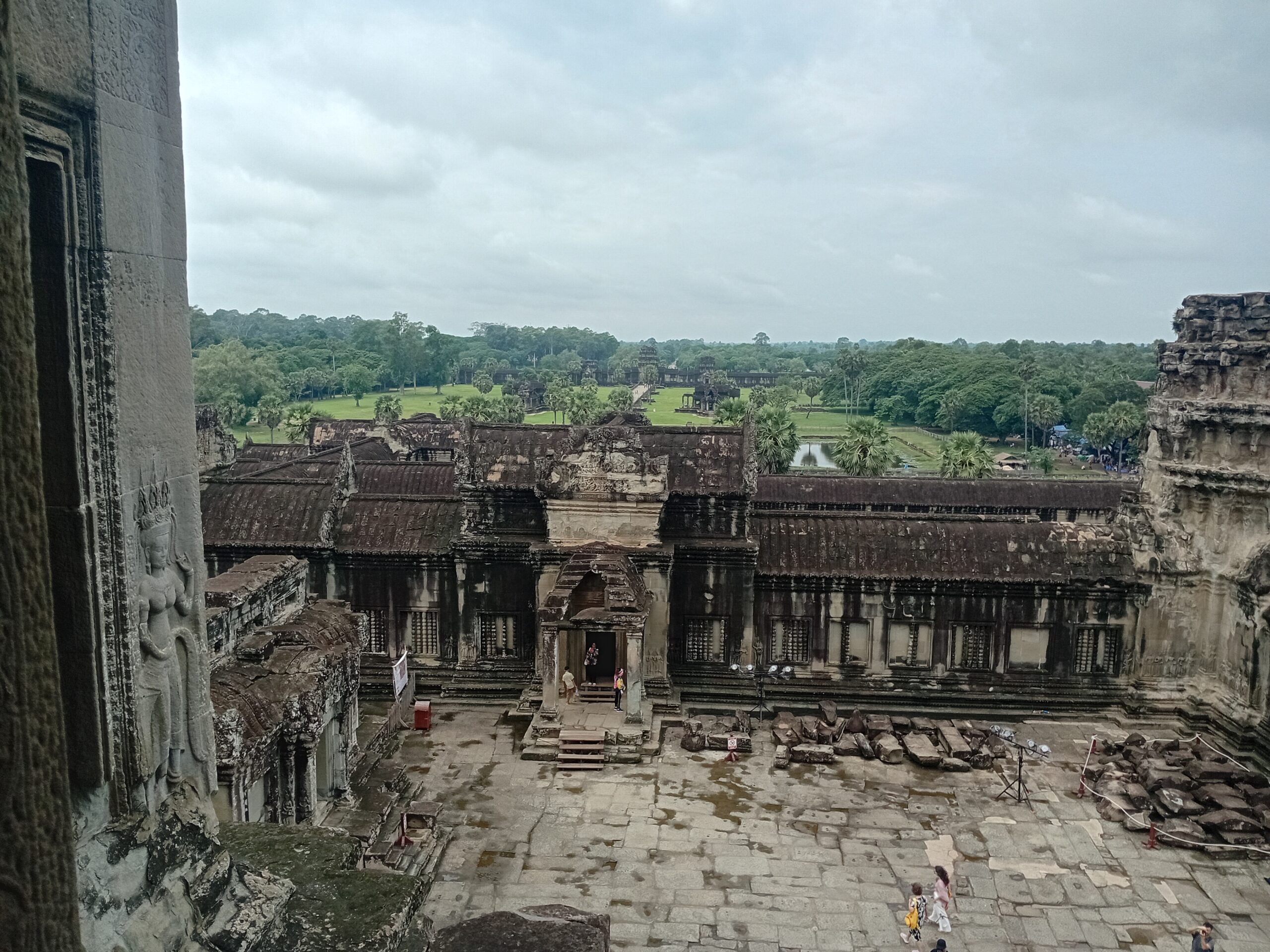
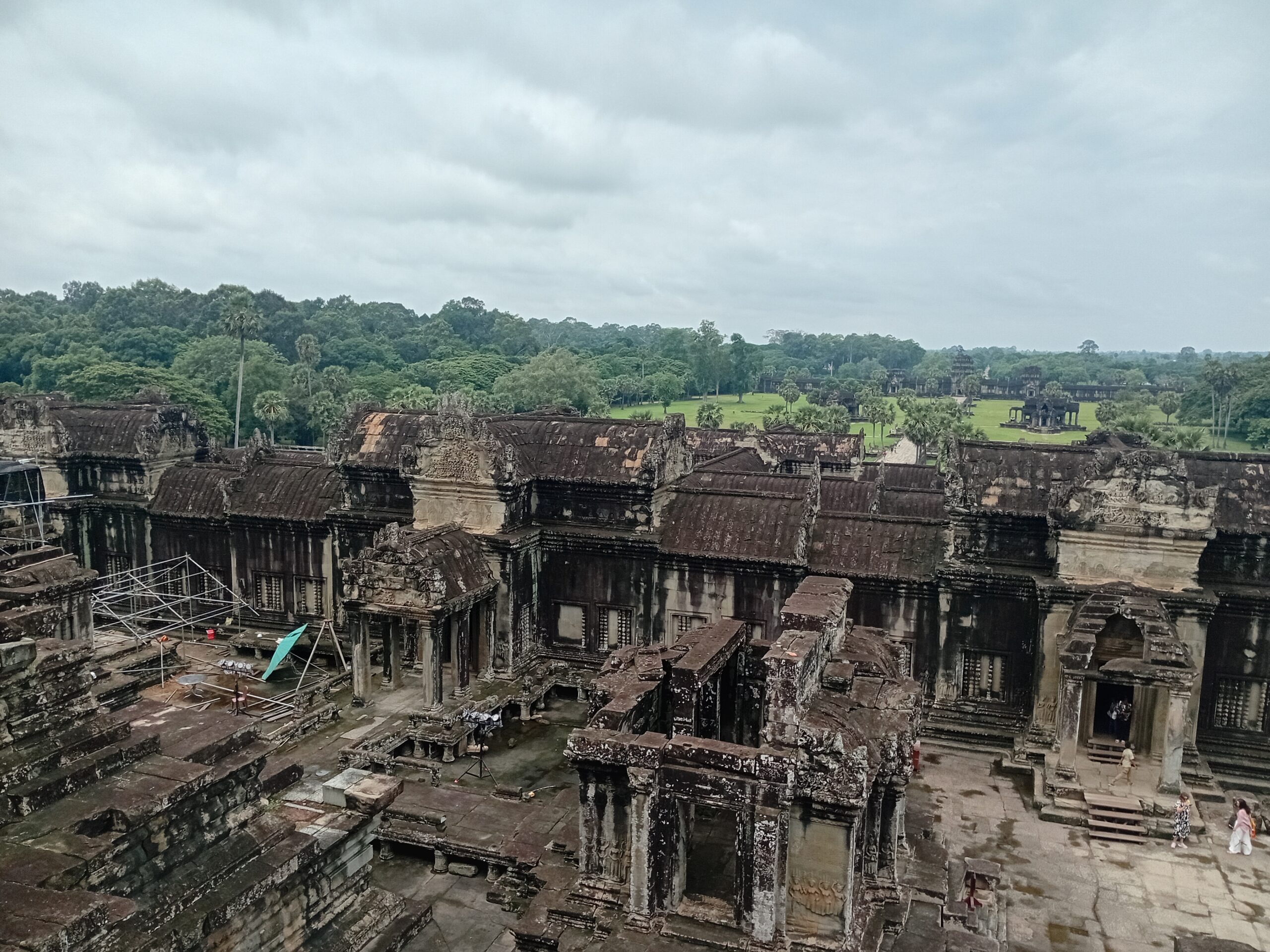
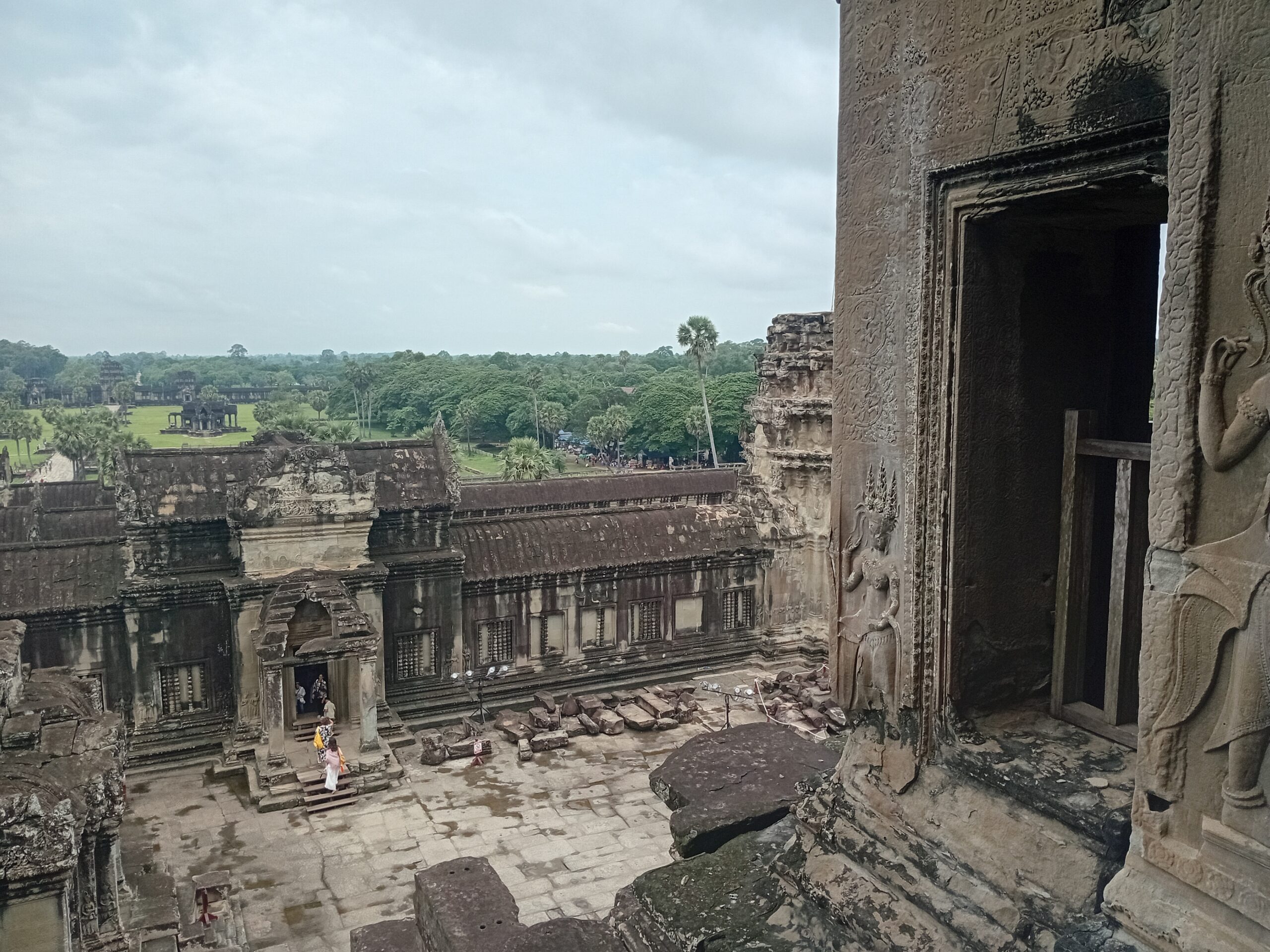
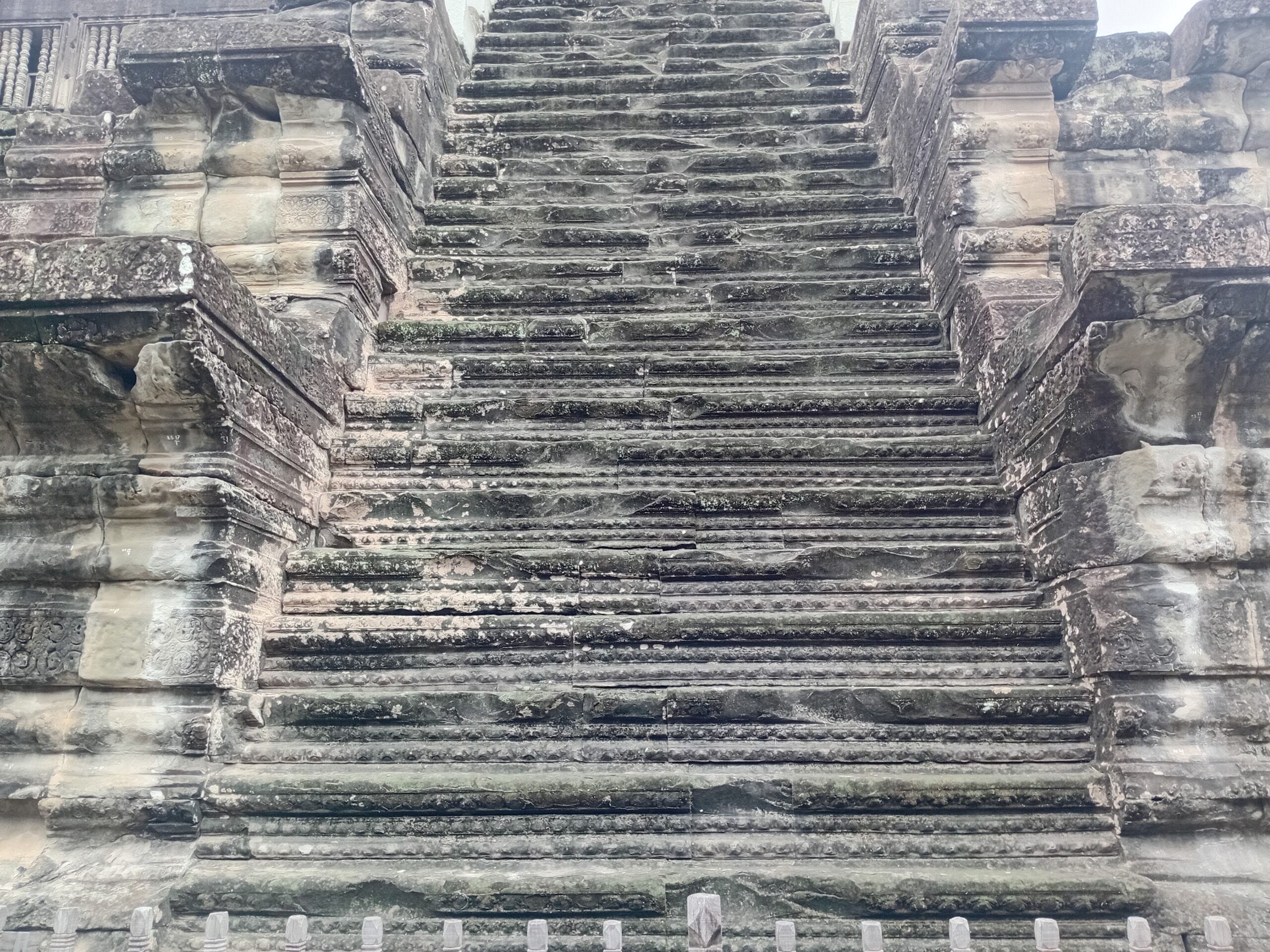
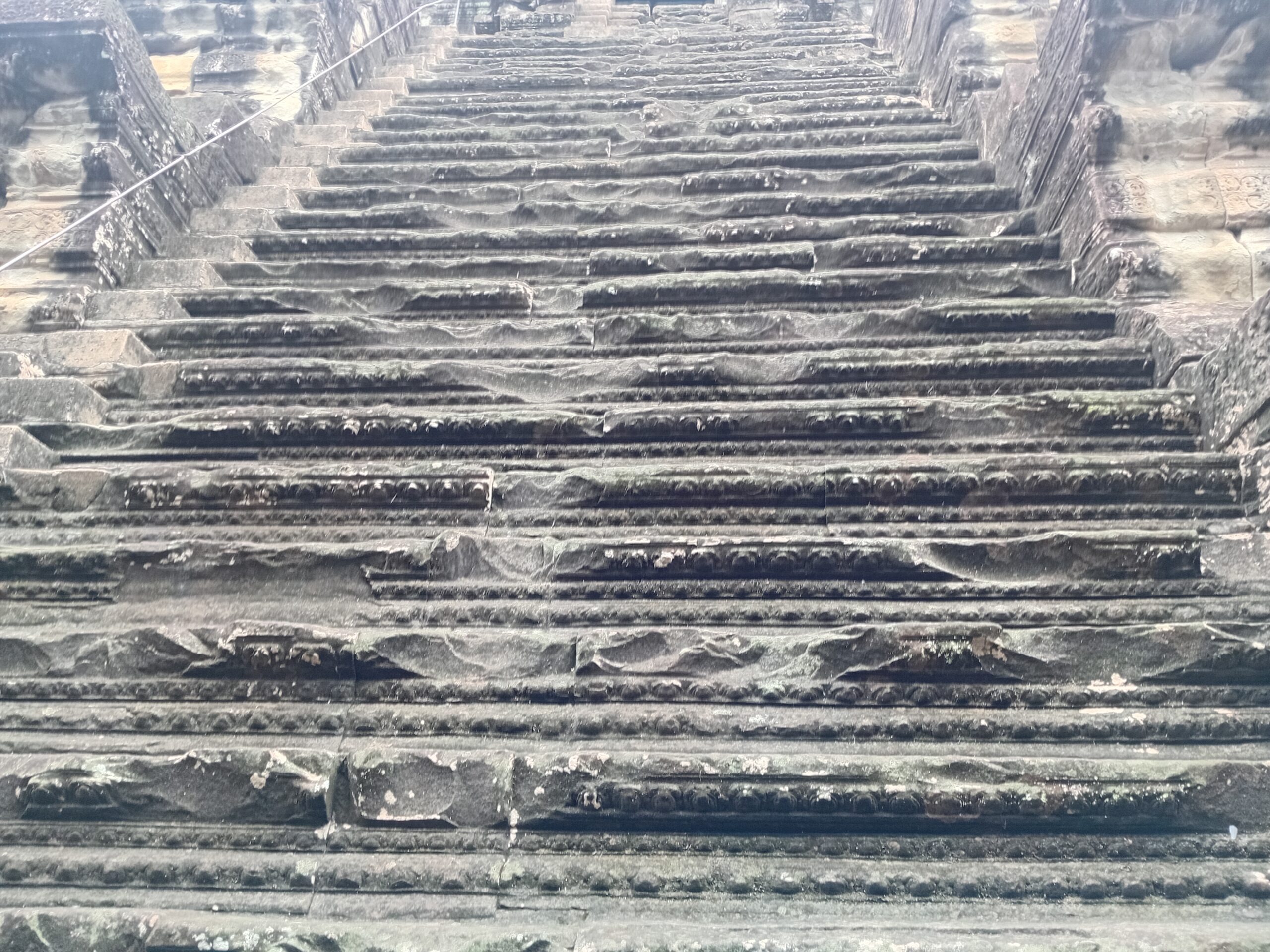
It was finally time to enter the central structure. Here I was told to climb the steps up to the top. I wasn’t just going inside Angkor Wat, I was climbing to the top. For this part, the guides remain at the bottom. It’s nice to be able to explore alone, but it had the unfortunate side effect of allowing people to graffiti some parts of the temple.
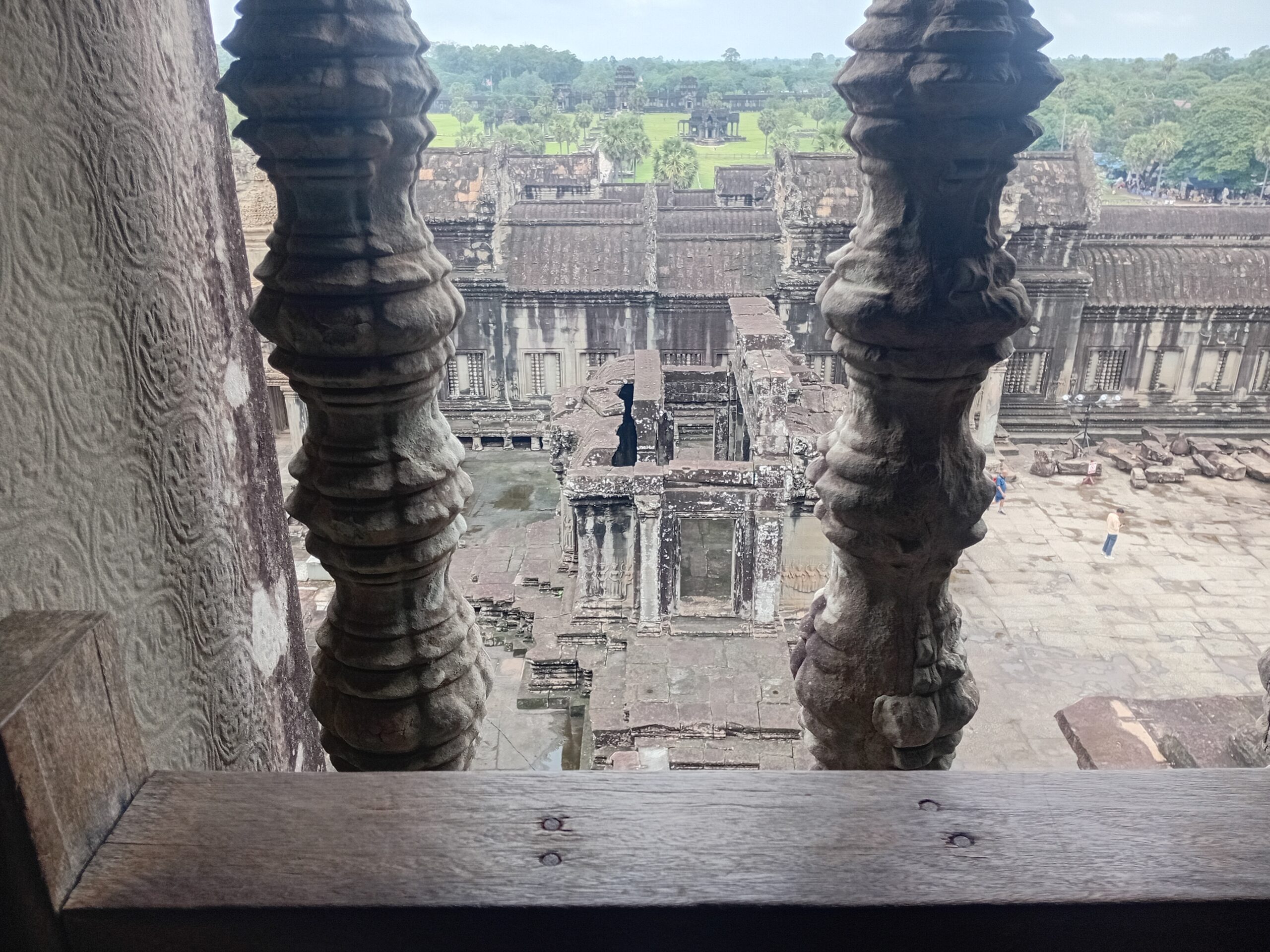
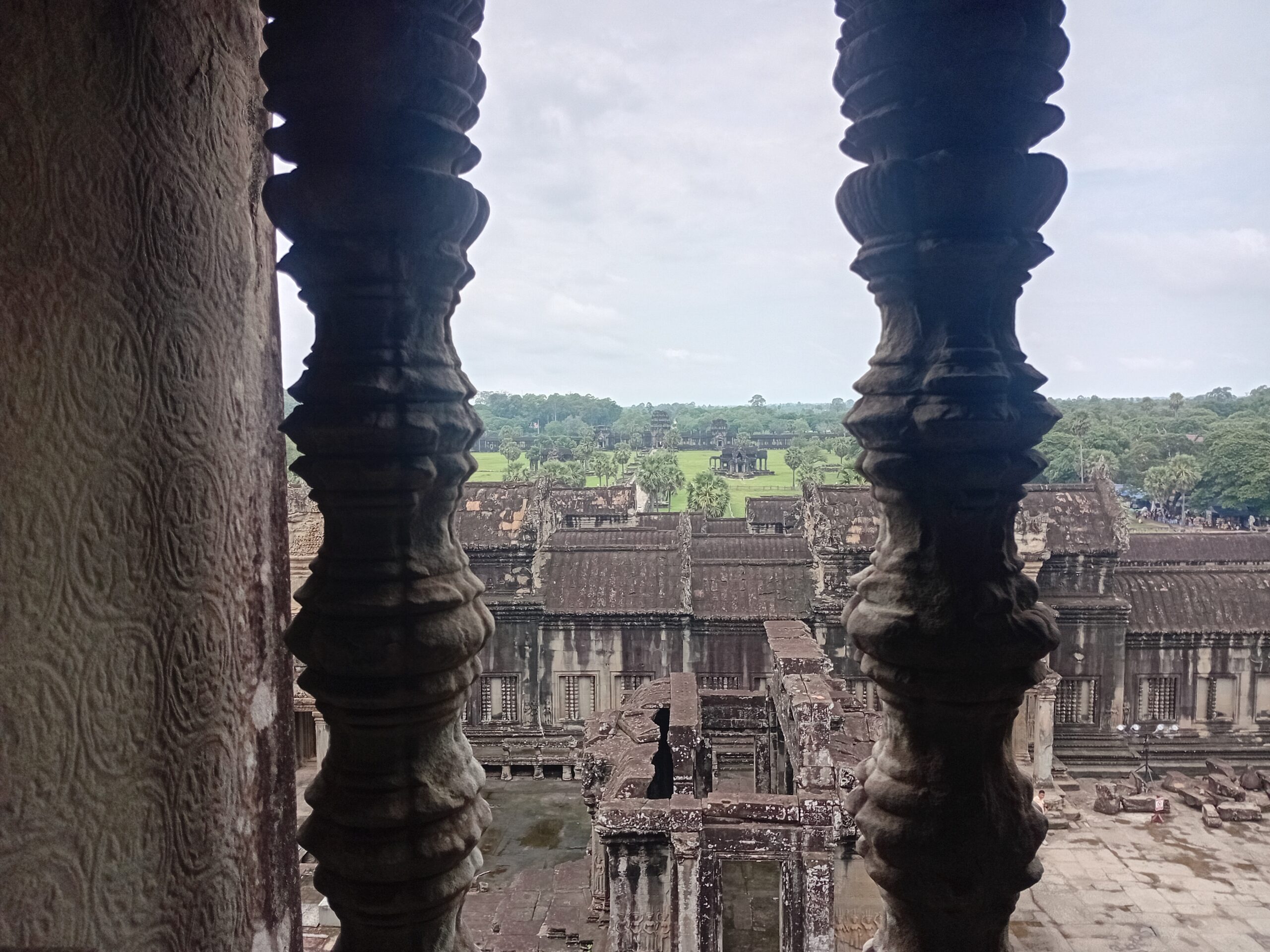
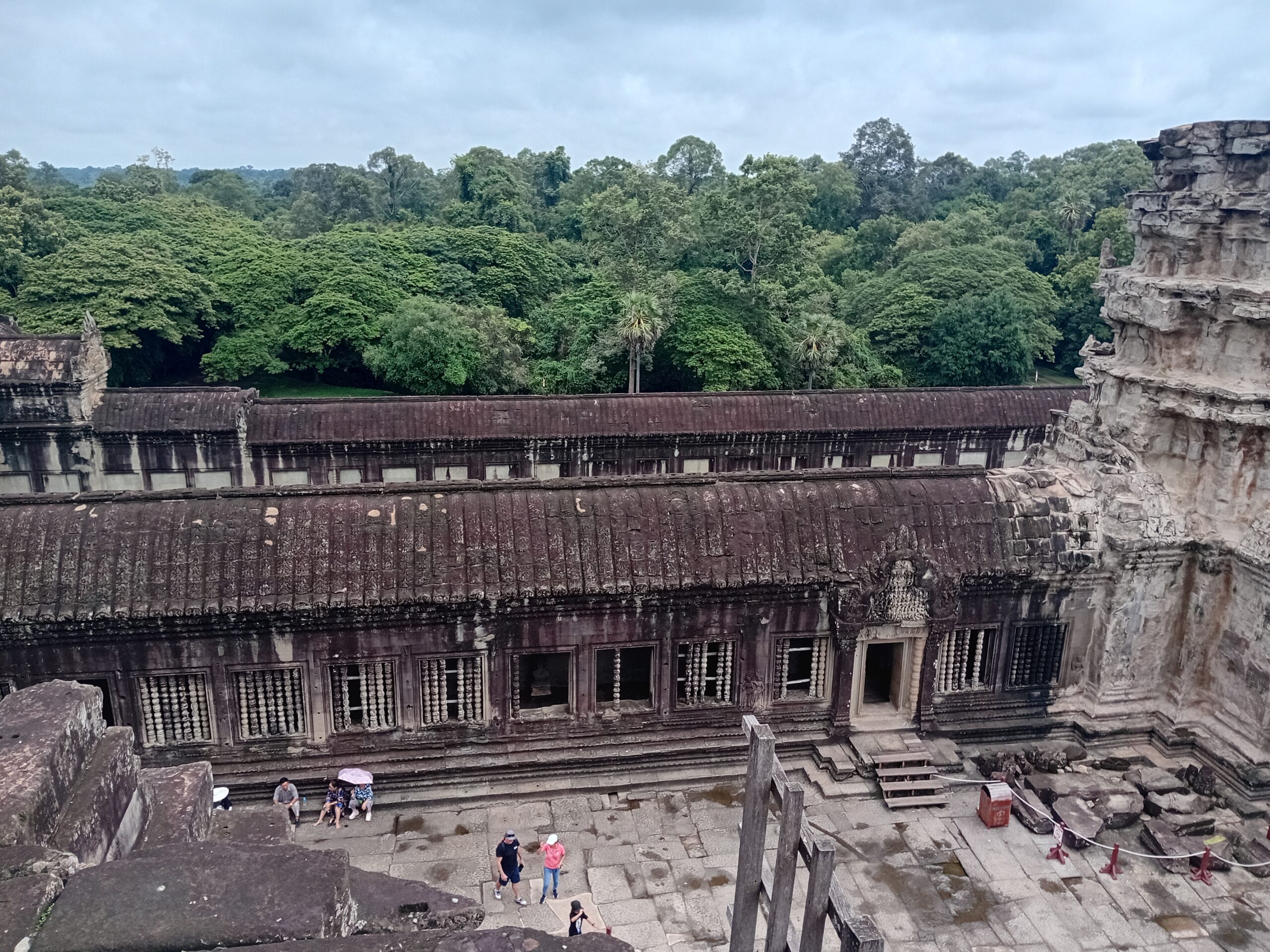
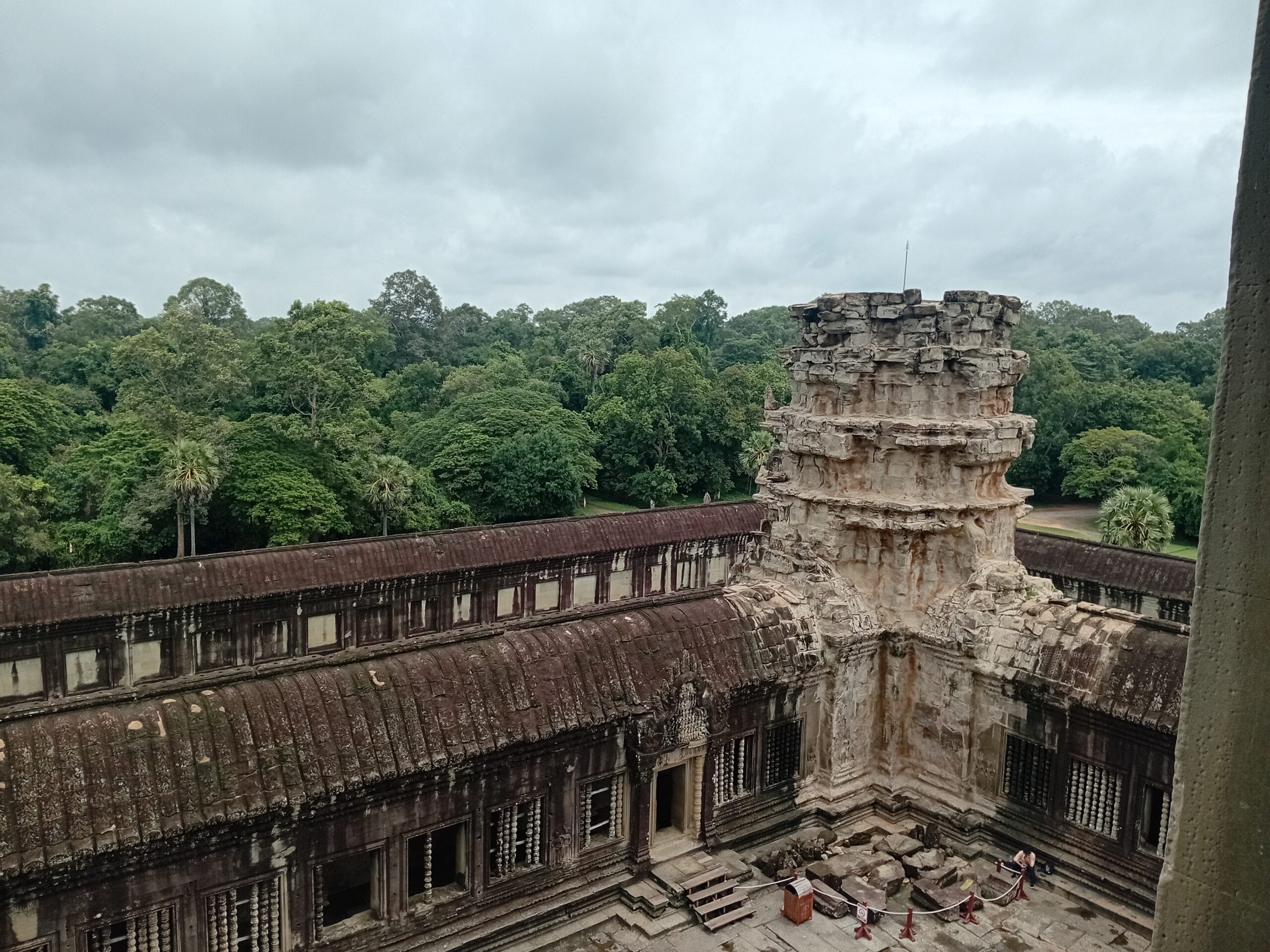
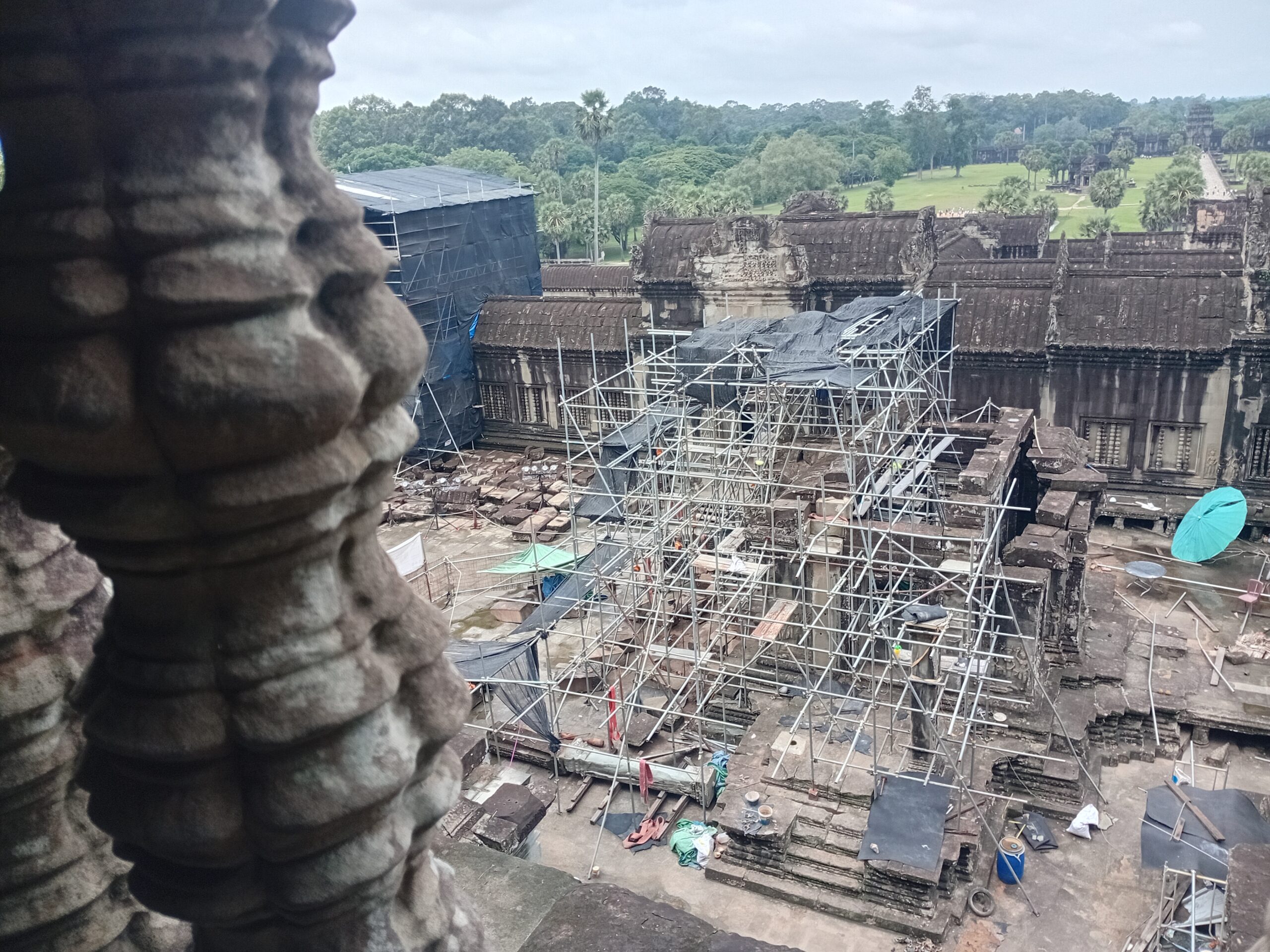
From this vantage point I was able to get some great views of the courtyard and the forest that surrounded the temple. I could also see some parts of the temple that were under restoration. They were inaccessible from the ground, but it was a glimpse into the effort people put in to maintaining this place.
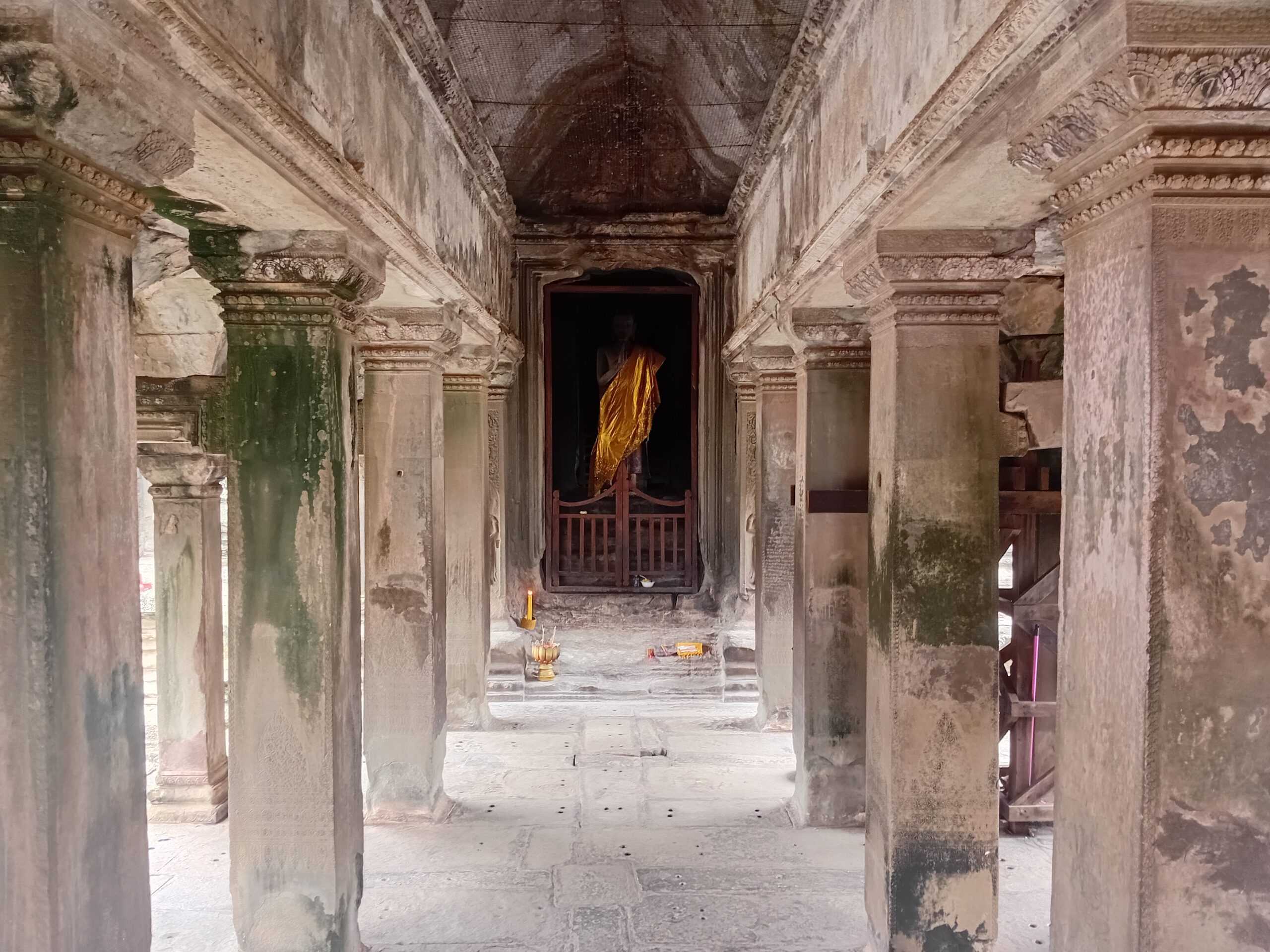
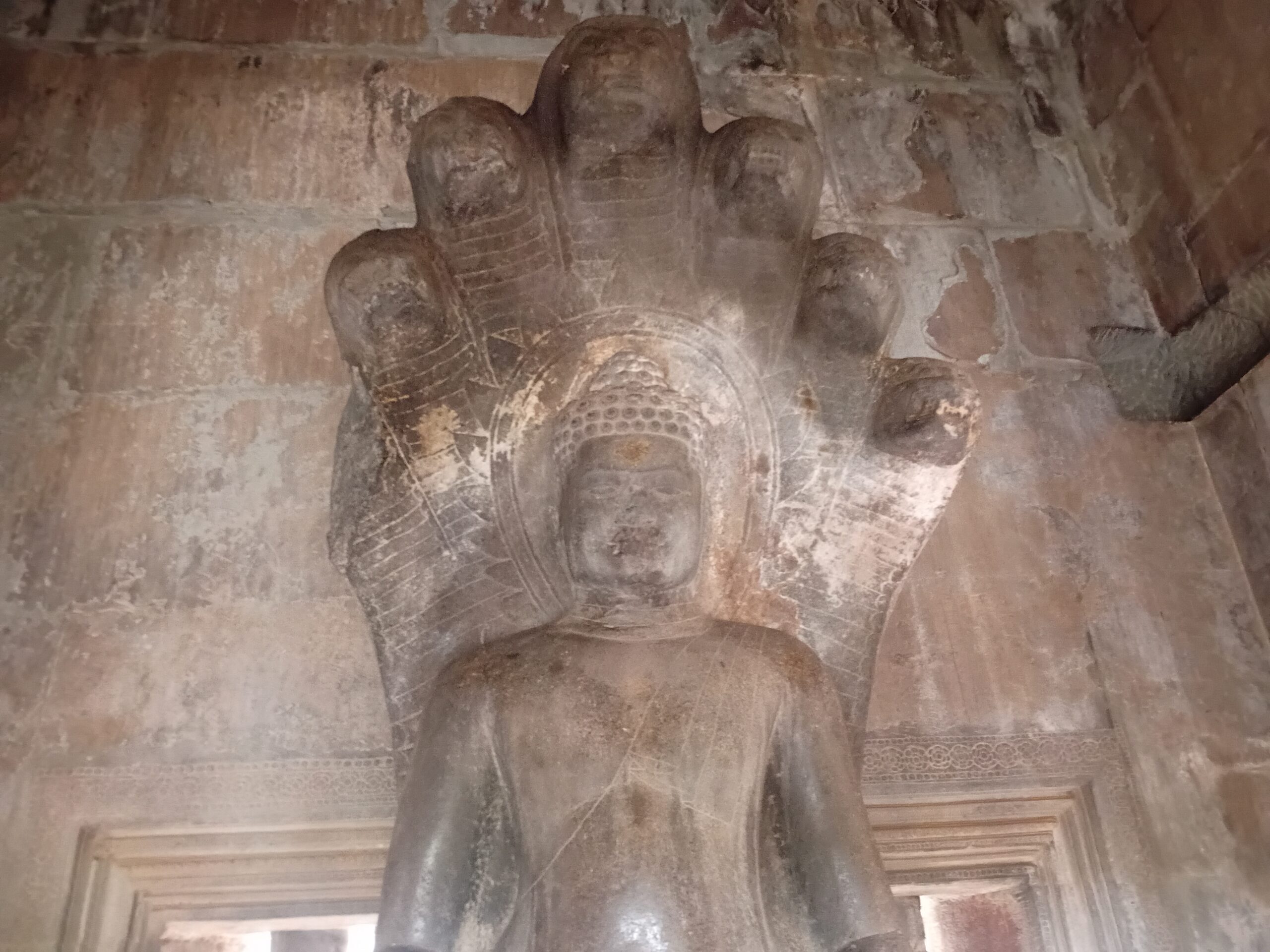
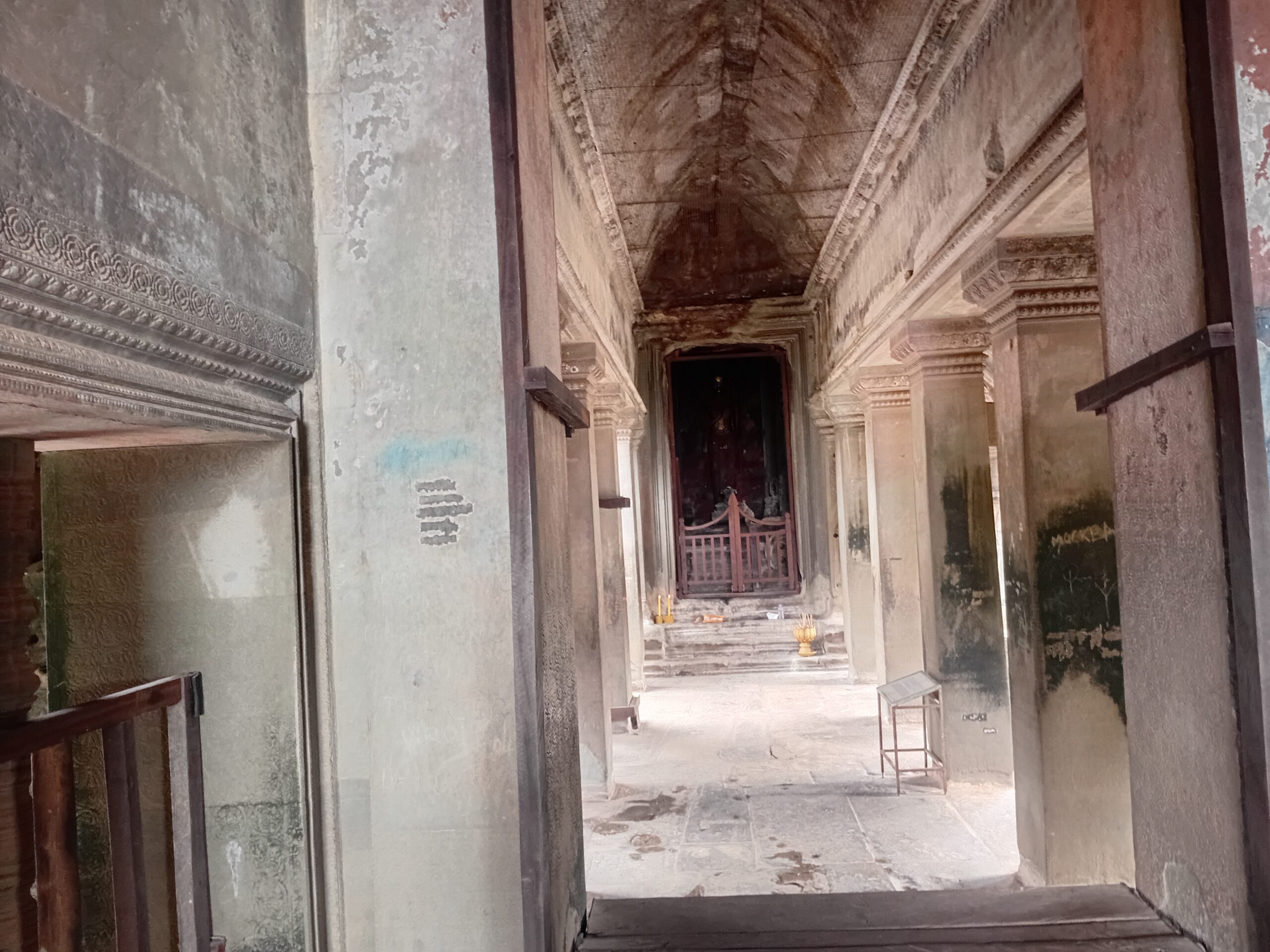
Atop the temple were a few chambers with Buddhist statues. The temple had been converted from a Hindu temple to a Buddhist temple, which is why the Ta Reach, among other statues, had been moved to the outside. What surprised me most was that these shrines were still being used. People still come to Angkor Wat to worship and pray.
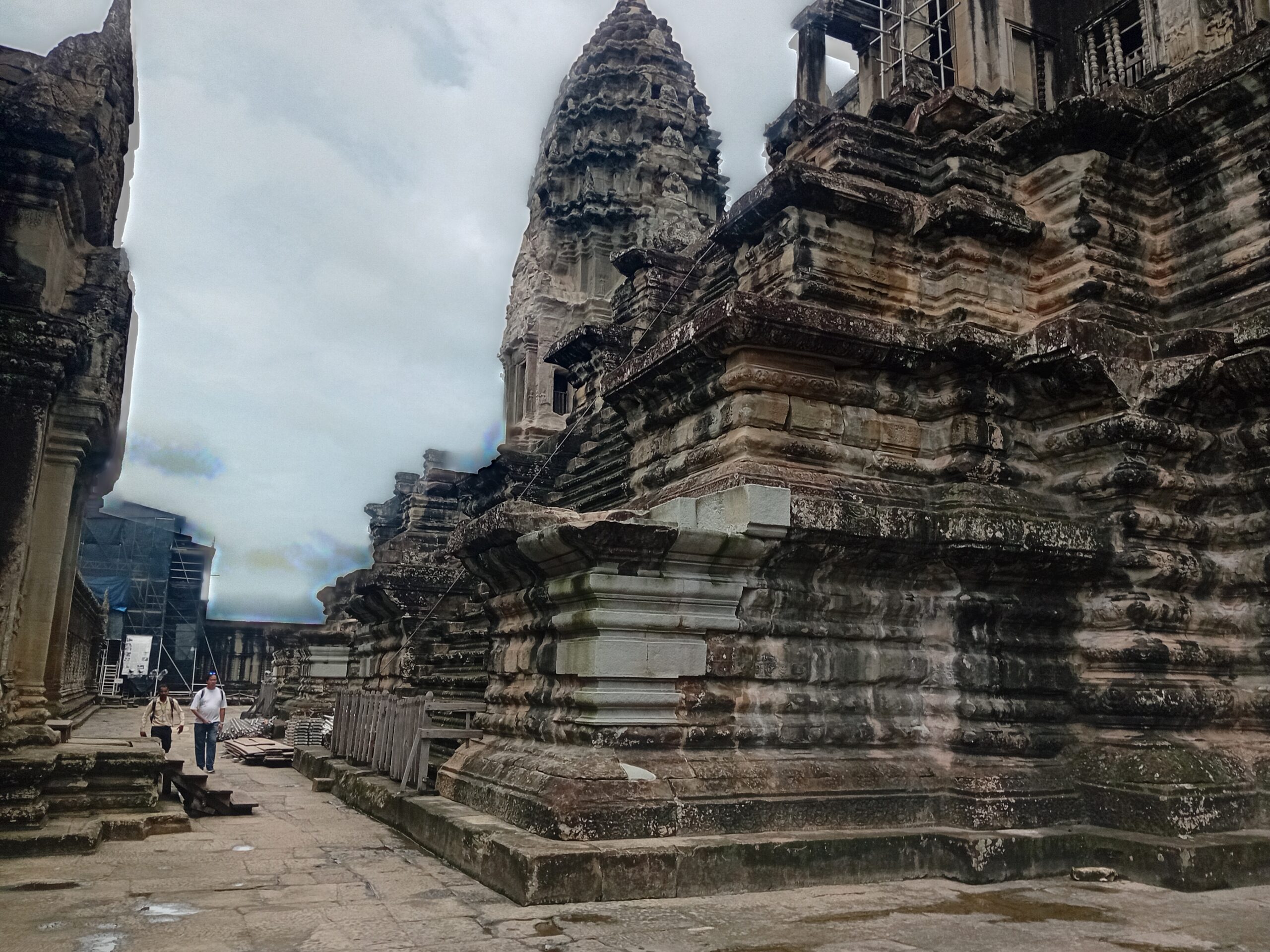
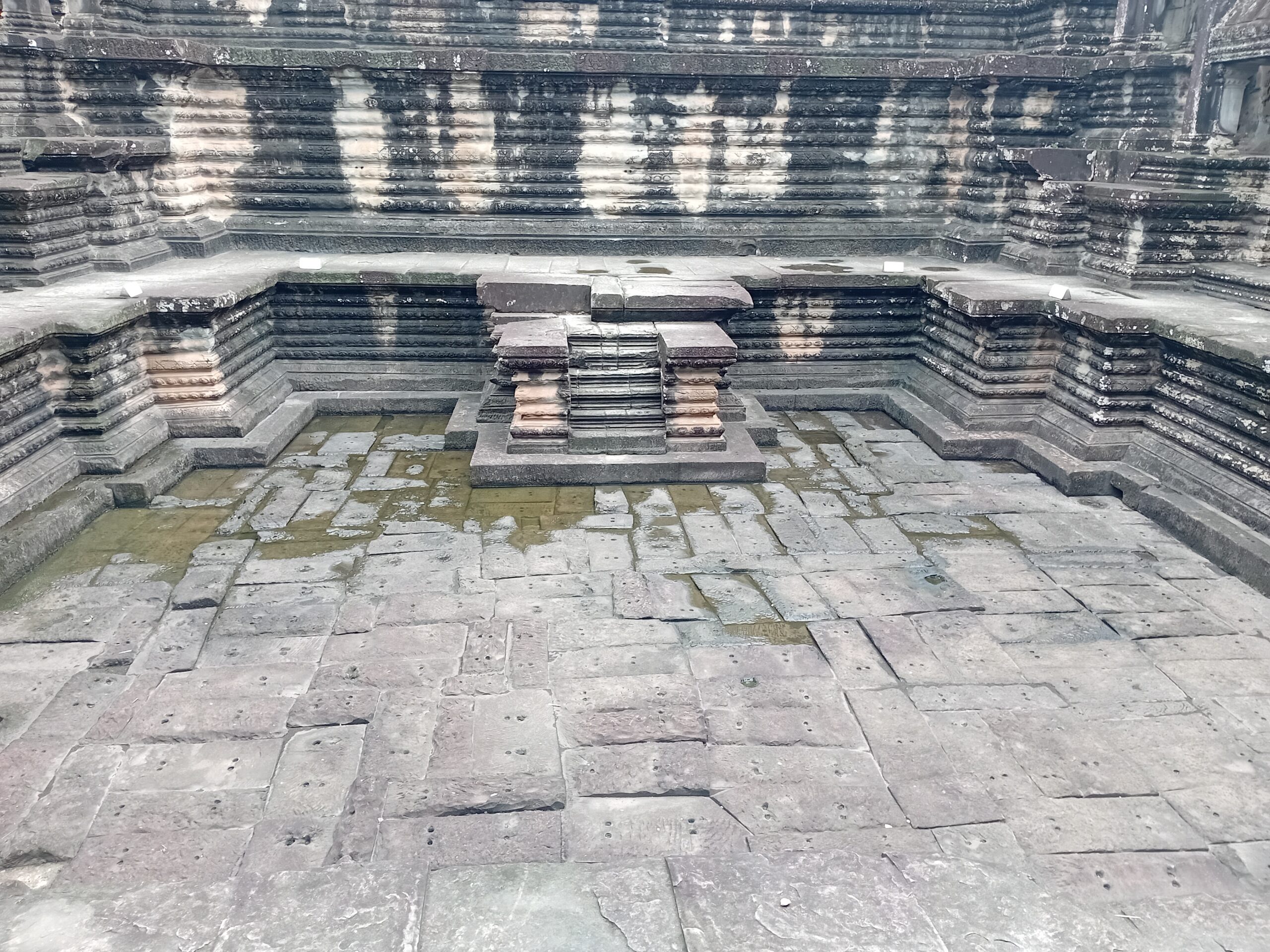
After this it was time to make our way back to the road. Since it was sunny by this point, we stopped by the pool in the courtyard and were able to get a better view of the reflection. Subconsciously I said my goodbyes and followed my guide back to our tuk tuk.
Not an End, but a Beginning
This wasn’t the end of the day, however. My guide would go on to take me to Angkor Thom, the ancient city nearby, as well as another couple of temples. These were the areas that required a guide, so it made sense to visit them on that day. There are other areas people can visit without a guide, so I planned to visit these on the other days my pass would be valid.
I had said goodbye to Angkor Wat, but as it turns out this wouldn’t be my last time seeing it. The equinox was close by, and on this day it would be possible to see the sun rise directly over the central towers of Angkor Wat. After finding this out, I planned to return and see it.
This may not even be the last time I visit Siem Reap. Despite exploring the area extensively, there are still many ruins and temples I have yet to see. Perhaps one day I will return and try to see them all.
Angkor Wat was a significant part of my travels. It was a goal I had set myself a long time ago, and now I have finally achieved it. I have several goals I have yet to fulfill, but now I know time is on my side. There is no need to rush. I will get there eventually.