

After exploring Angkor Wat our day was far from over. The ancient temple is only a small part of a huge ancient city that stretched over the land and I wanted to explore more of it. I would need a guide to explore Angkor Thom as well, so we had planned to also go into the city to the north and explore more of the temples and ruins in the area.
Although Angkor Wat had been the dream, being here and learning that there was a whole lot more to explore meant I now had other goals. I had paid my guide to take me around some of these places, so we boarded the tuk-tuk once again and were on our way.
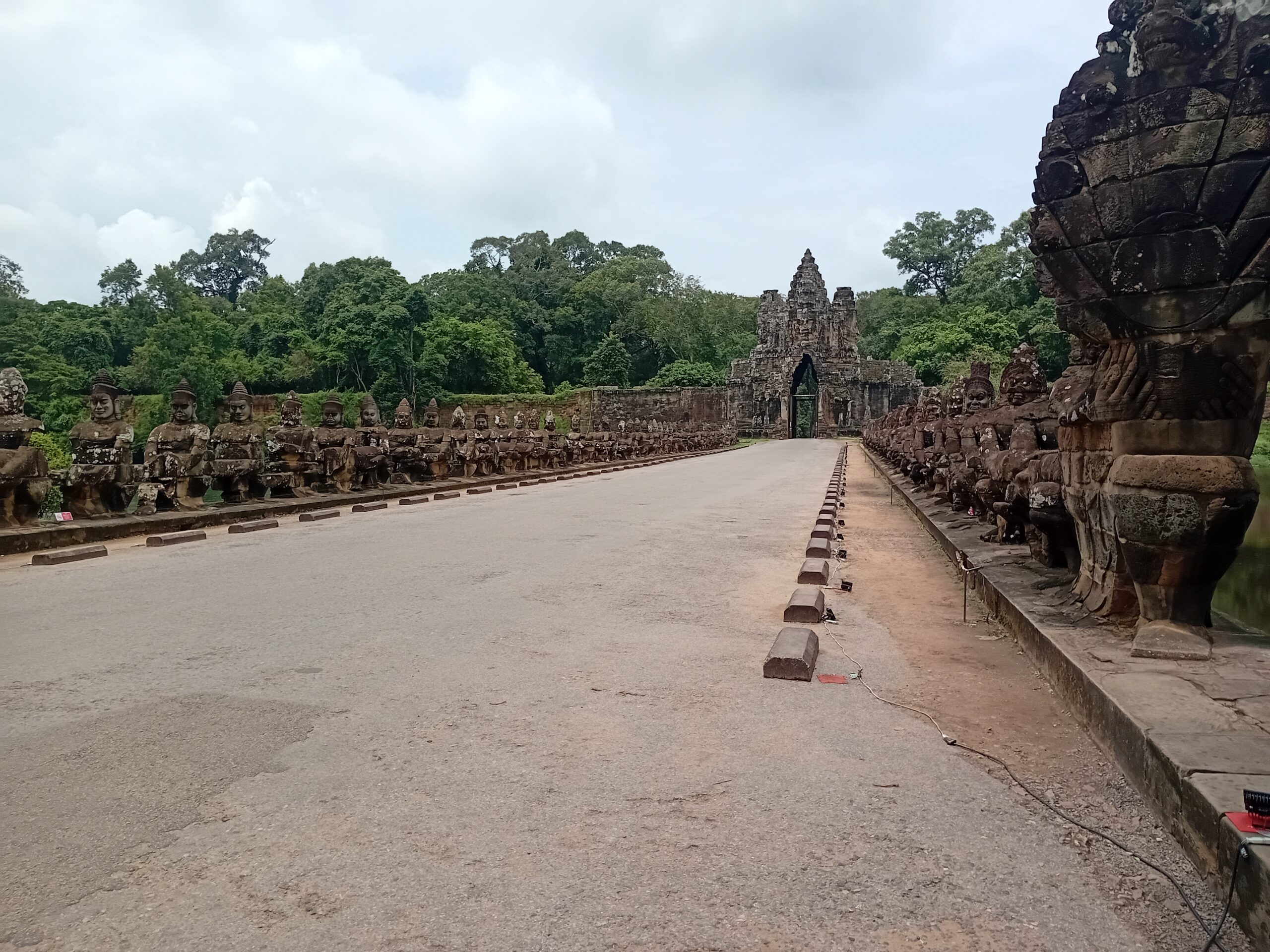
The tuk-tuk took us to the north, across the bridge to the South Gate. My guide told me this is the most well preserved entrance to the city. I saw that the bridge was lined with asuras on one side and devas on the other. They hold a snake, the naga King Vasuki, which I recognised as another depiction of the Churning of the Sea of Milk.
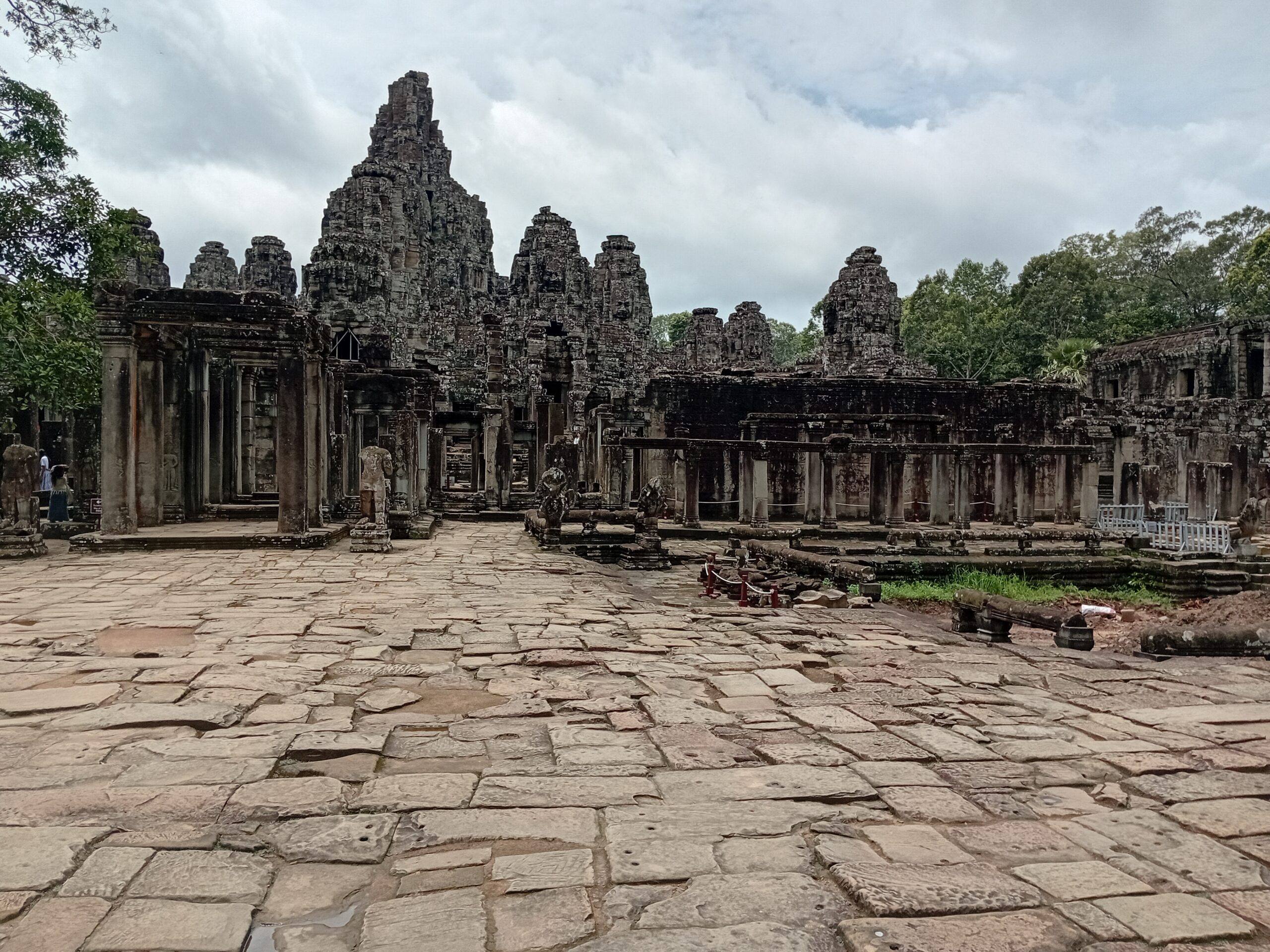

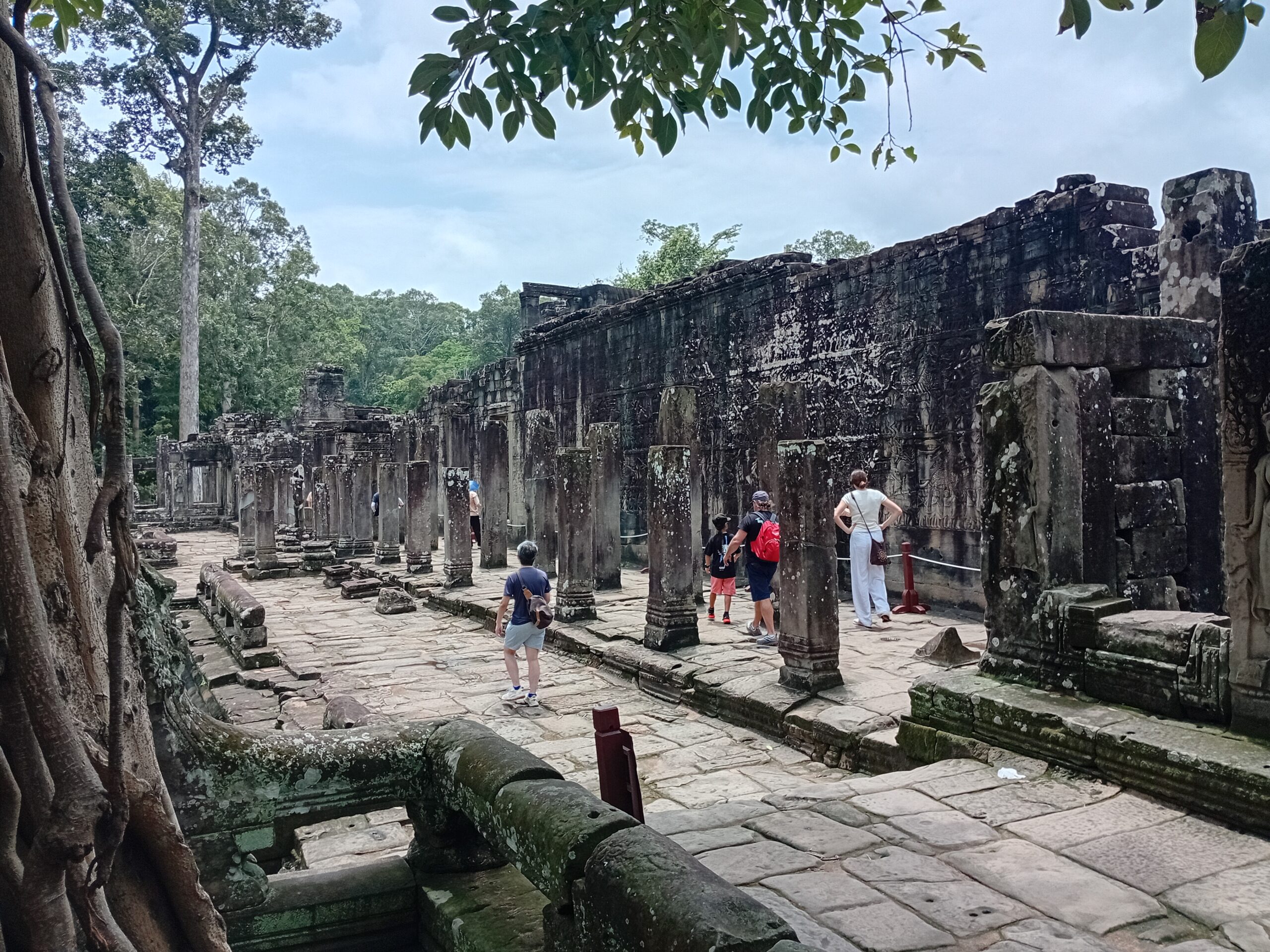
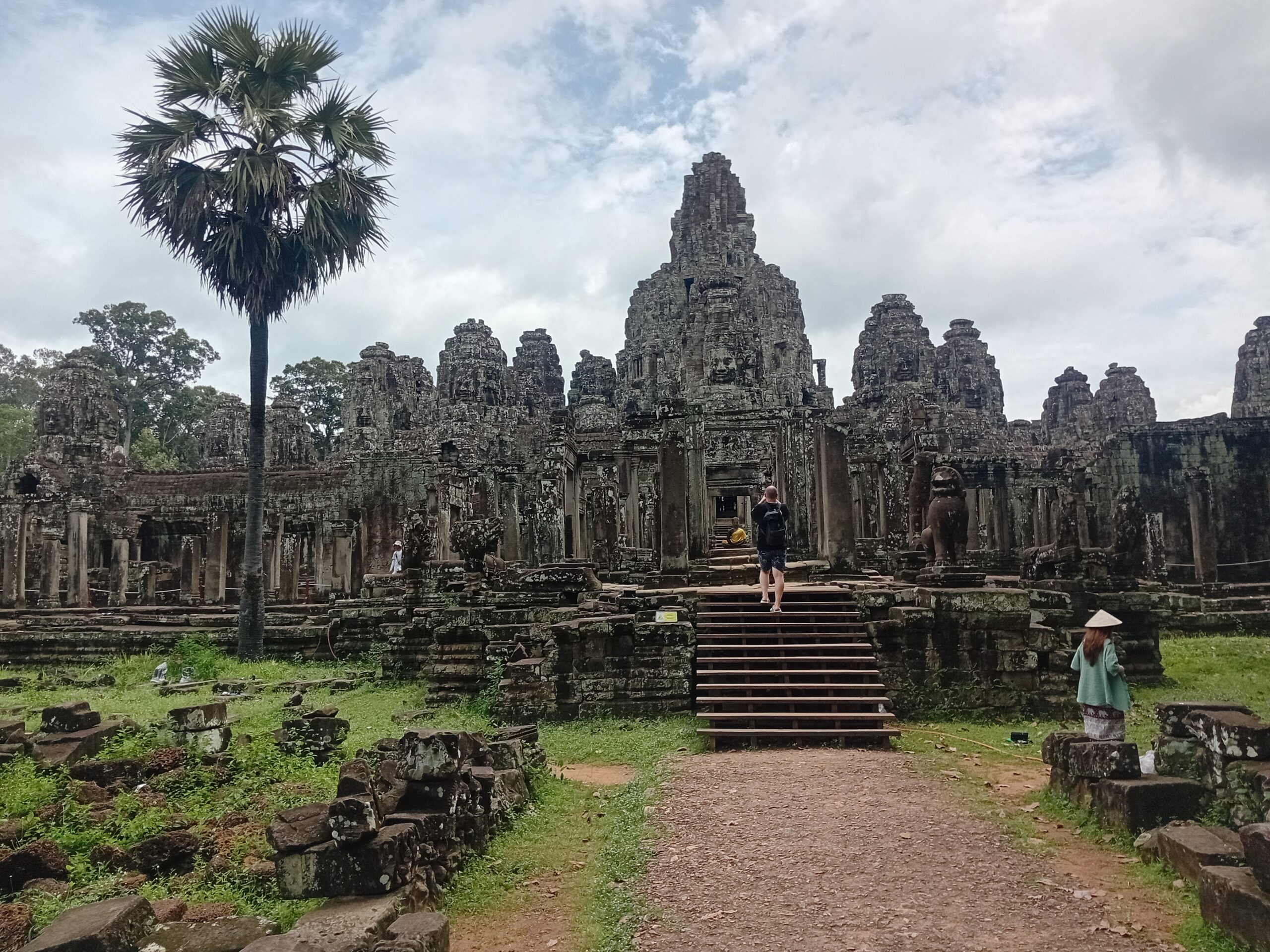
Our first stop on the tour of the city was the Bayon, a temple that has been both dedicated to Buddhism and Hinduism throughout various points in history. Today it is dedicated to Buddhism, and is still an active site of worship for local Khmer.
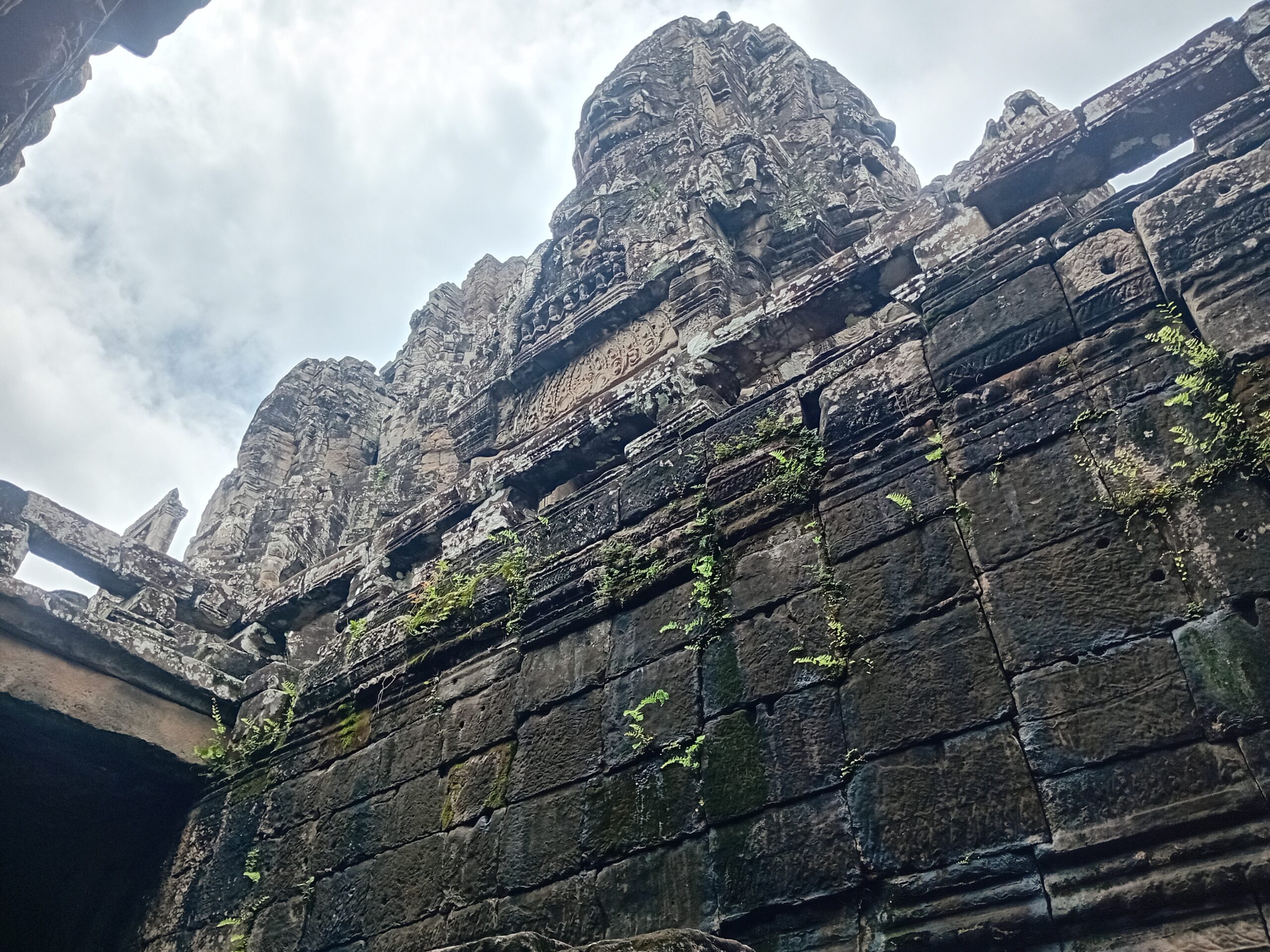
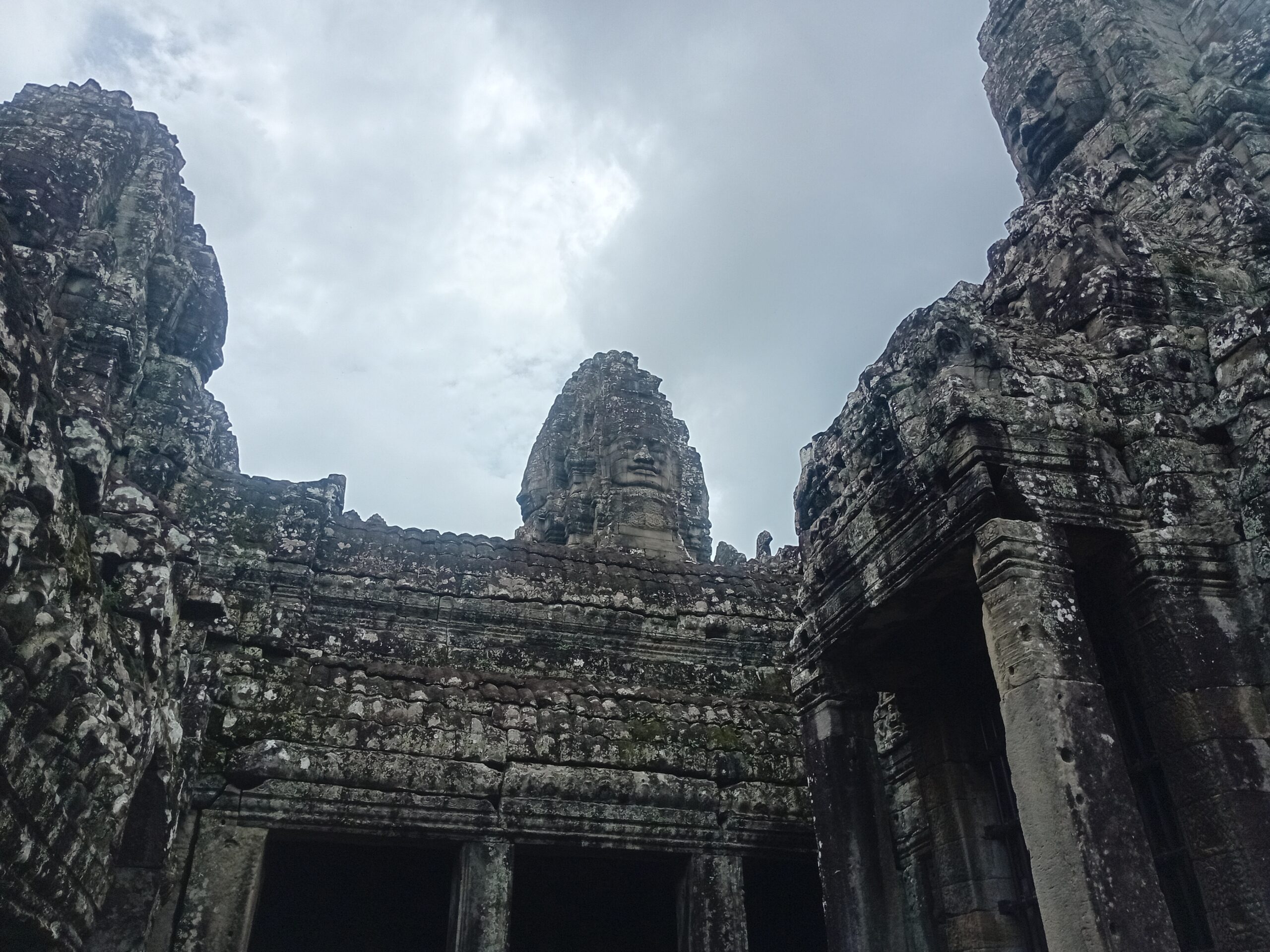
It has several towers with carved faces on all four sides, possible depictions of Brahma, but they may represent other gods or Bodhisattva. They may even represent the kings of the ancient city. The ambiguity is not helped by the history of the temple’s dedications to different religions and sects.
My guide told me there are 216 faces in total, though the number has changed over the years as the temple was altered. These faces give the temple its nickname, the Temple of Many Faces.

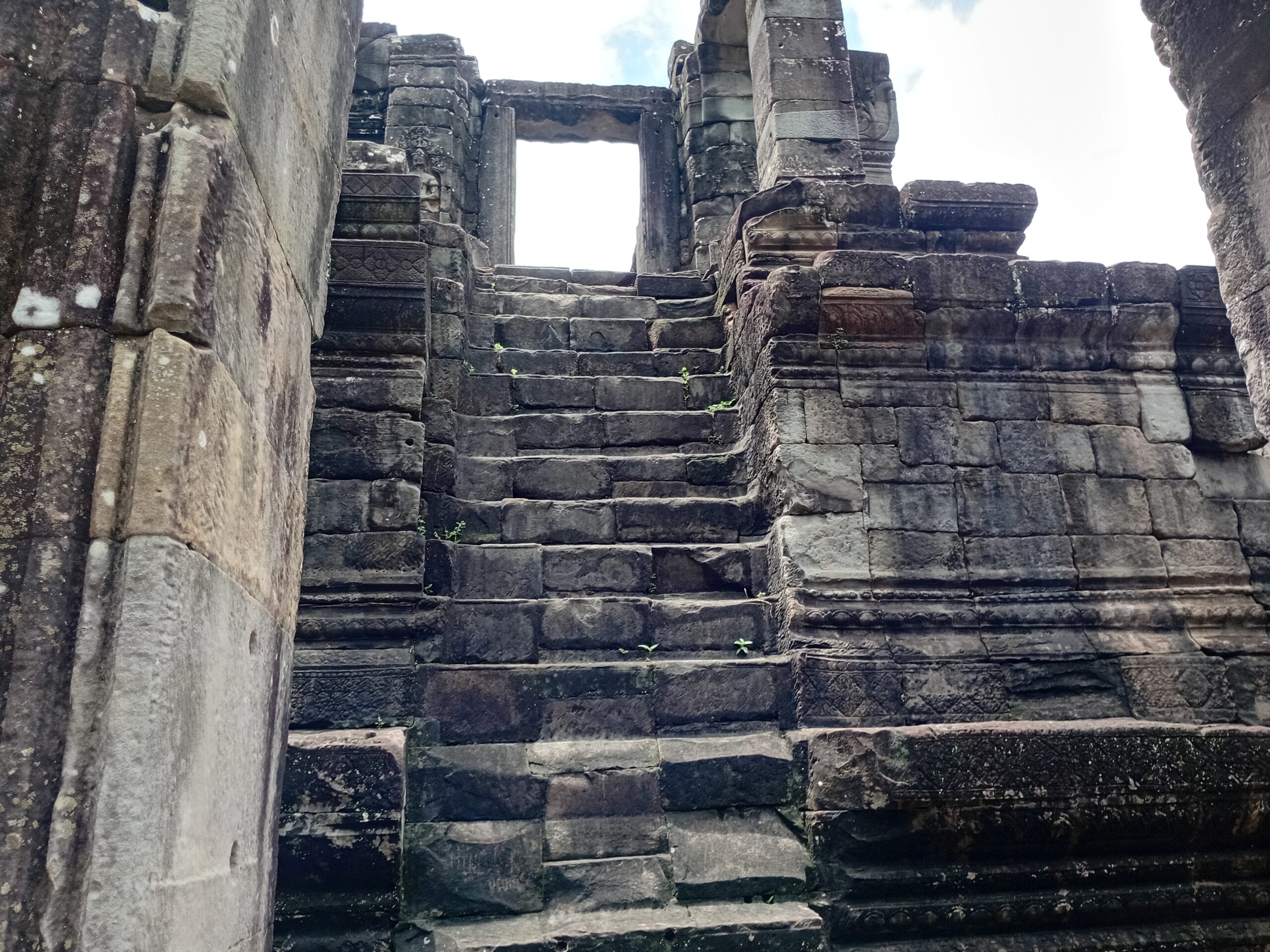
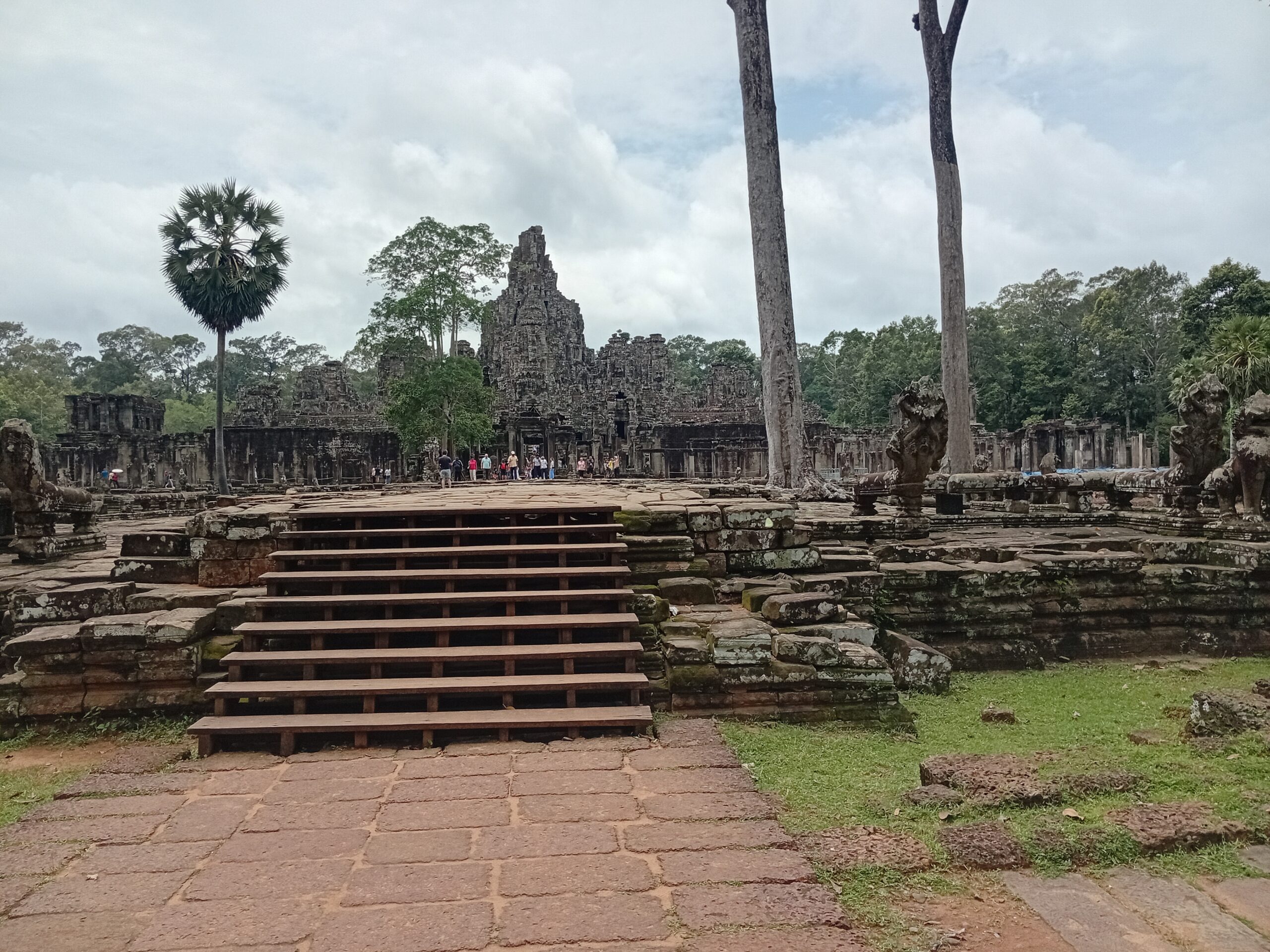
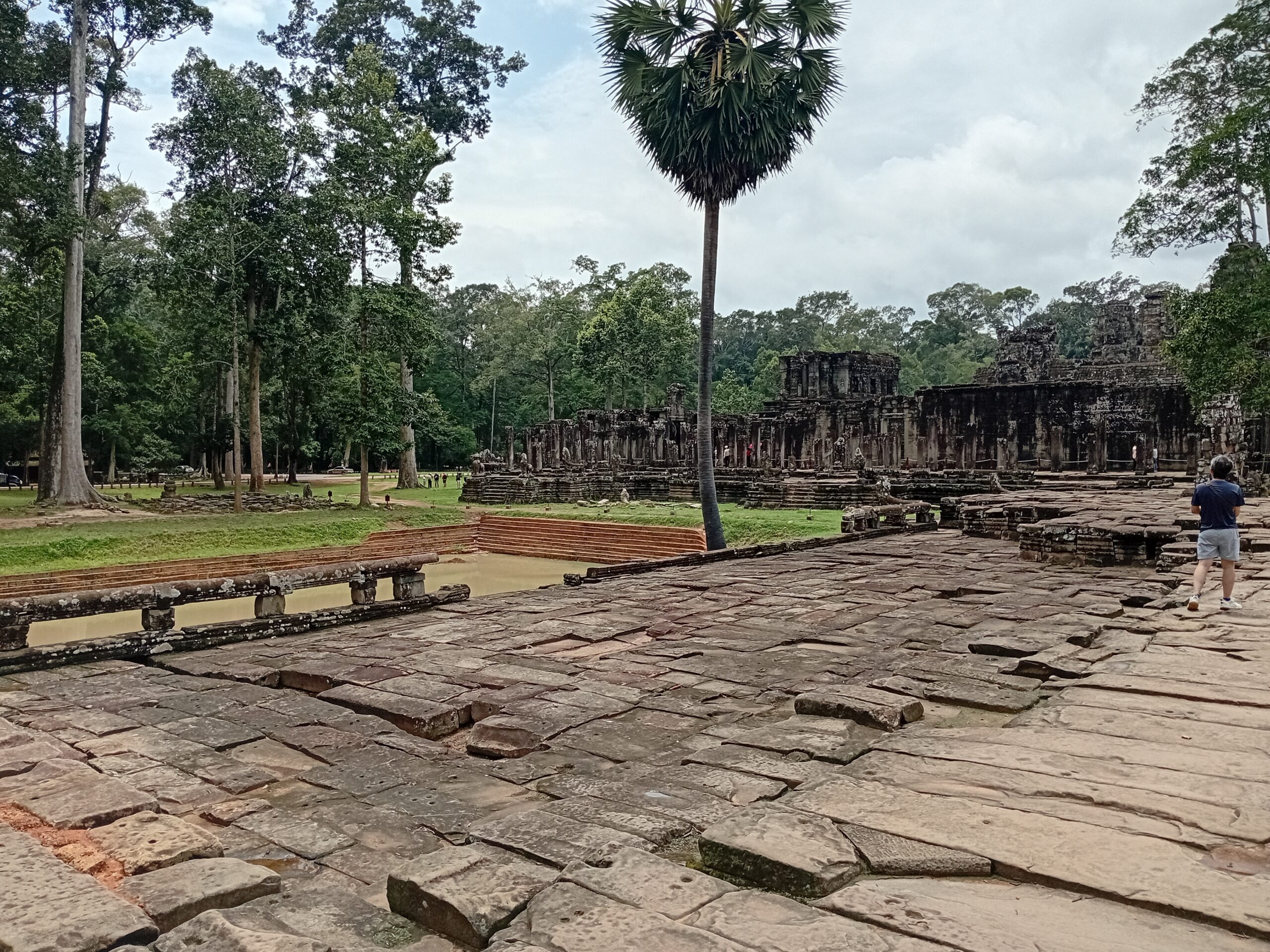
As with all temples in this region, nagas guard the entrances. Wooden steps have been built over the old stone steps, allowing people to climb onto the temple without further damaging the stone. Some palm trees have grown here, bursting through cracks in the stones that paved the ground.
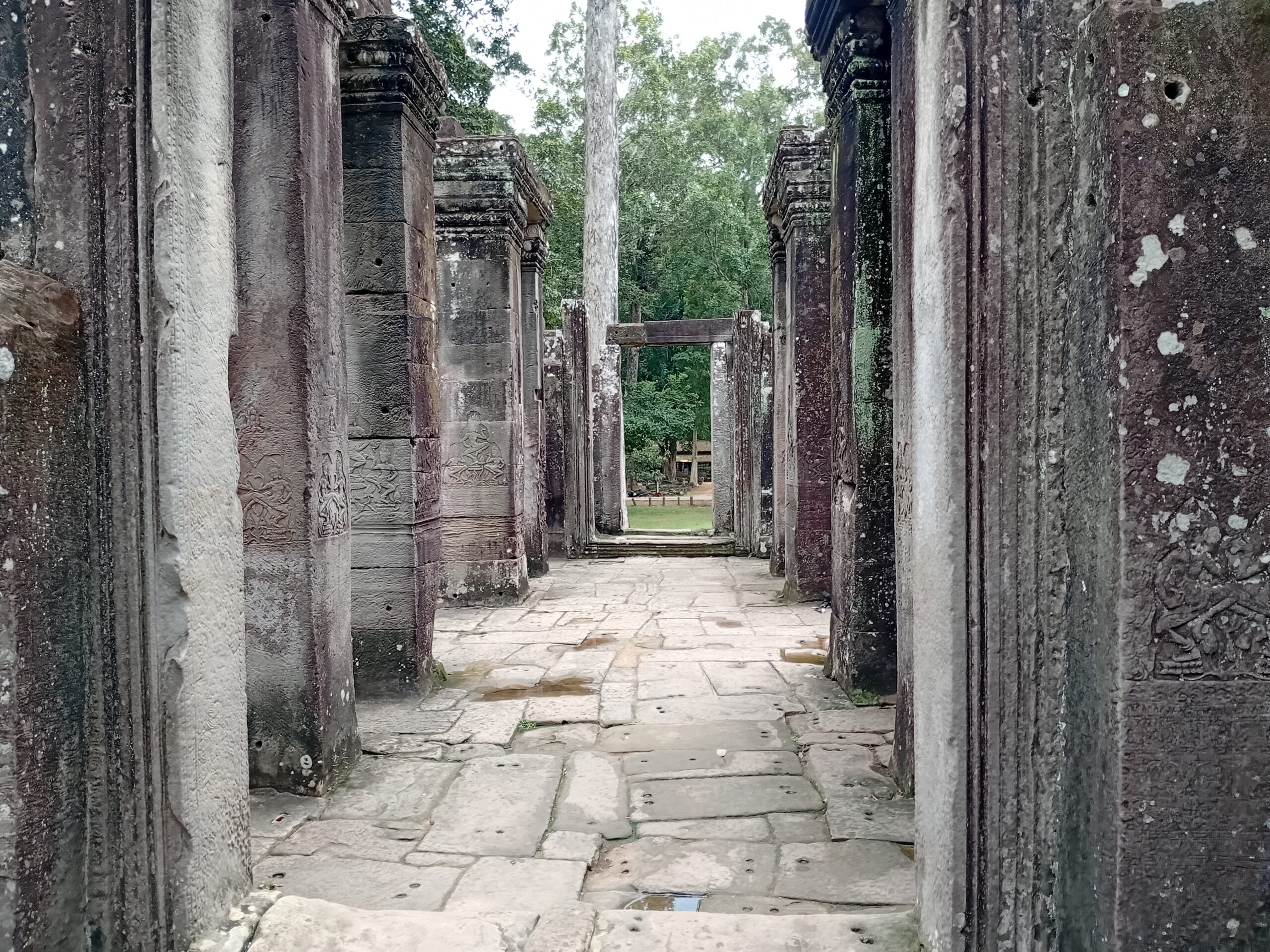
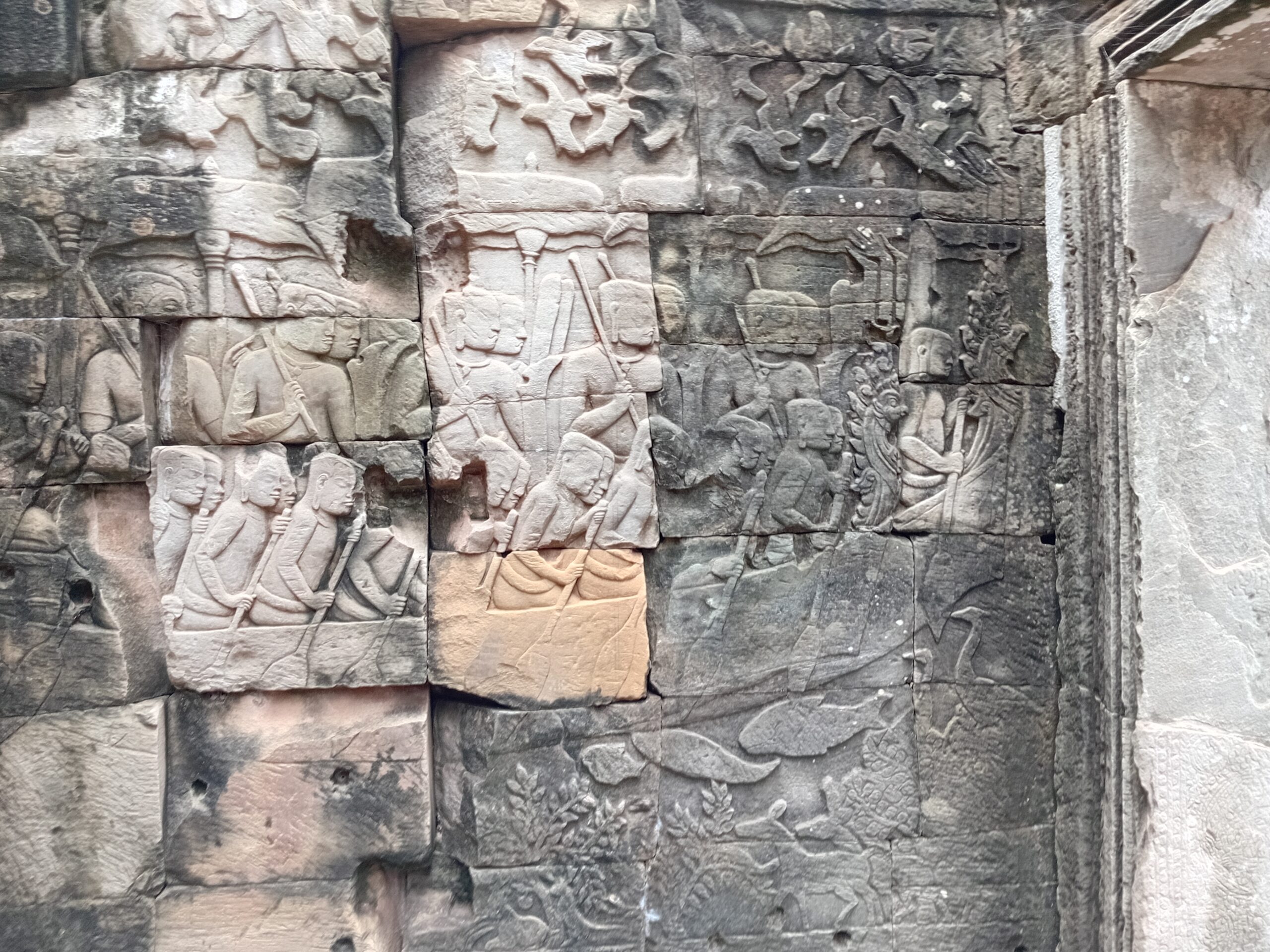

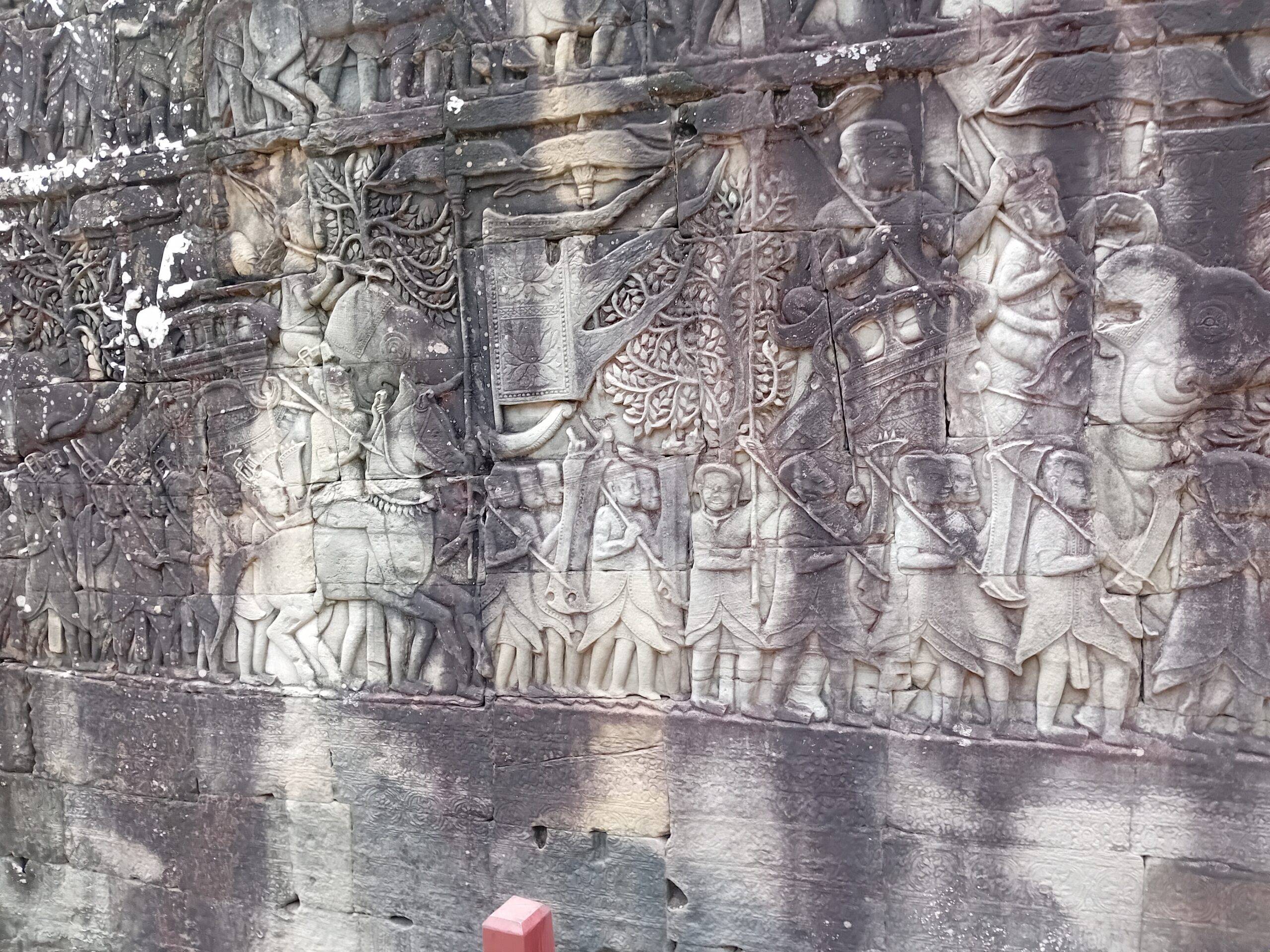
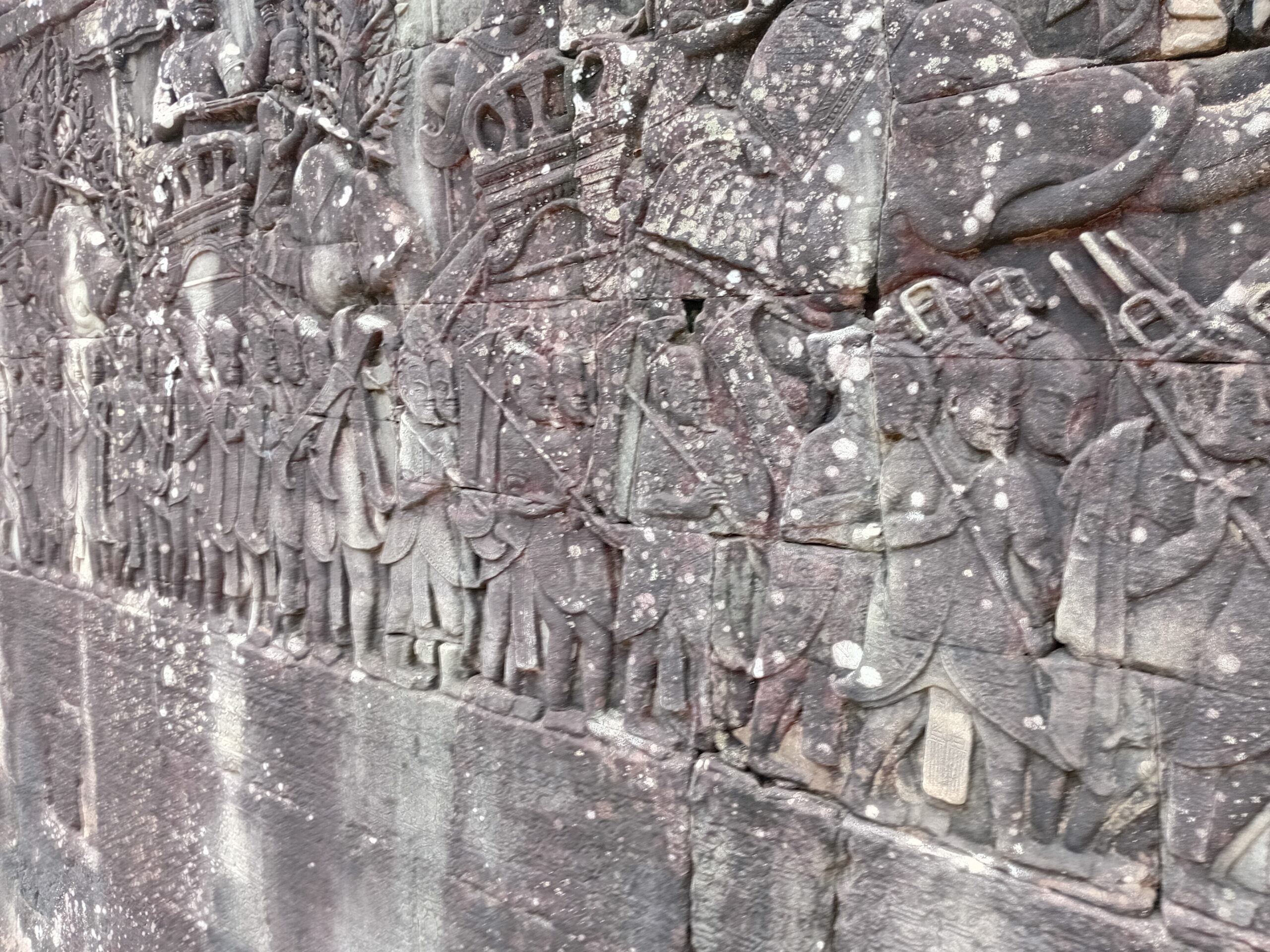
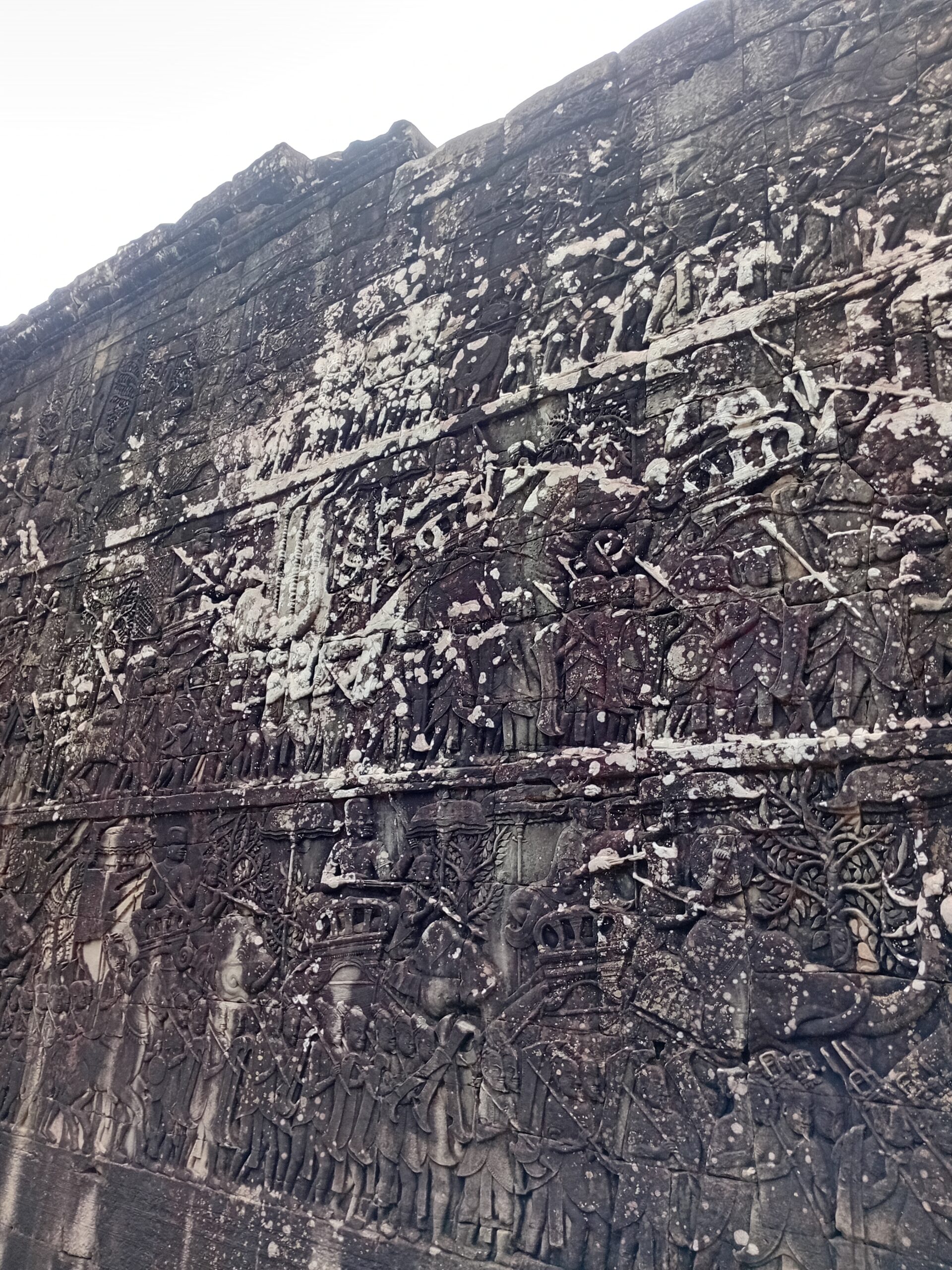
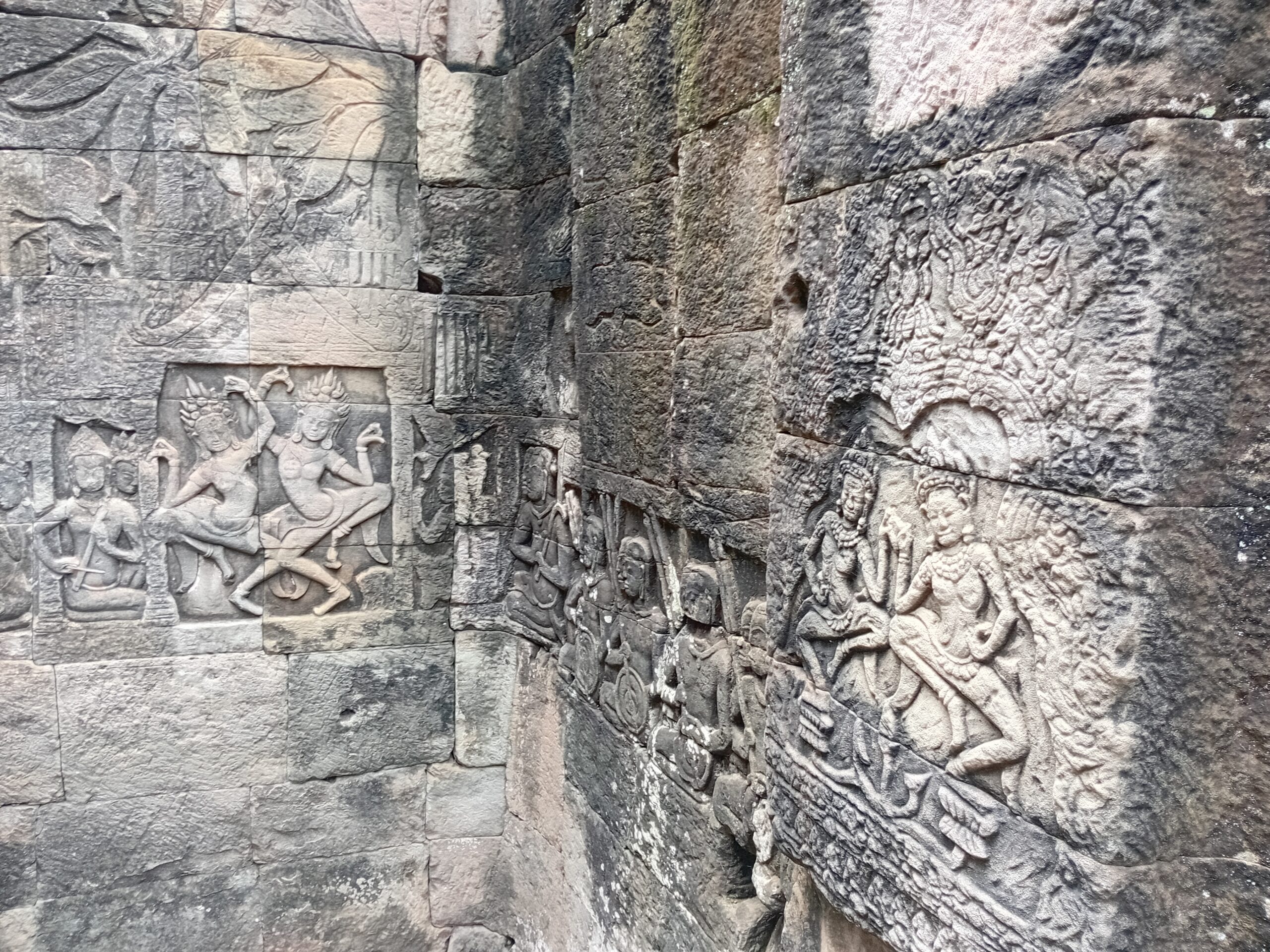
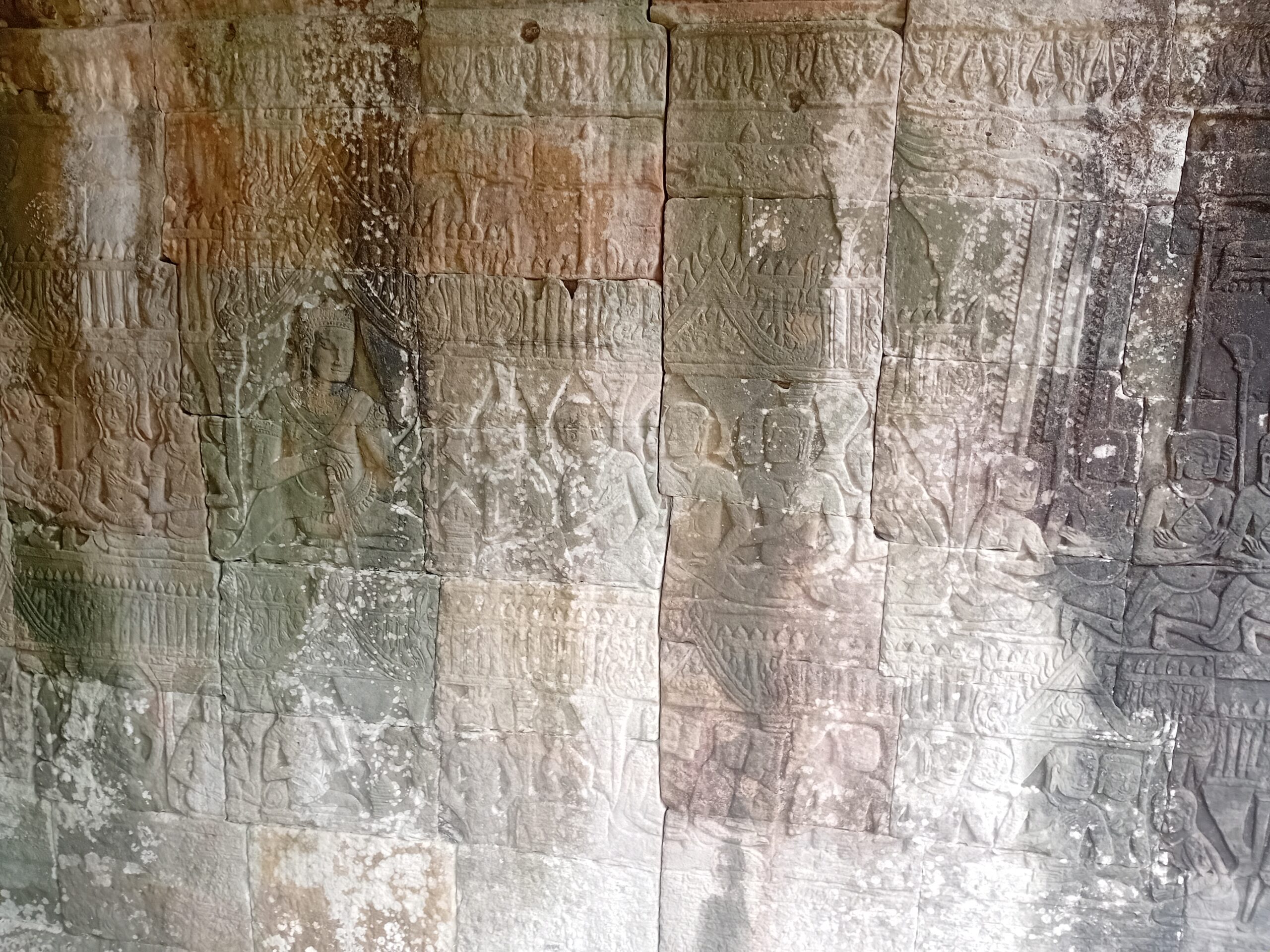
Before we entered the temple proper, my guide took me around the side to show me the murals. Here there are scenes of soldiers fighting, Khmer and Chinese. The figures are slightly less than a foot high. Most march on foot past the trees behind, some ride horses or elephants into battle. Though weathered by time, I could still see the small details in the carvings; the stitched patterns on the clothing, floral patterns on the flags, individual leaves on the trees, even carvings on the saddles and weapons.
In the south east of the temple there are carvings of dancing apsaras, a divine representation of the feminine spirit. They come in pairs, their limbs intertwined. They seem to always be moving, in a forever-lasting dance.
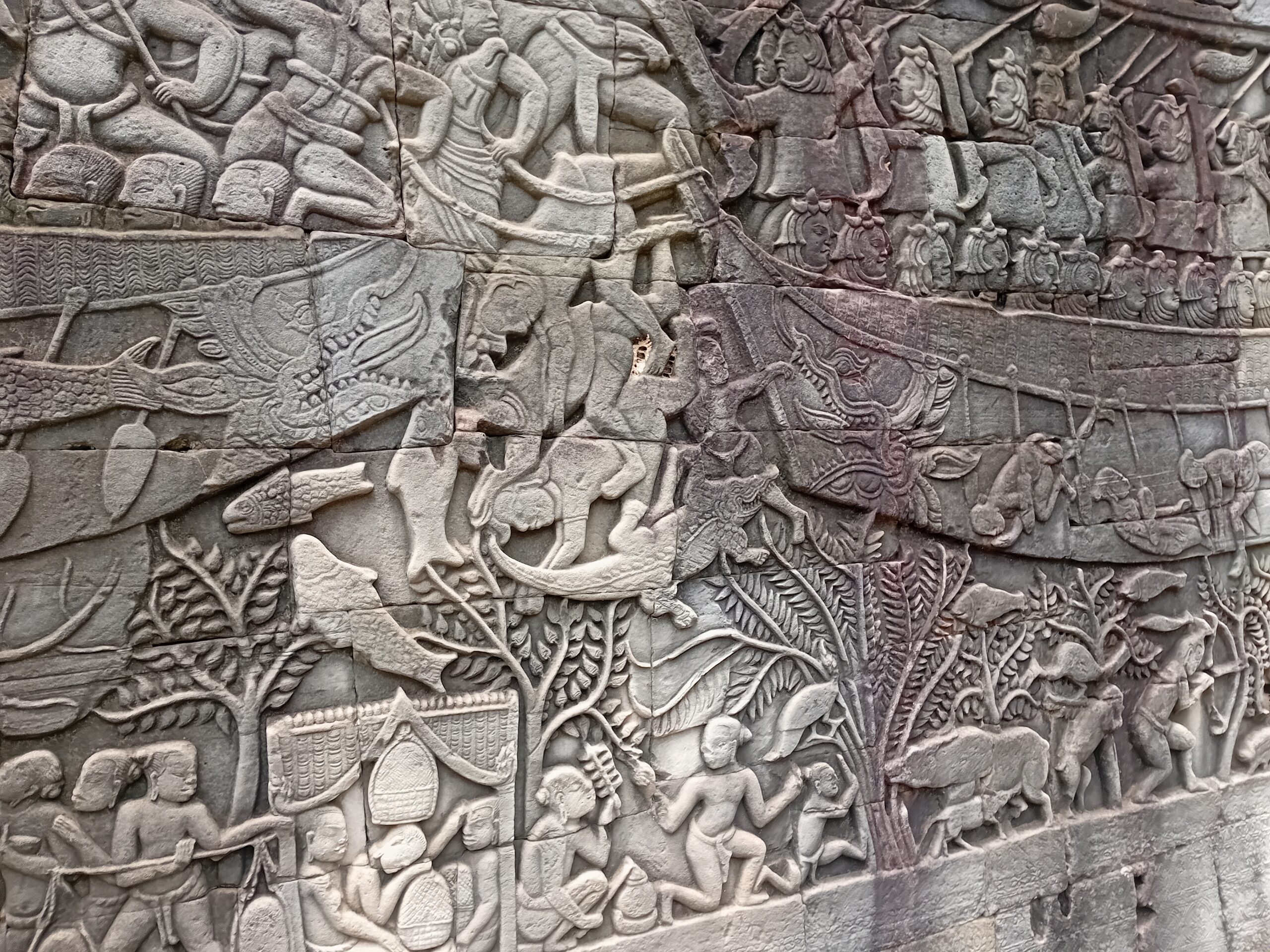

The next scene on the southern wall depicts fishermen and a battle over water. Men leap from canoes at each other to engage in battle. There are many cracks here and you can tell different kinds of stone have been placed together to form a single canvas. Whether this is how it was originally built, or is due to early restoration work is unknown.
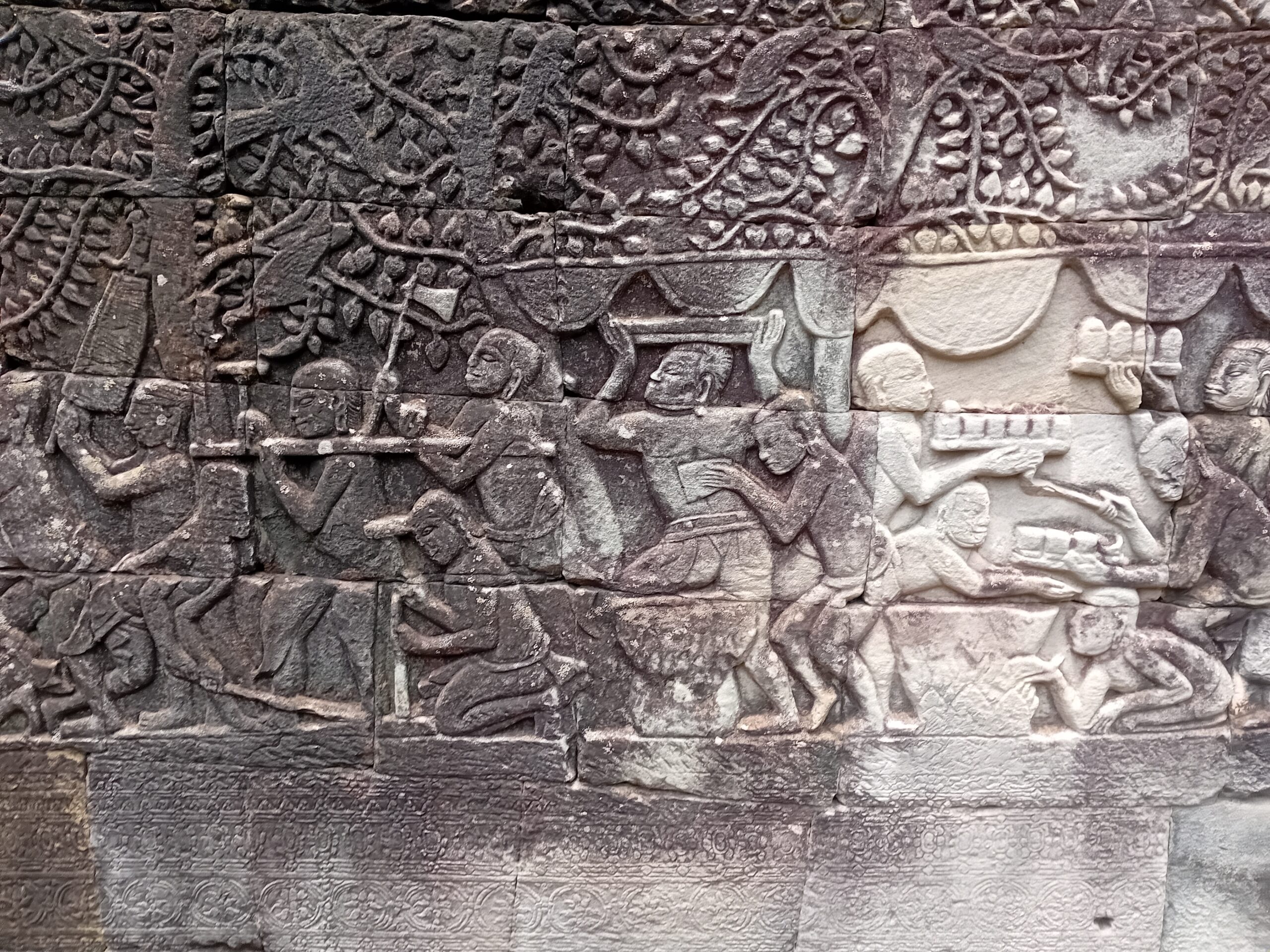
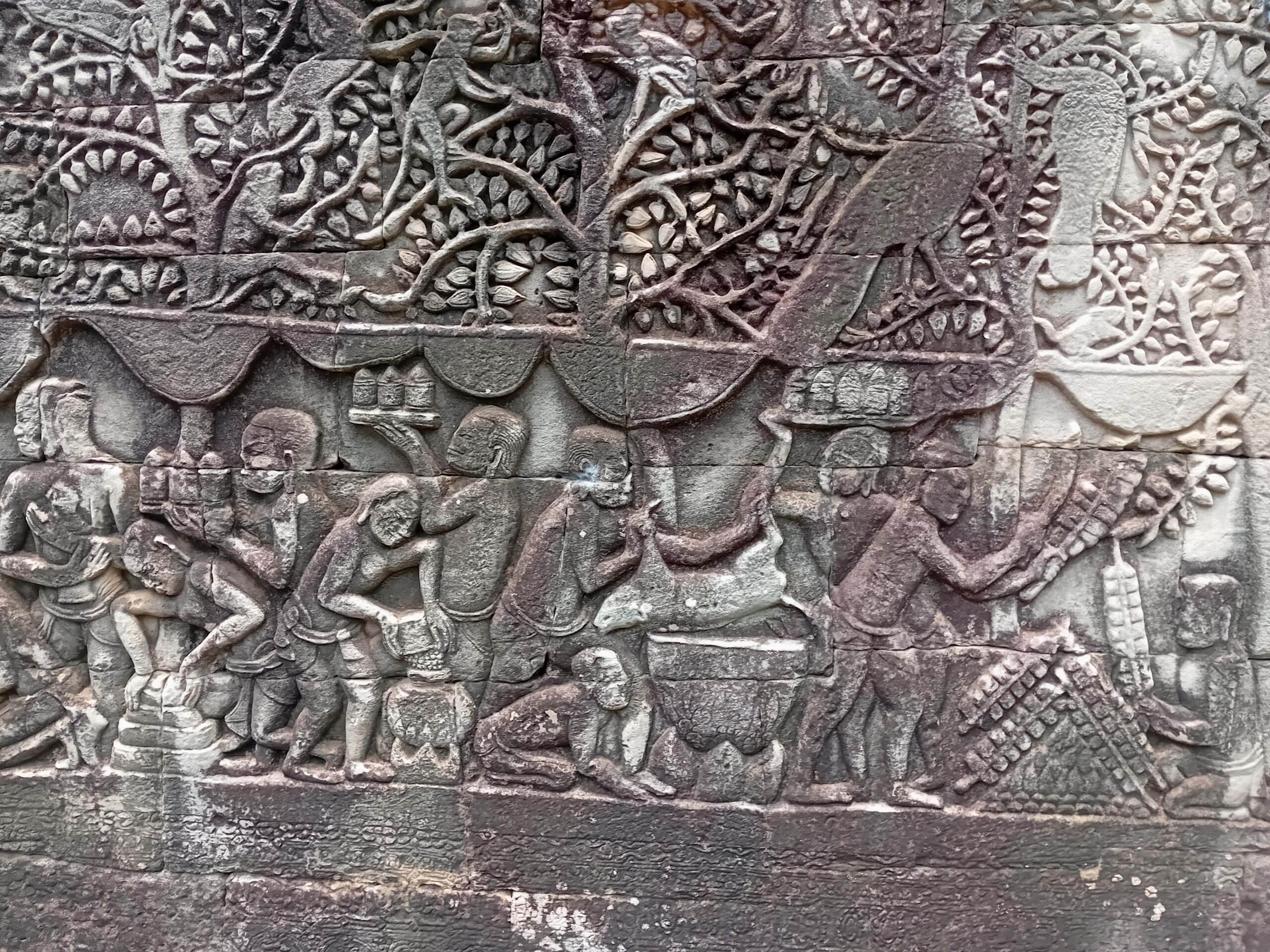
Finally there were a group of scenes depicting daily life – people harvesting wheat, gathering food, and chopping trees for wood. It was a glimpse of how the ancient Khmer viewed life. I found myself imagining what it would be like to live in simpler times, where food and battle were the only things that mattered.
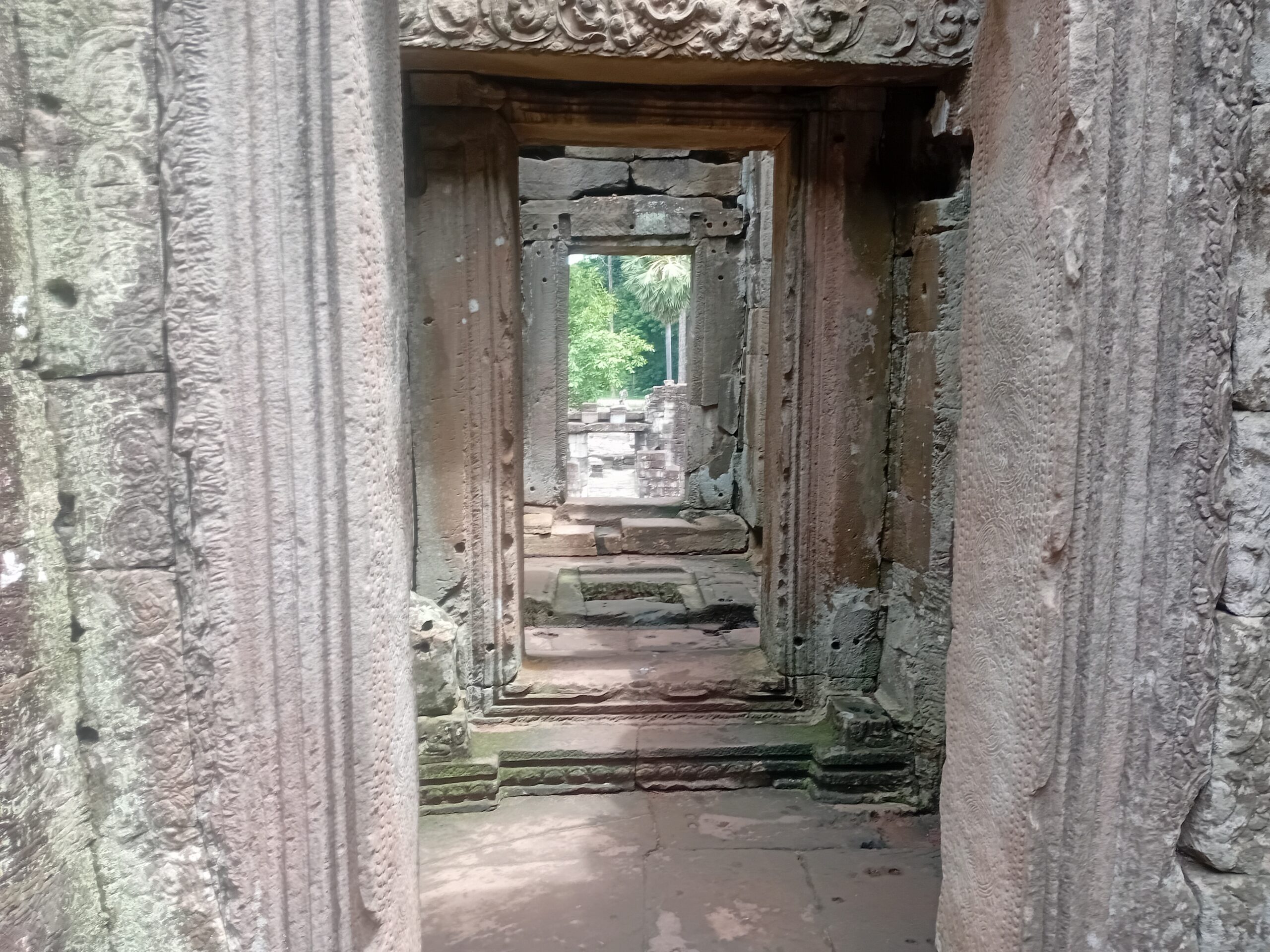
From inside the temple we were able to view the faces in more detail. They rose from the courtyards like gods towering over us, watching the world from on high. It felt like these ancient beings were there to protect us, or to prevent us from leaving. Either way they made me feel small on the divine scale of things.
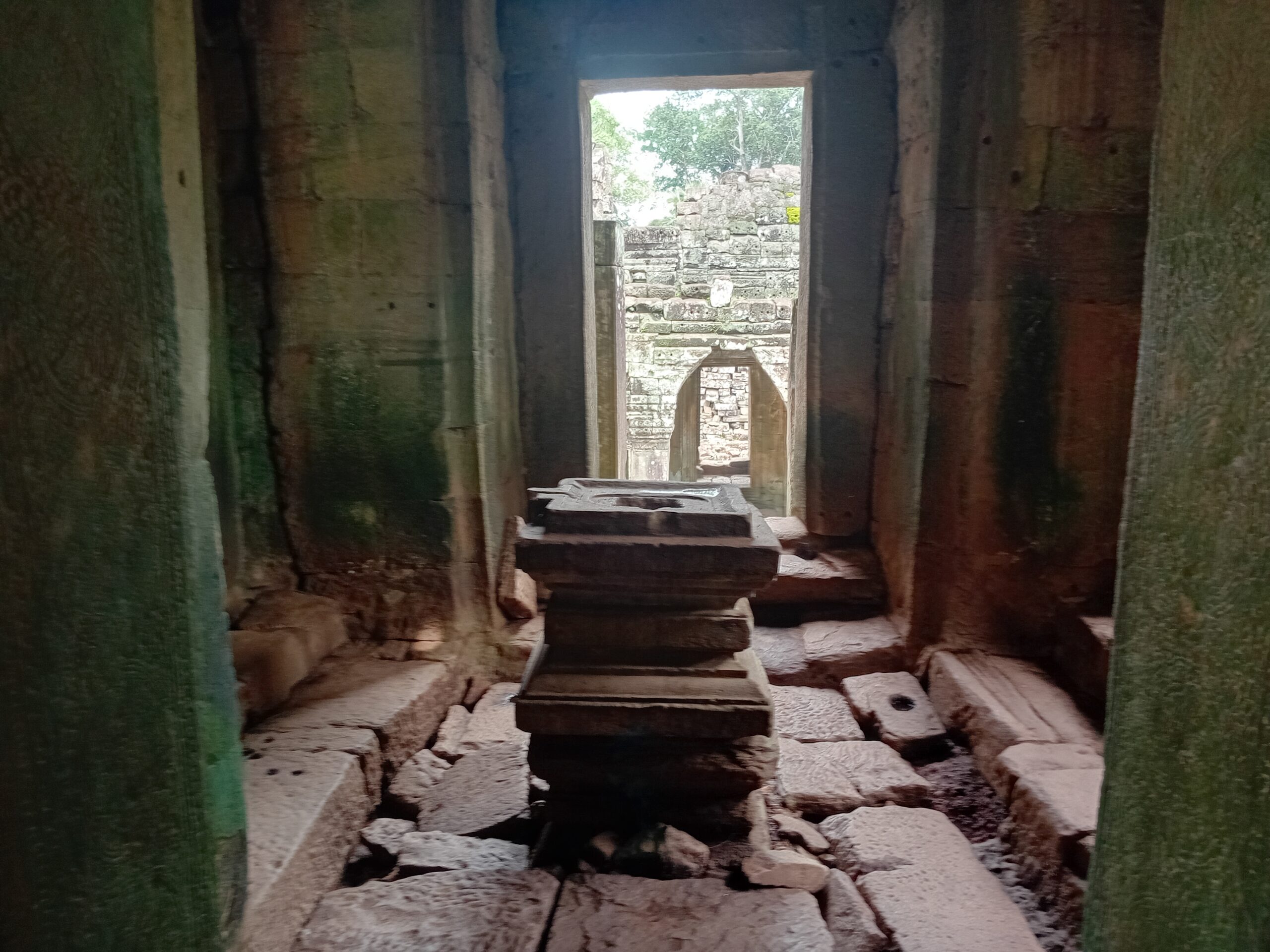
Hidden within the towering faces were rooms containing yoni, abstract models of the feminine sex organs. These were likely once part of complete lingams, representations of the Hindu god Shiva. These are important parts of any Hindu temple, and reveals a part of the temple’s history as being dedicated to Hinduism at certain times.
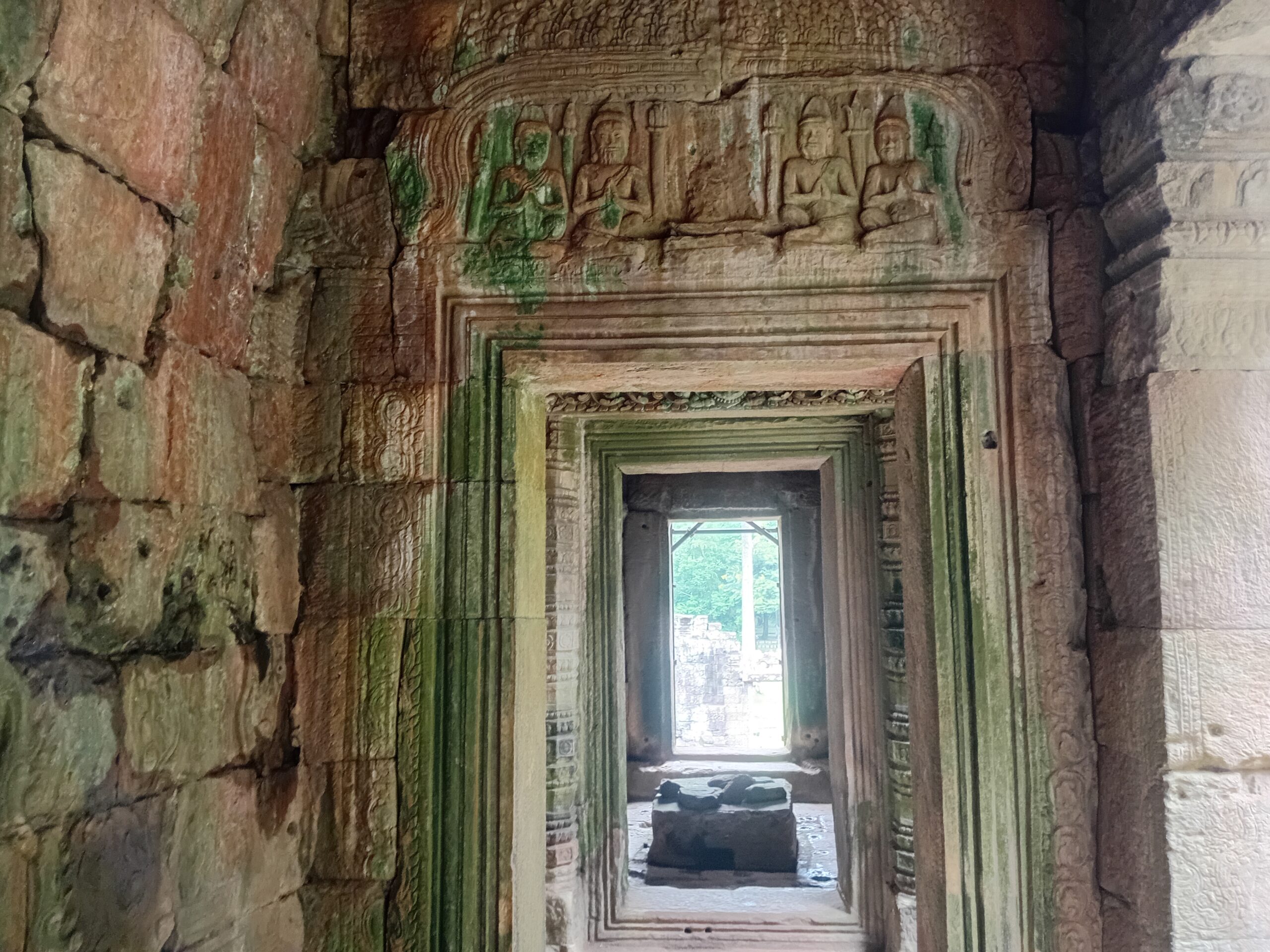
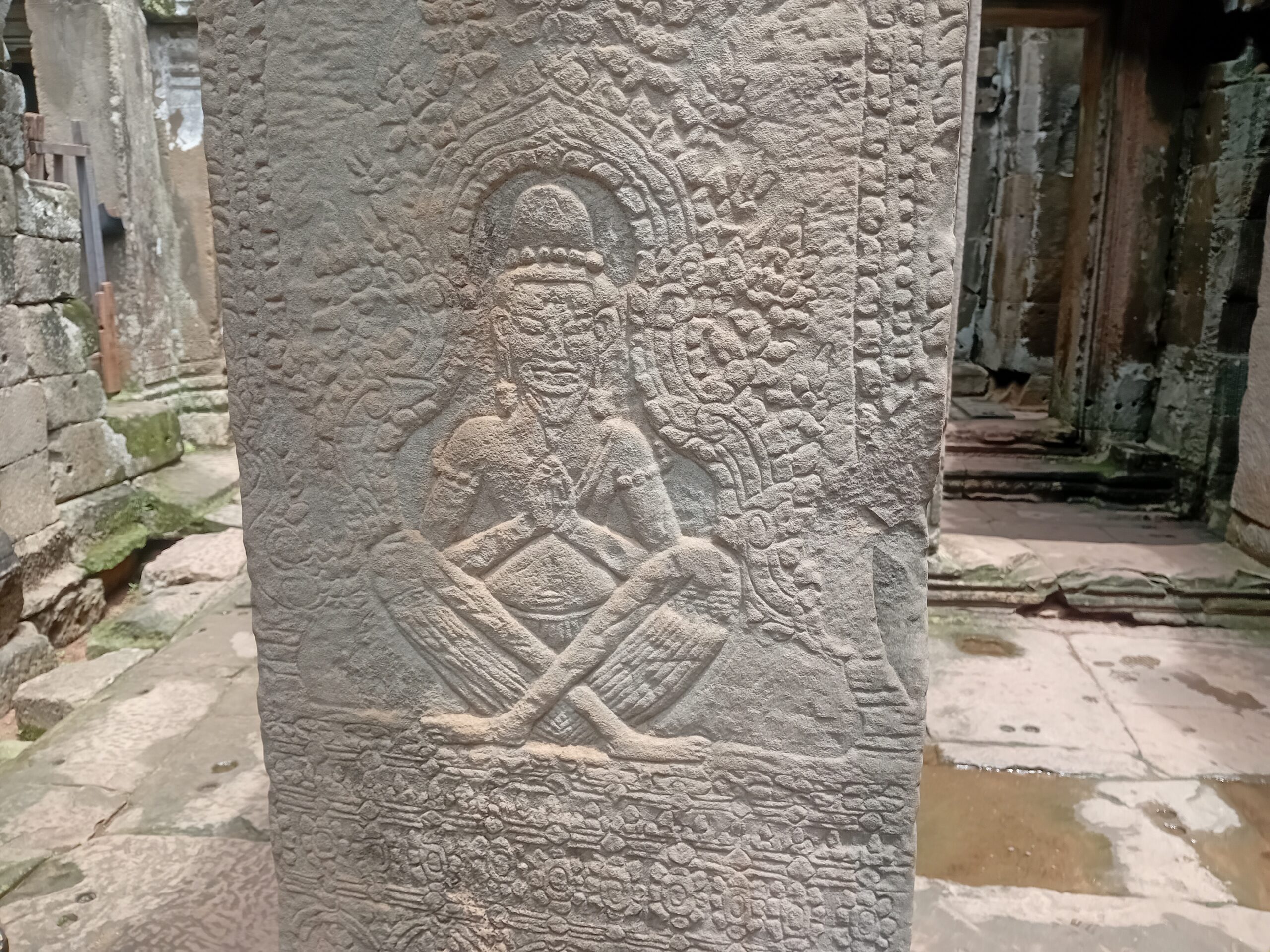
My guide also pointed out how the hands on a carving of a meditating man had been re-carved to show a Buddhist meditation style rather than a Hindu meditation style. Yet another indication of the temple’s shifting religious affiliation.
We left the temple to the north so we could go on to explore the rest of Angkor Thom. We wouldn’t be meeting the tuk-tuk right away as we could walk to the other sites in Angkor Thom. I took one last look at the faces as we walked away. Over 200 faces hovering over the landscape, silently watching every direction. I wondered if they even noticed us as we left.


One thought on “The Temple with Many Faces”