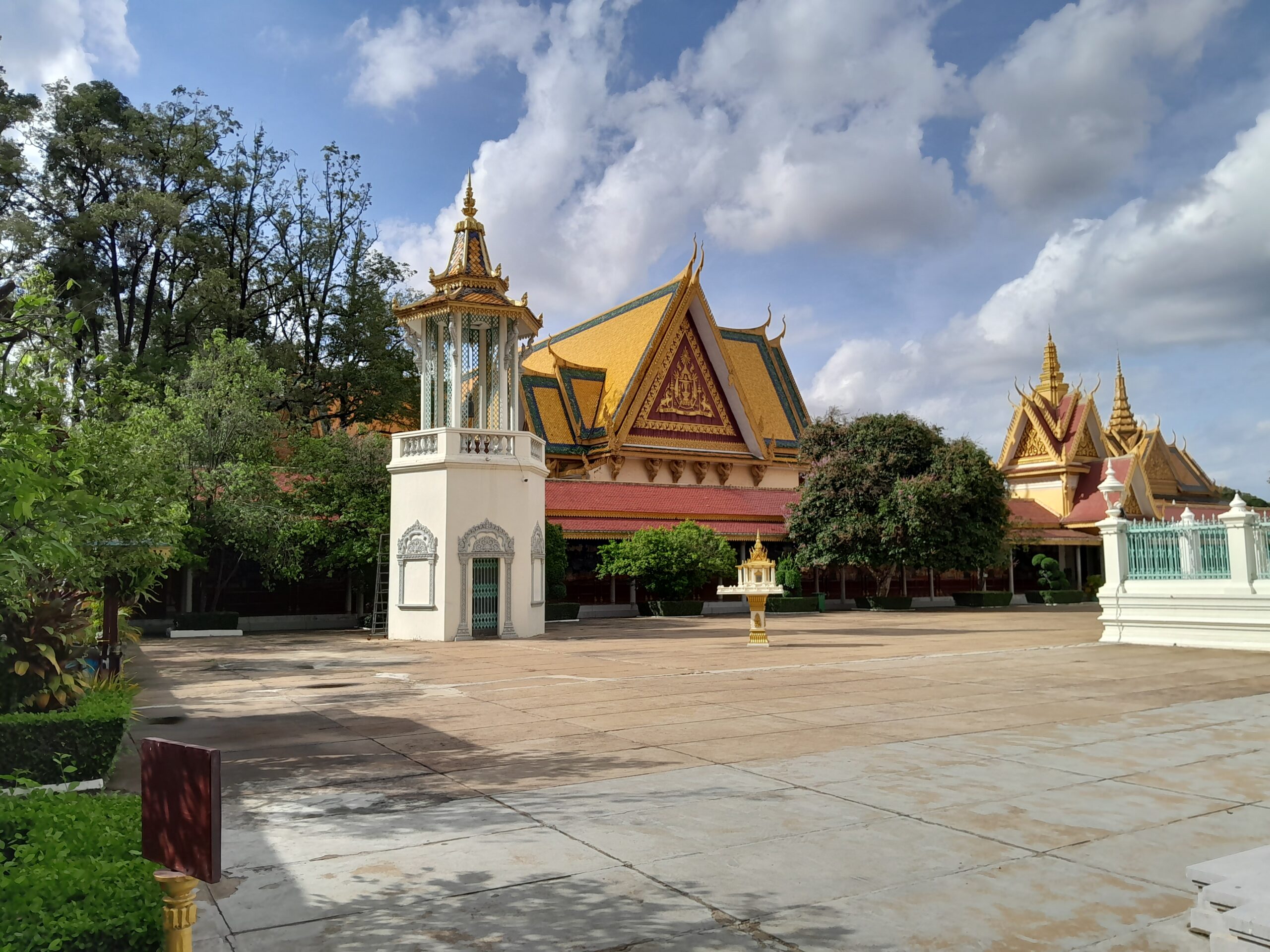

The Royal Palace of Cambodia sits at the centre of Phnom Penh, close to the Mekong River. Originally constructed in the late 19th century, it has since served as the residence for Cambodian monarchs – the only exception being the Khmer Rouge period.
The Royal Palace is open to visitors and is a popular destination for tourists. When I arrived it was difficult to find the entrance. This gave a couple of touts the opportunity to tell me it was closed, and that they could take me somewhere else. Don’t ever trust them: these are a common scam in tourist areas here.
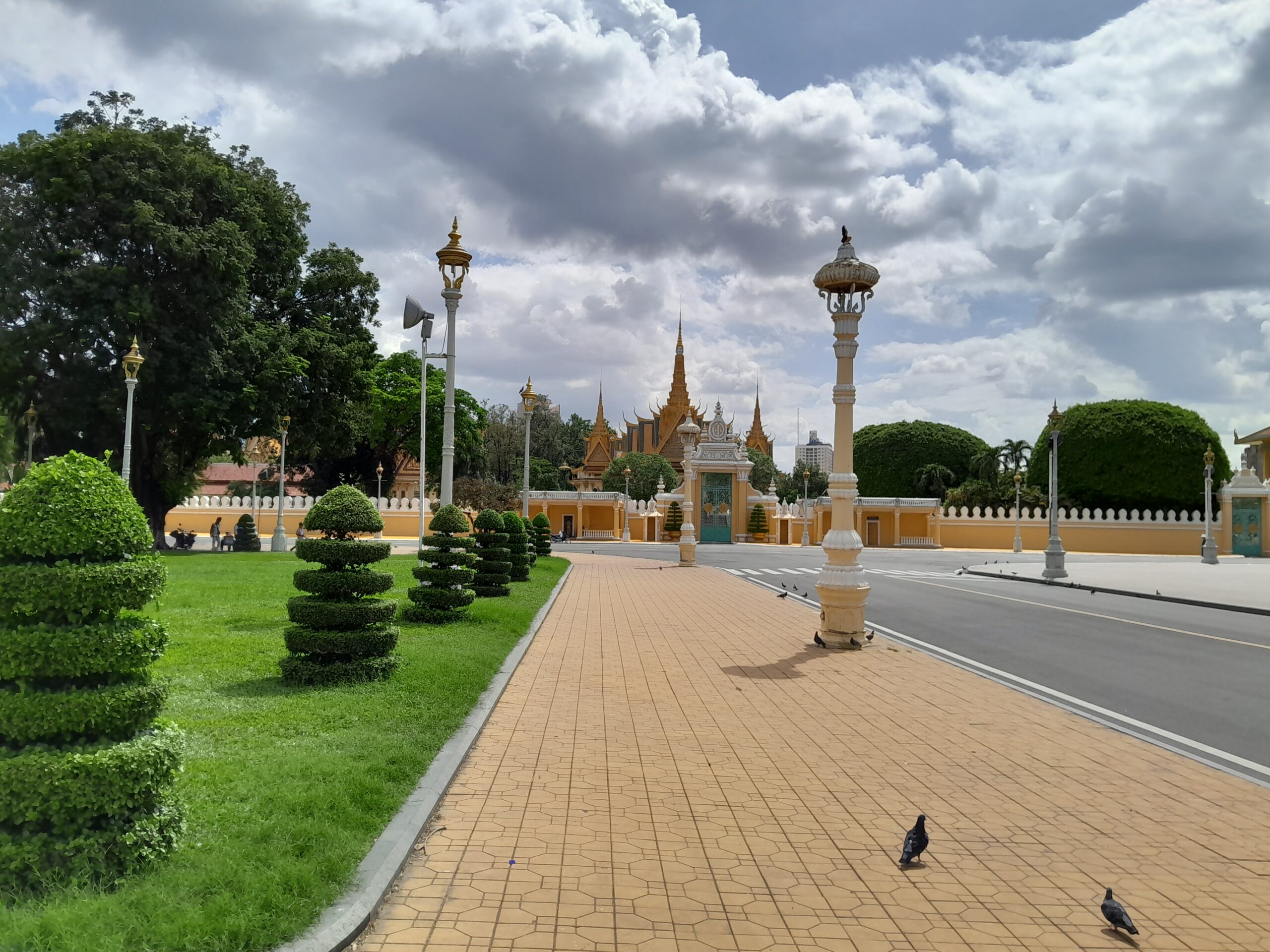
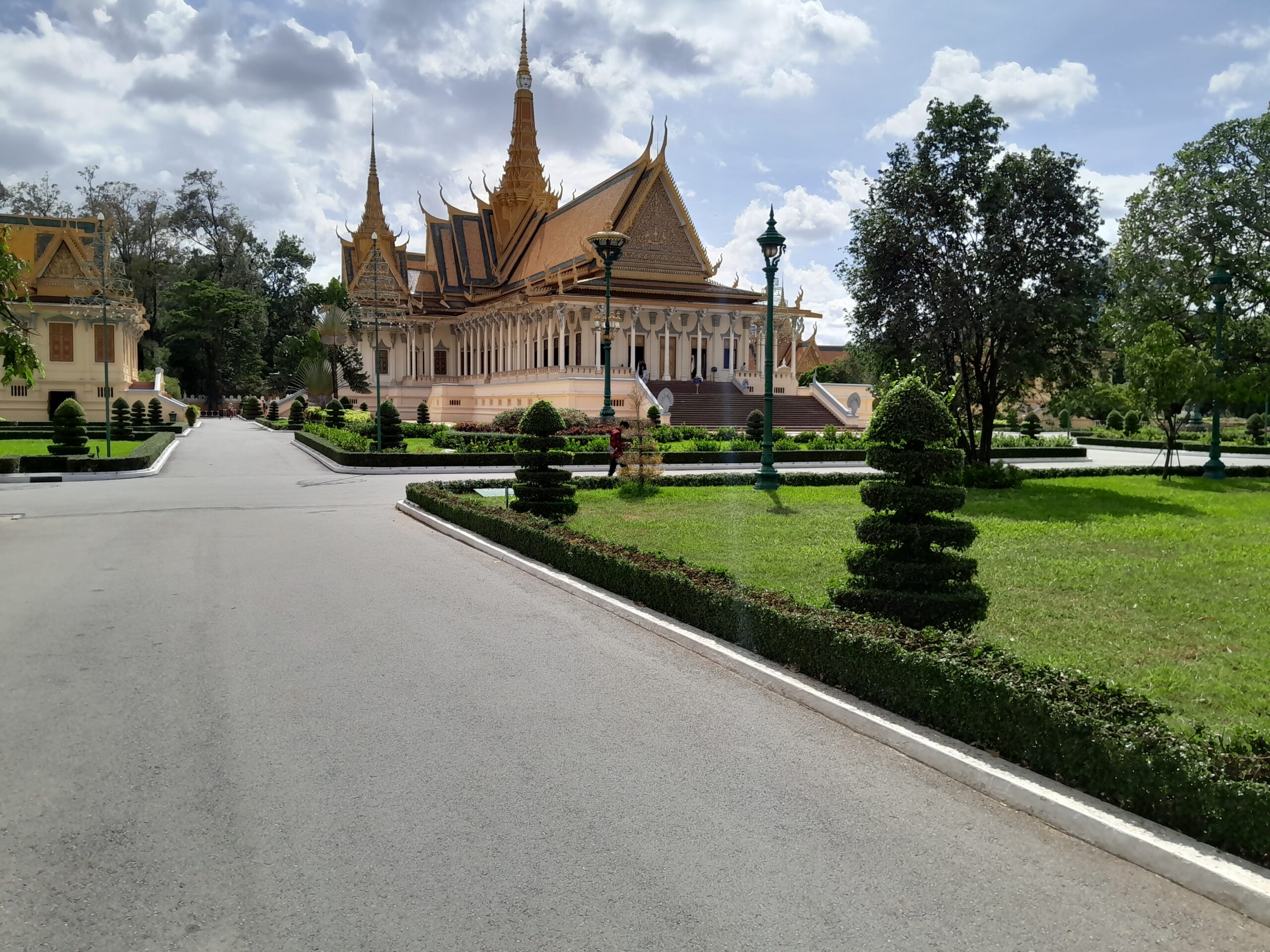
I found the visitors entrance to the south of the Palace grounds. Since the site is considered a sacred place, you need to be modestly dressed: long trousers and no exposed shoulders. I did see a place where you can rent some trousers or shirts before you go in, however.
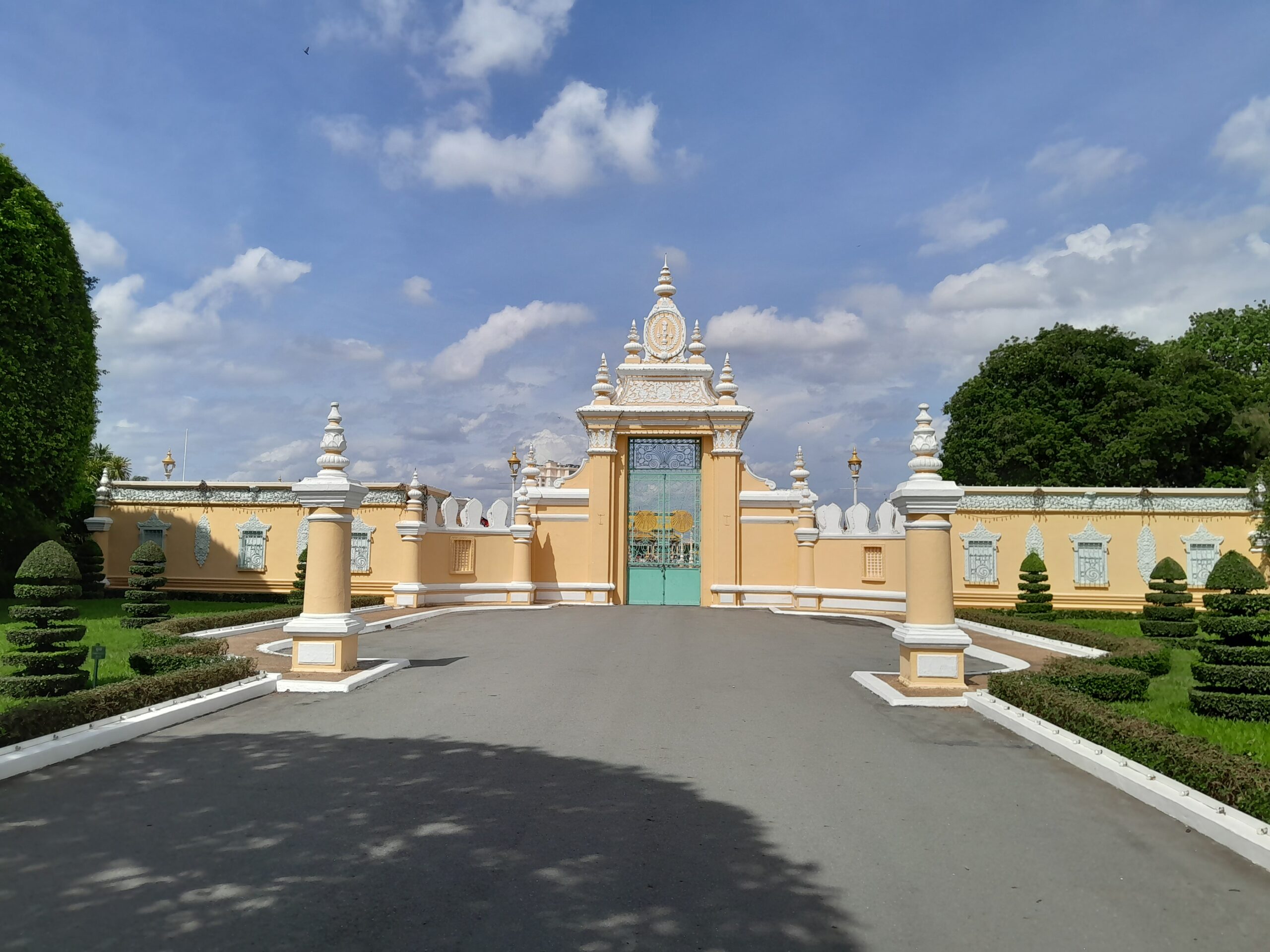
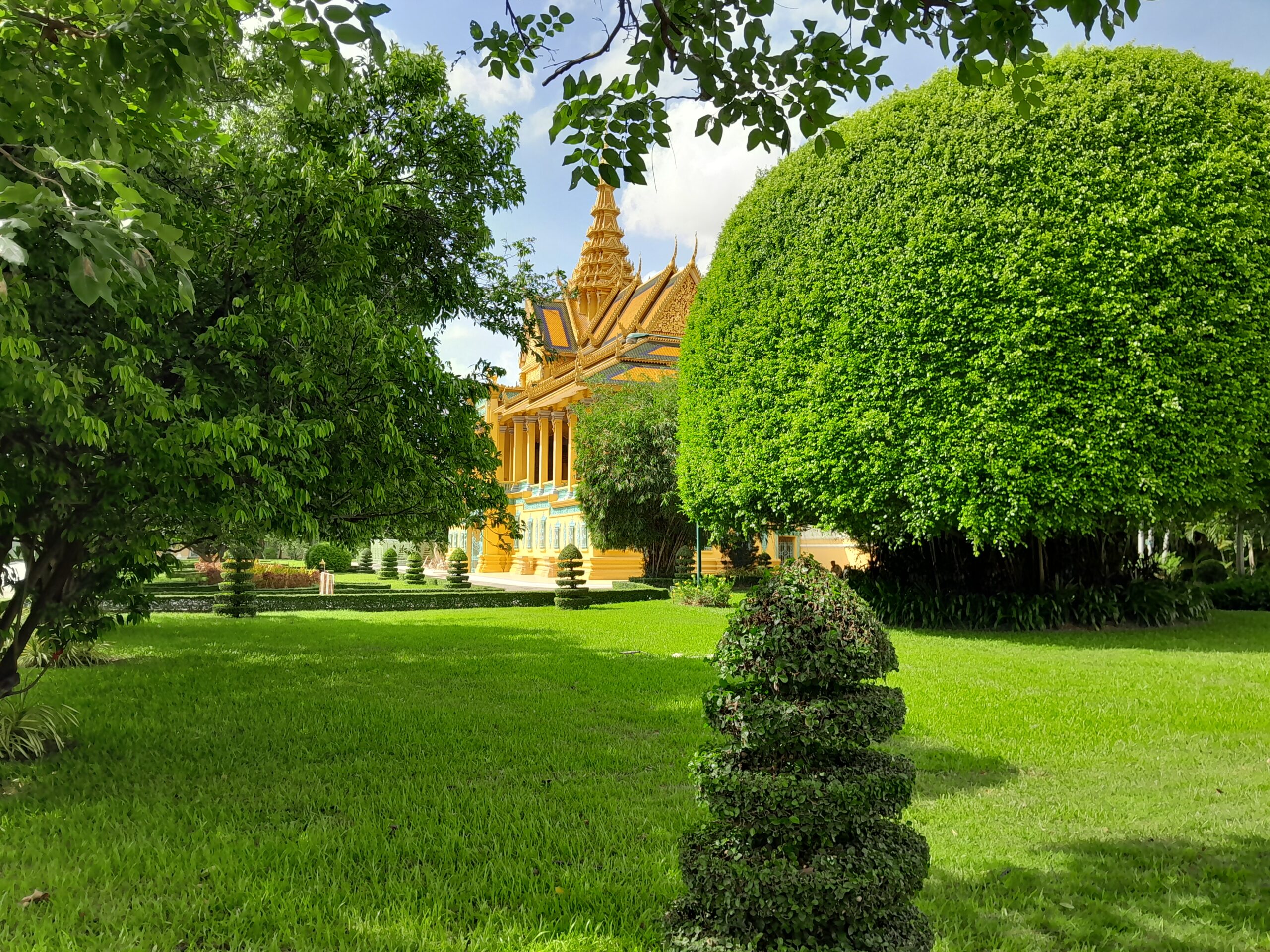
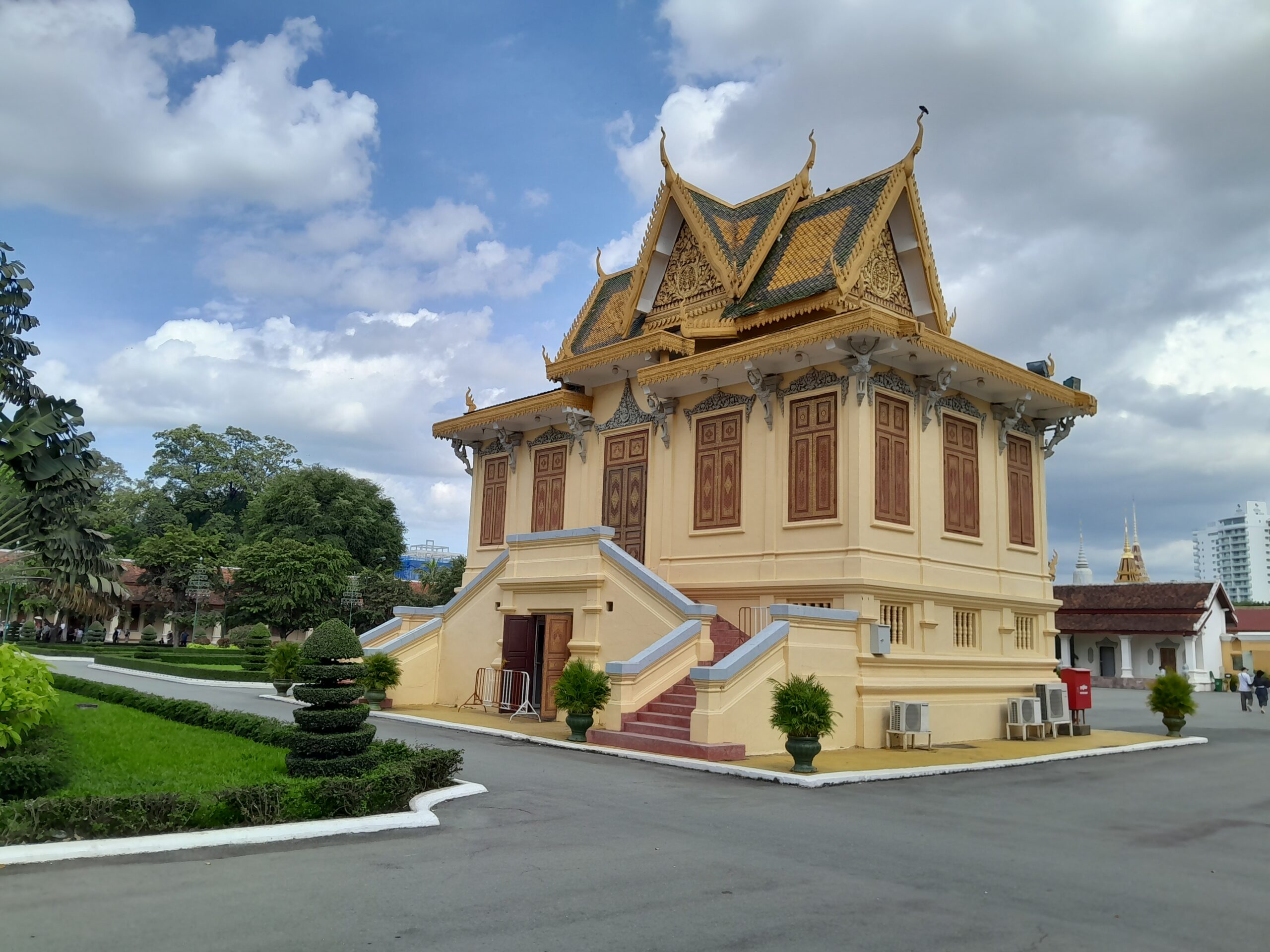
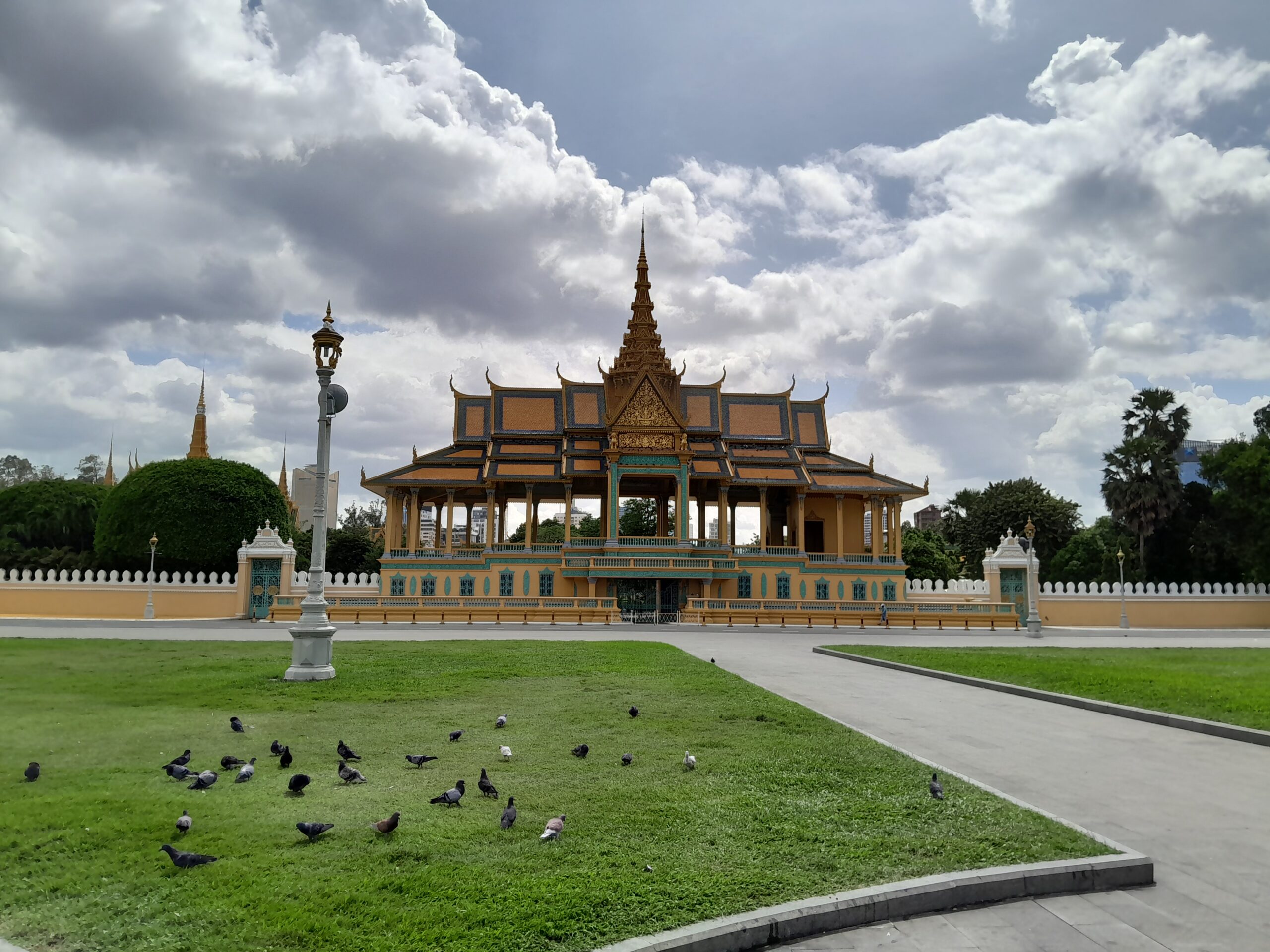
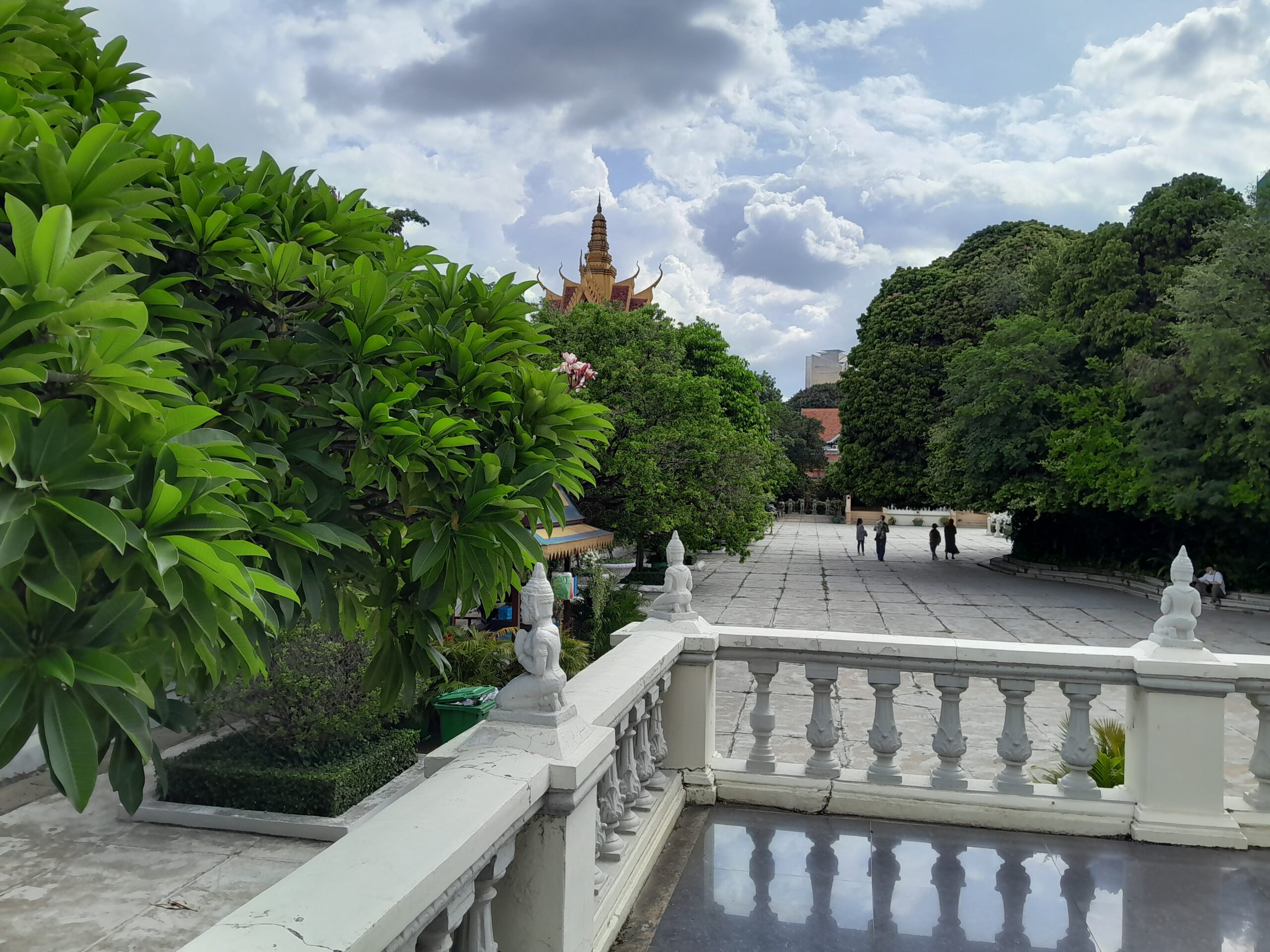
The first thing I saw upon entering the grounds were the gardens. Huge lawns with hedgerows and wide roads lead to the main entrance that faces the Mekong. The main road leads to the Throne Hall which is still used for official ceremonies. Nearby is the Moonlight Pavilion, a place where the Royals can watch processions as they move through the grounds.
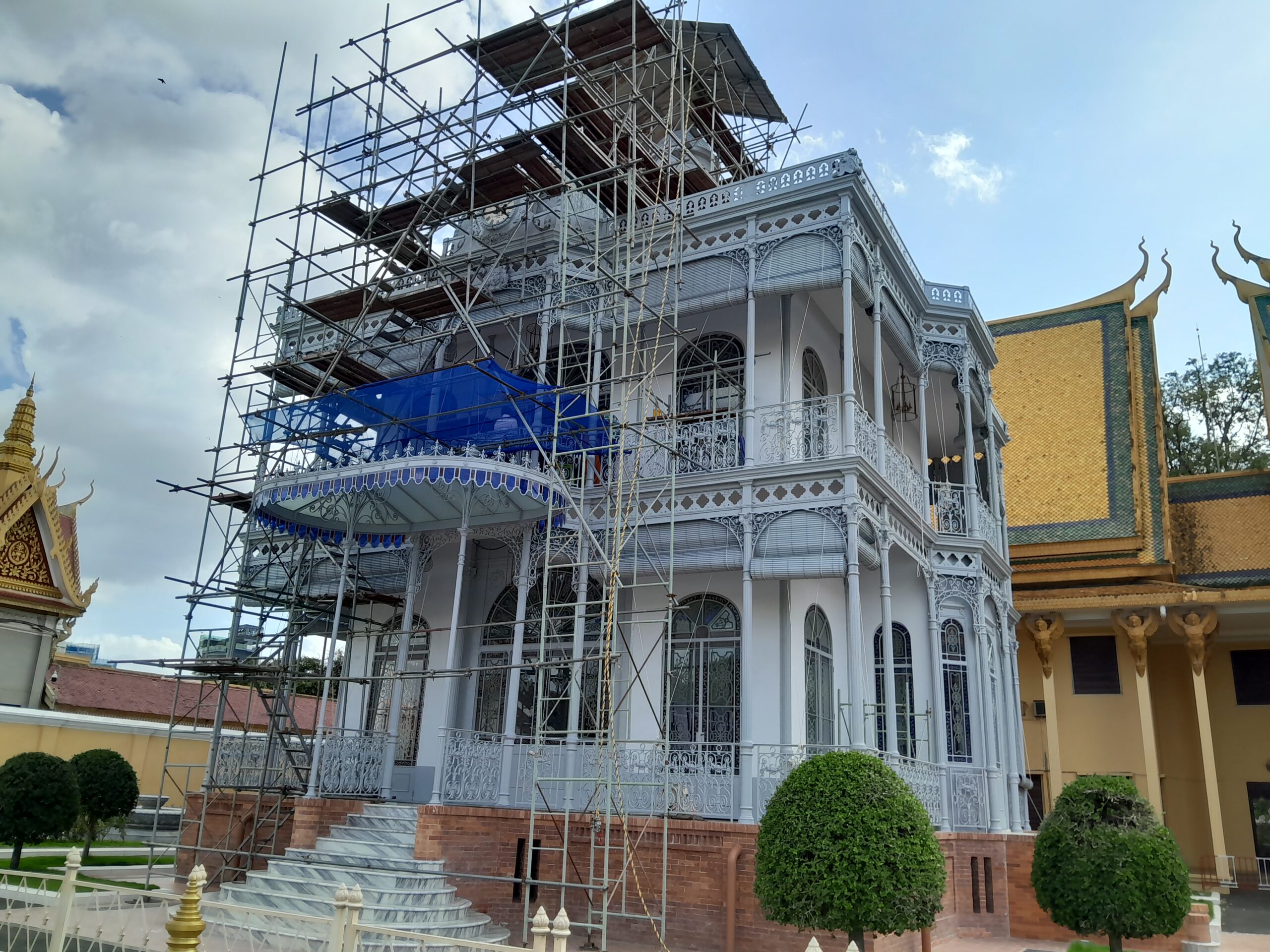
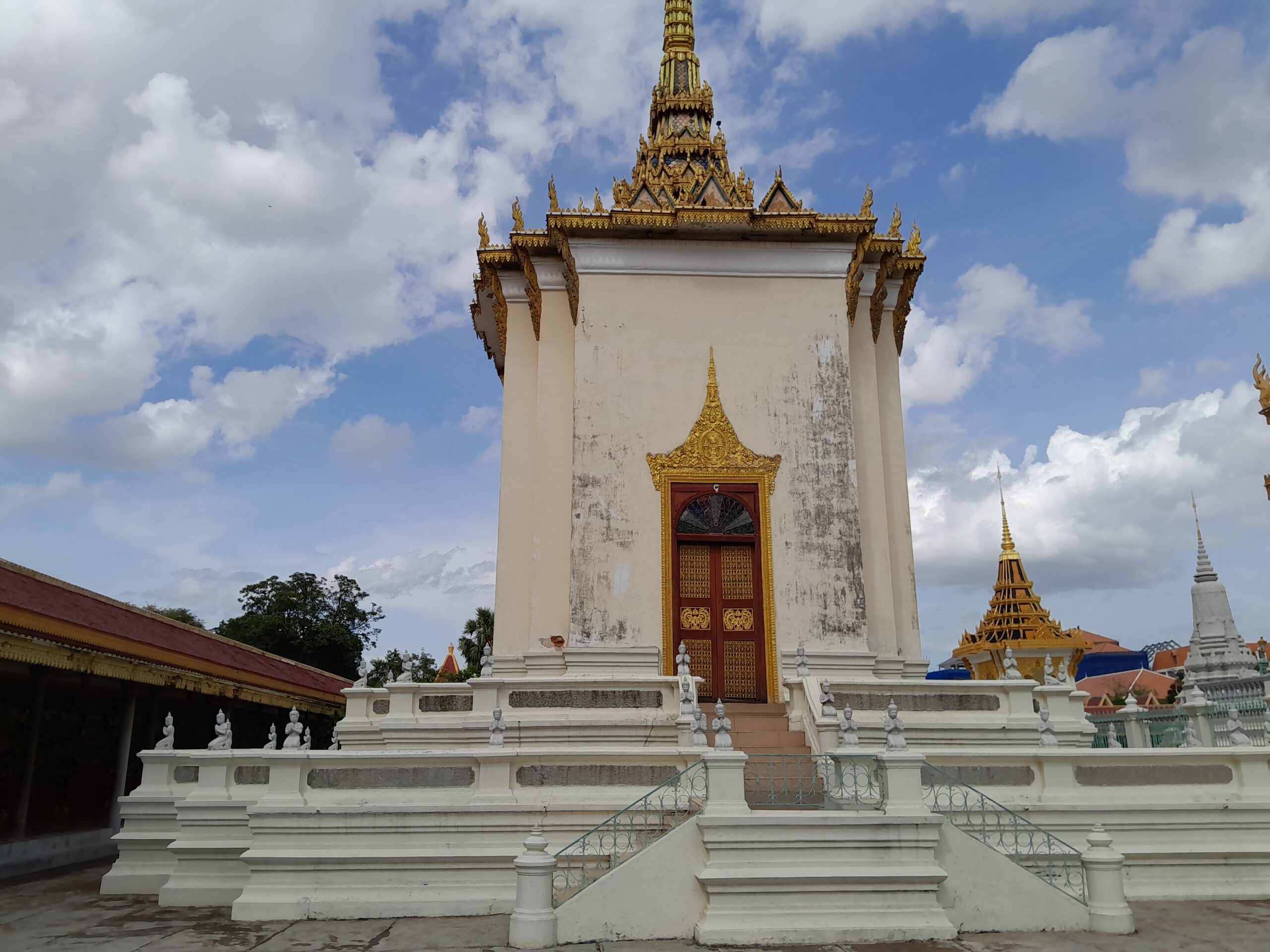
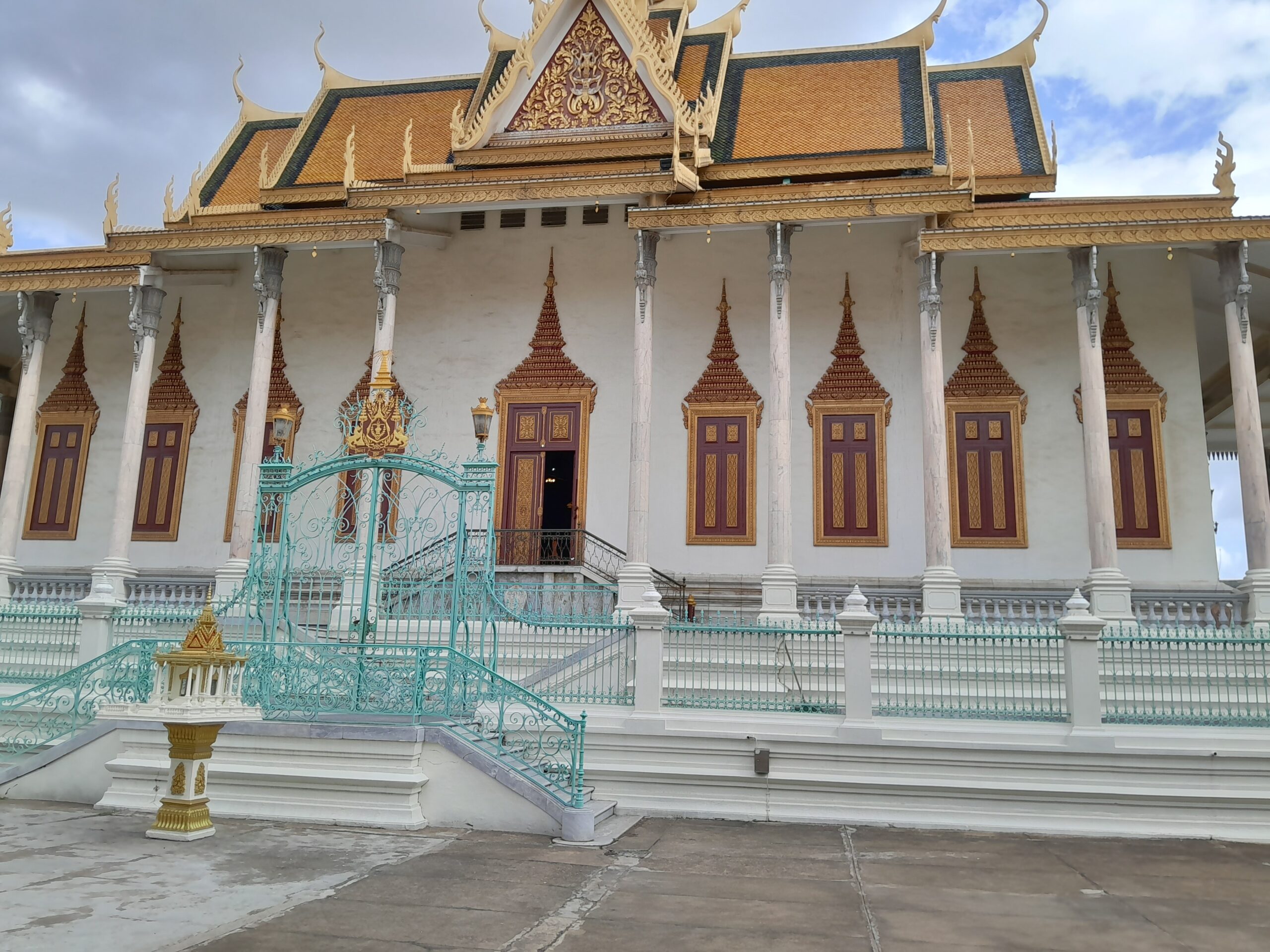
Unfortunately no photography was allowed inside any of the buildings, and I didn’t want to show disrespect to local customs, so all the pictures in this article are from the outside of these buildings.
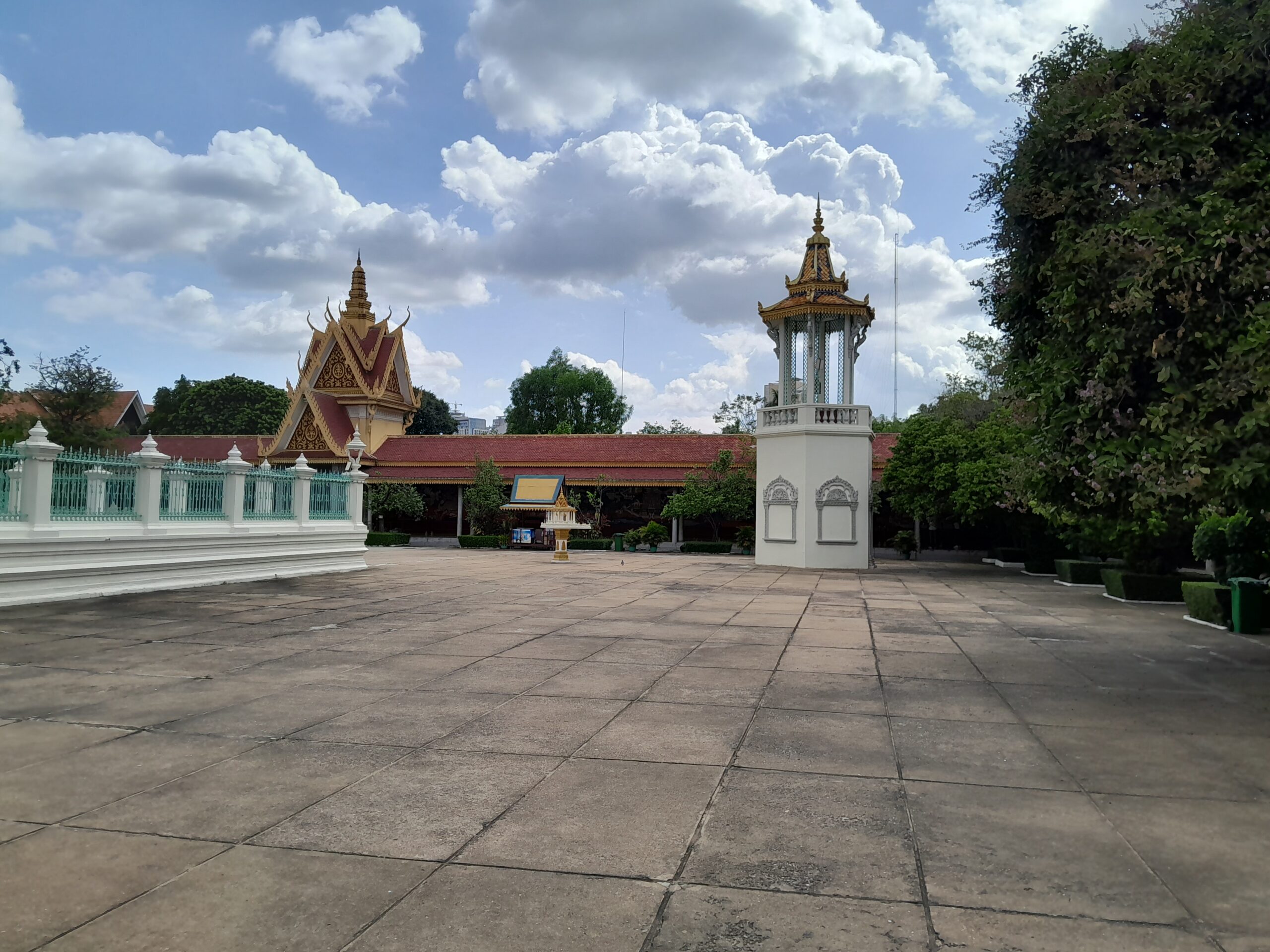
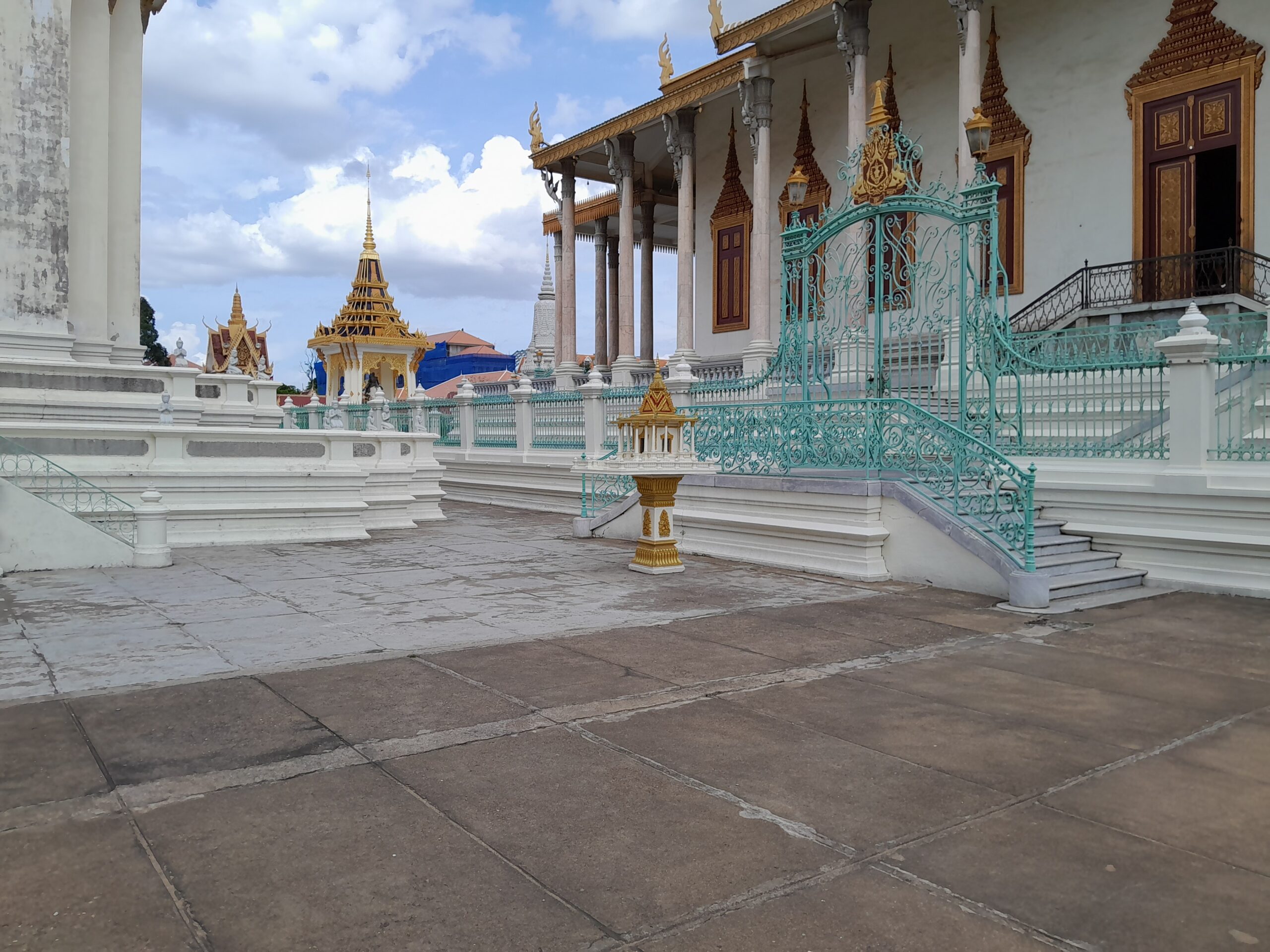
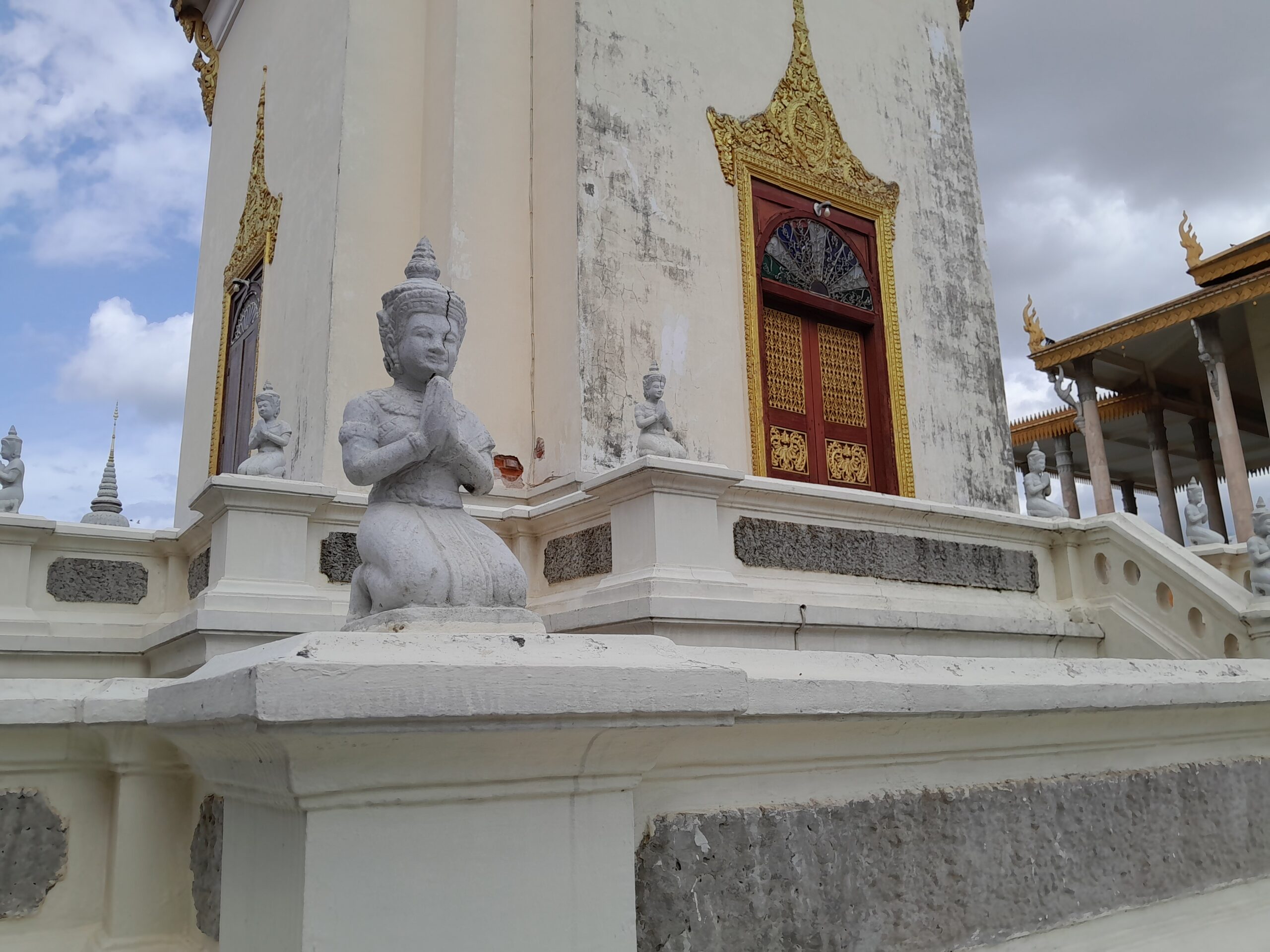
Inside the central wing there is also the Napoleon III Pavilion. This building stood out to me as it looked very western, with marble pillars and archways. It combines both western and Khmer architecture. During my visit it was undergoing maintenance, so scaffolding blocked some of the features of this building.
The north wing of the Palace grounds is mostly off limits. I guessed that they are used more often than the rest of the space, so they keep tourists away from this area. The south wing is open, however, so that was my next destination.
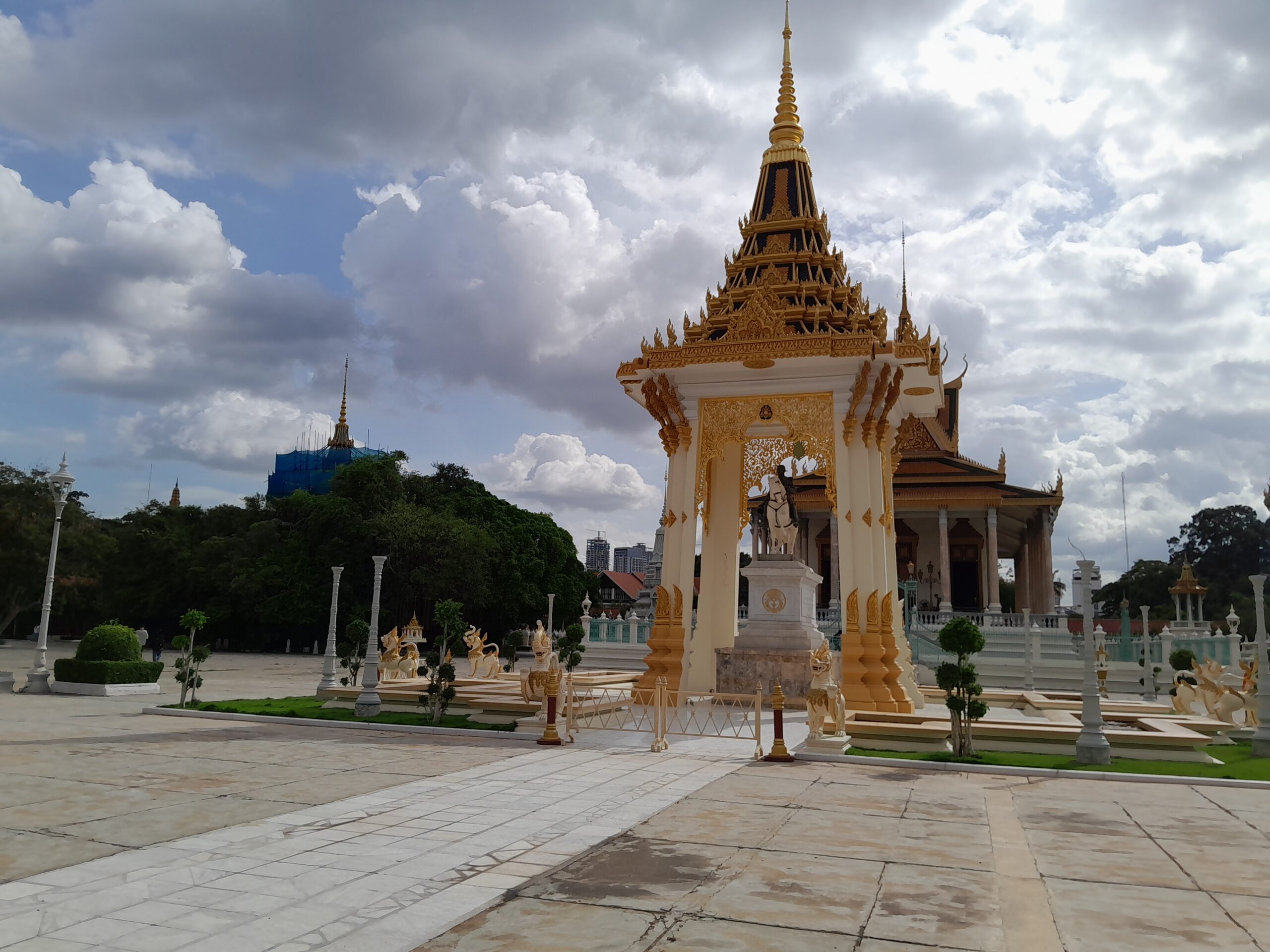
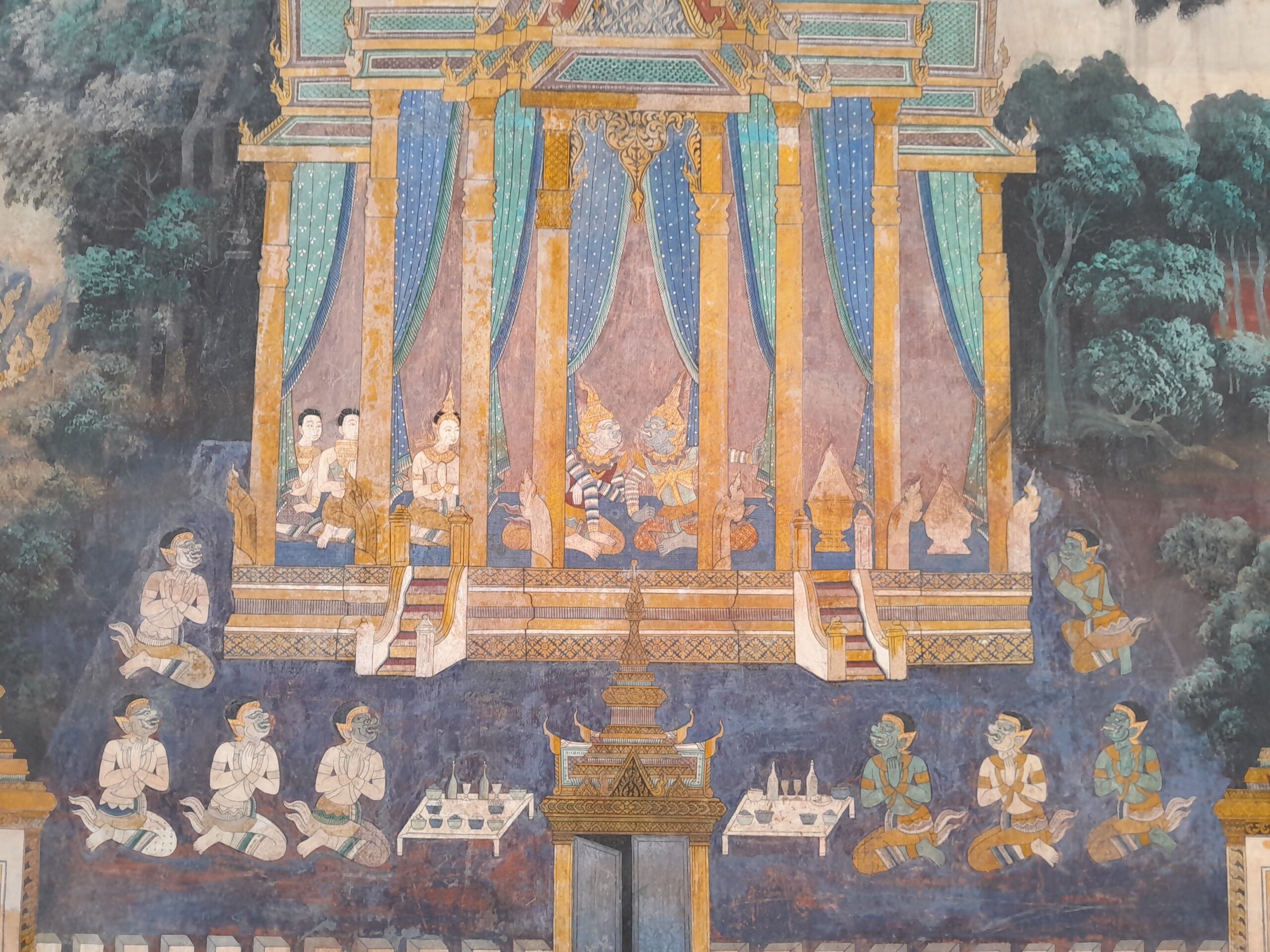
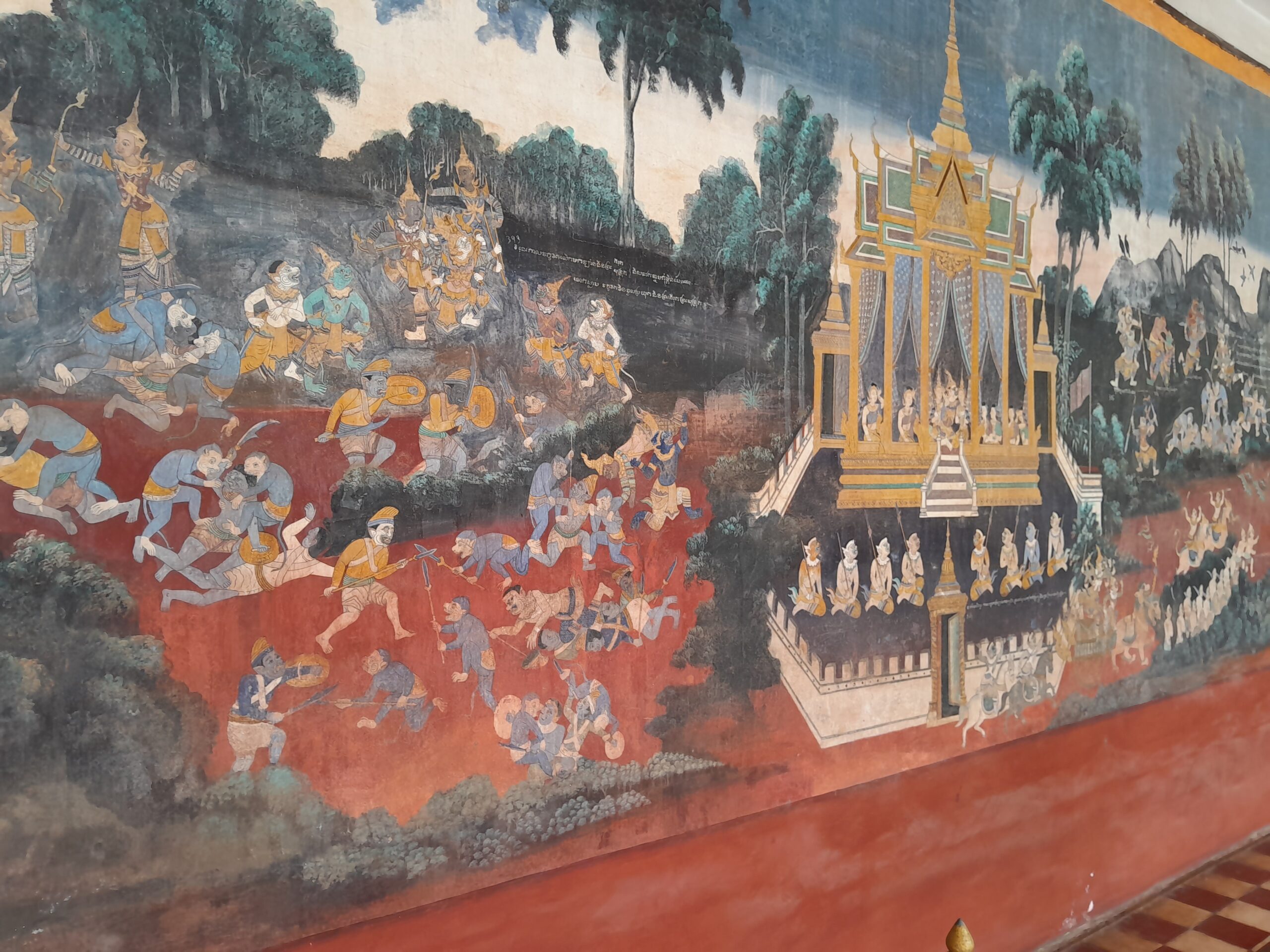
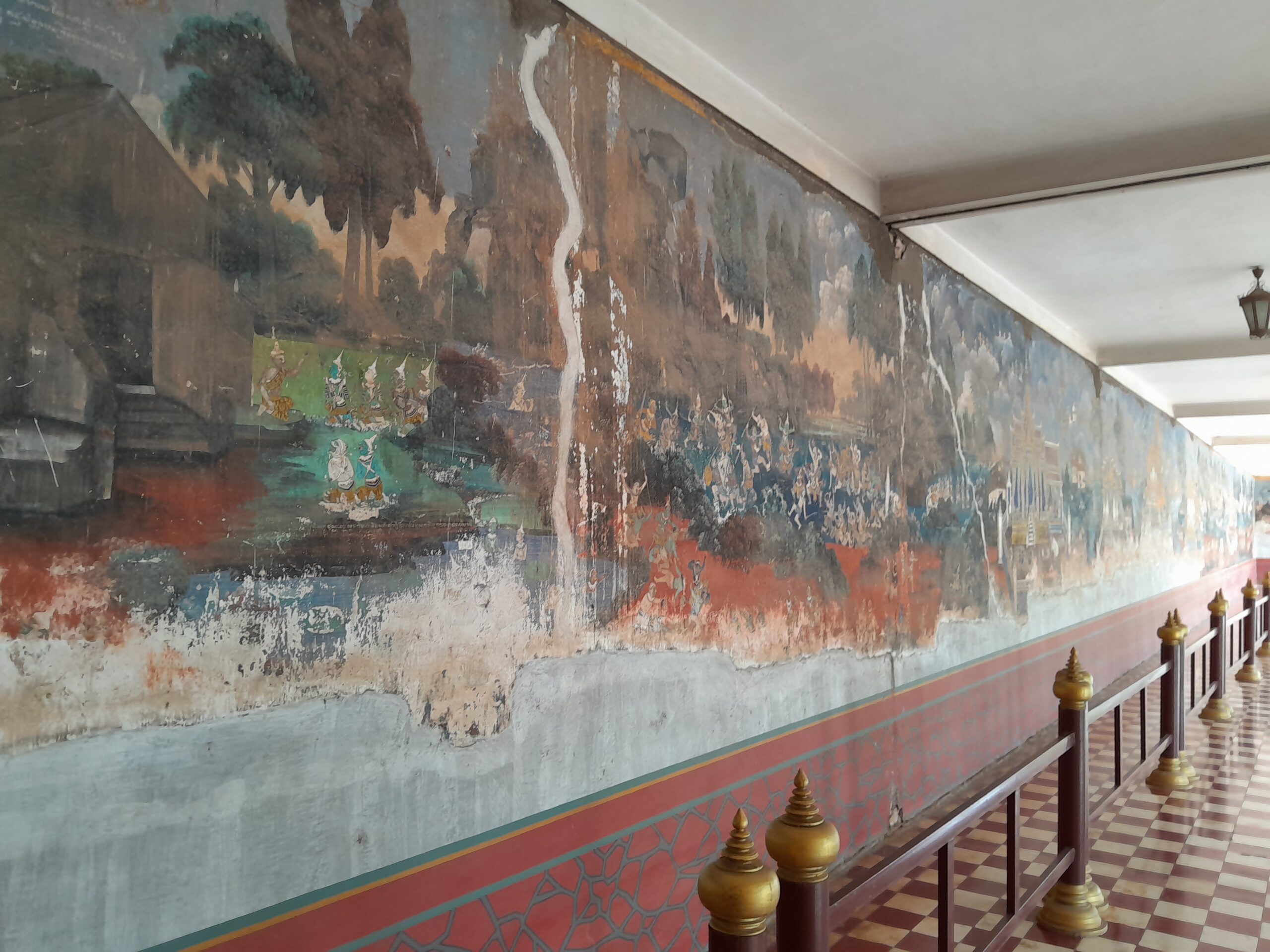
This area is known as the Silver Pagoda Compound, named for the silver tiles lining the central pagoda’s floor. The first thing I noticed in this compound was a mural on the surrounding walls. This mural depicts scenes from the Reamker, Cambodia’s version of the Ramayana.
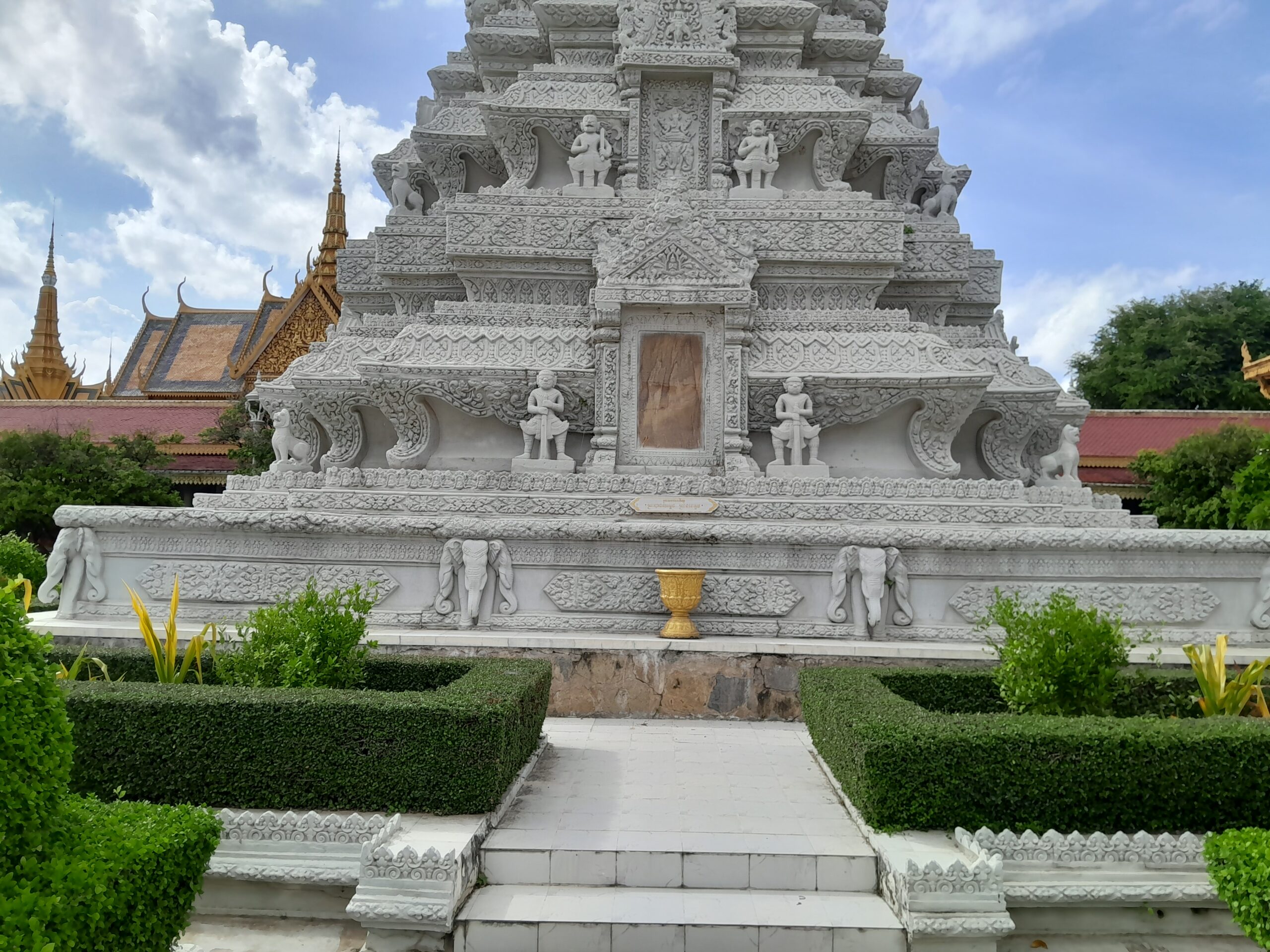
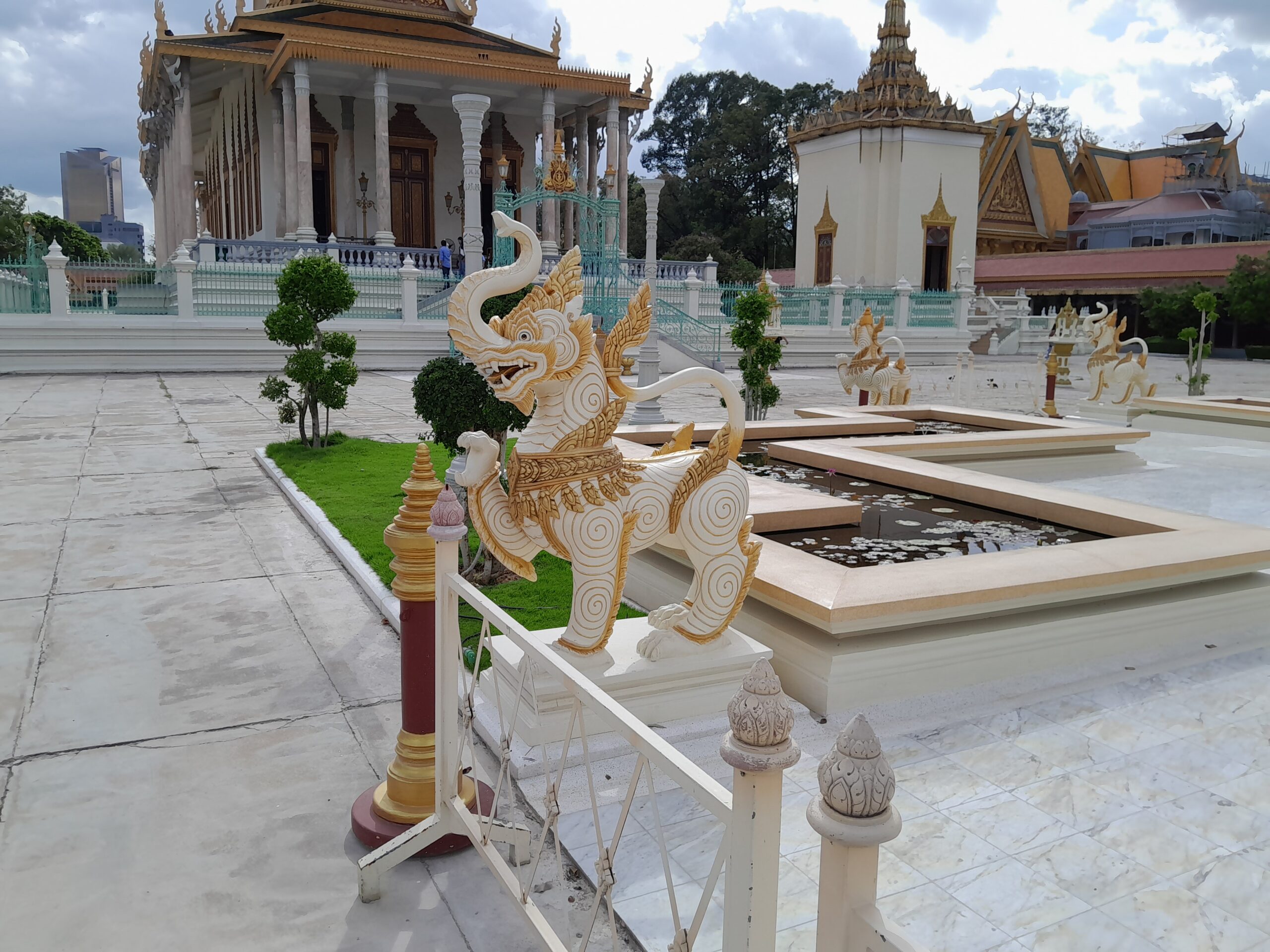
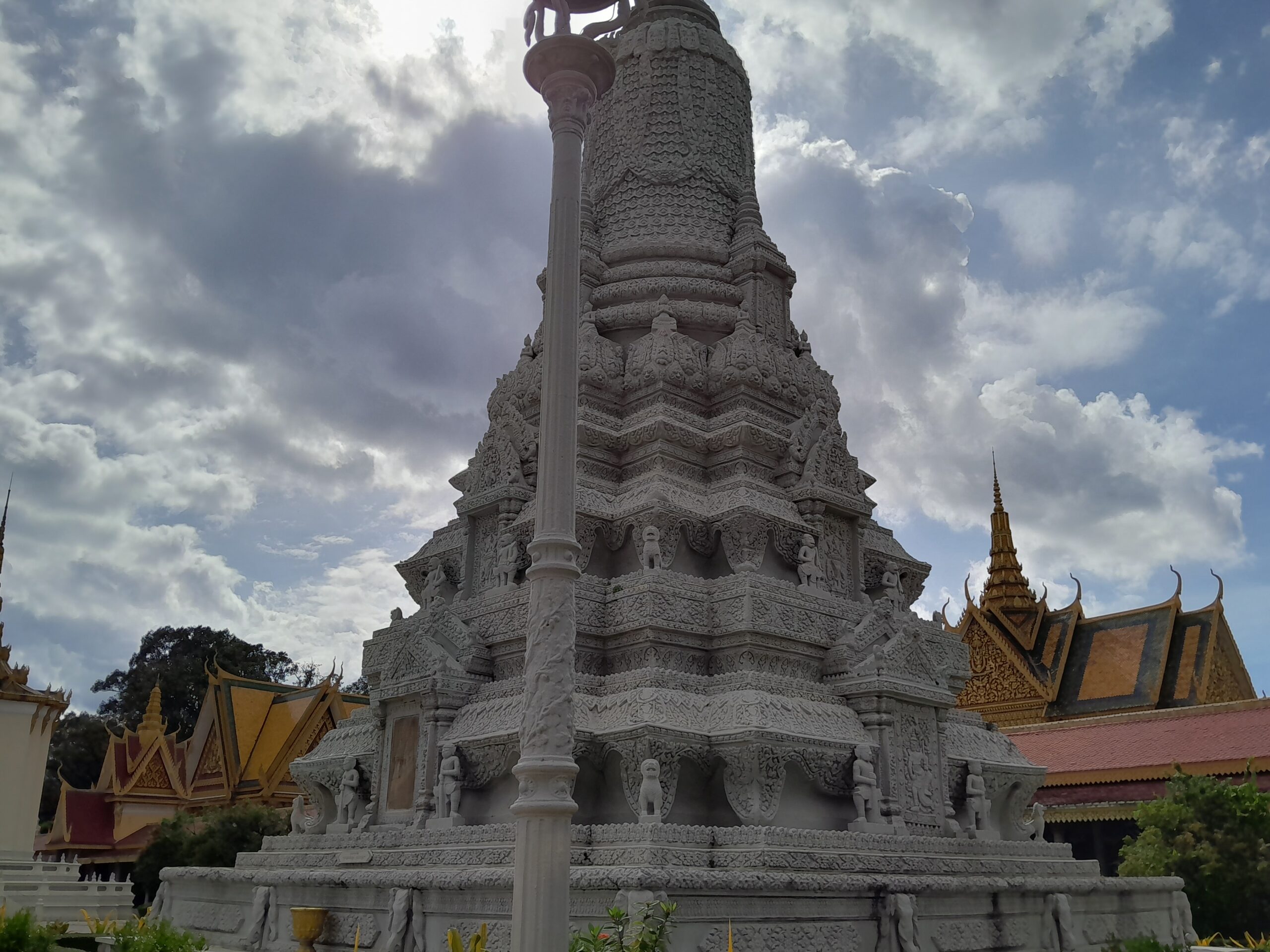
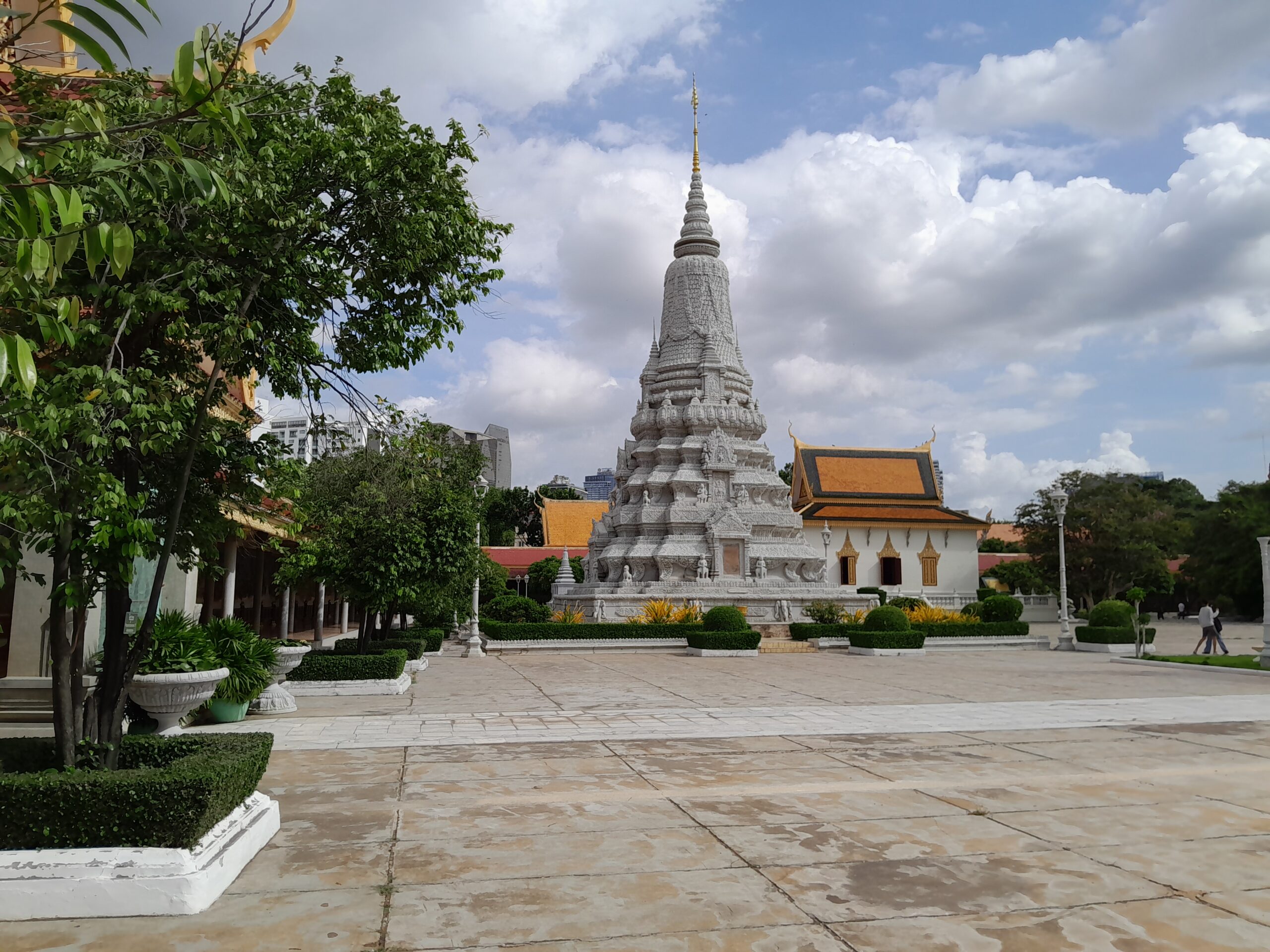
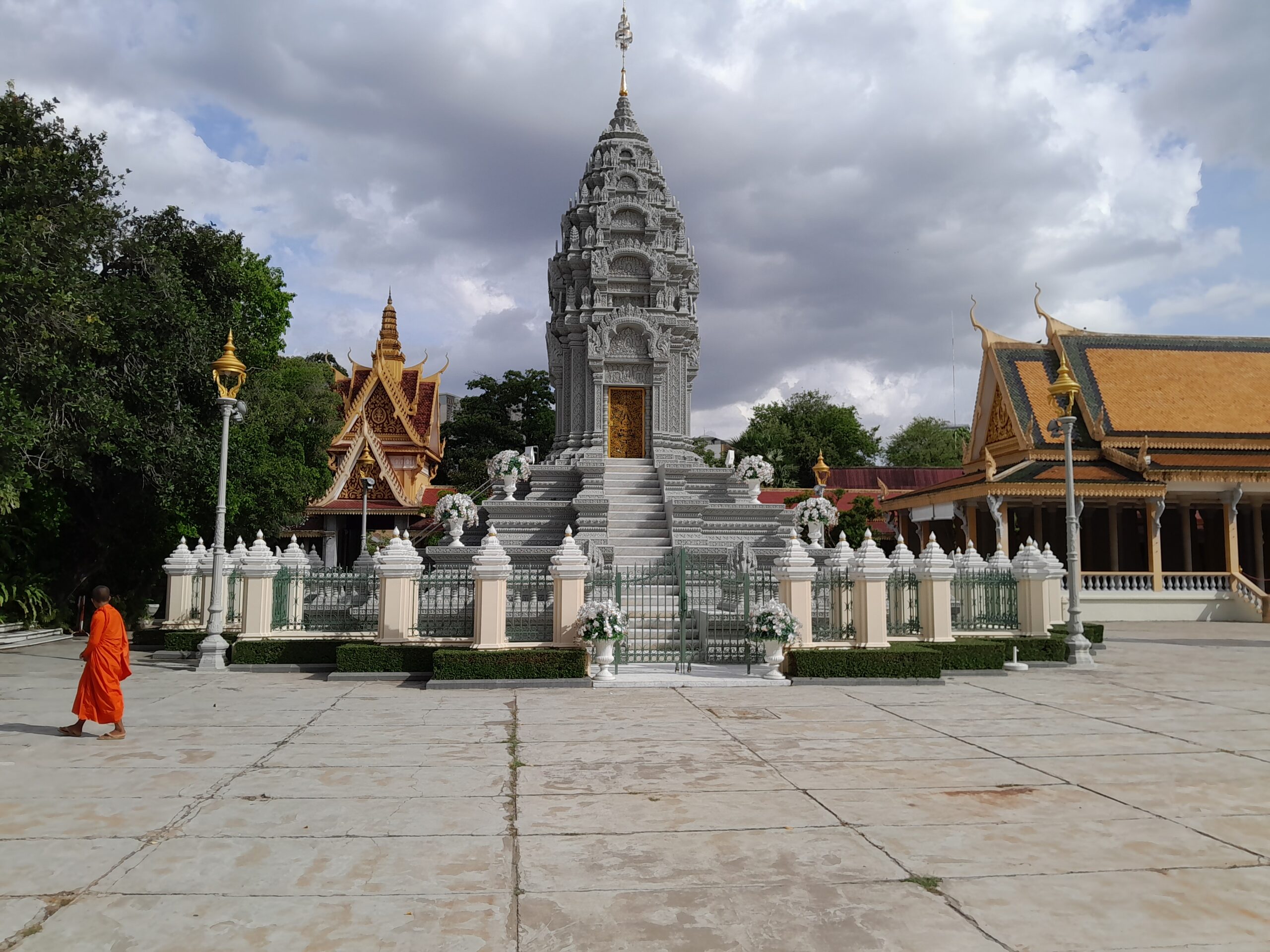
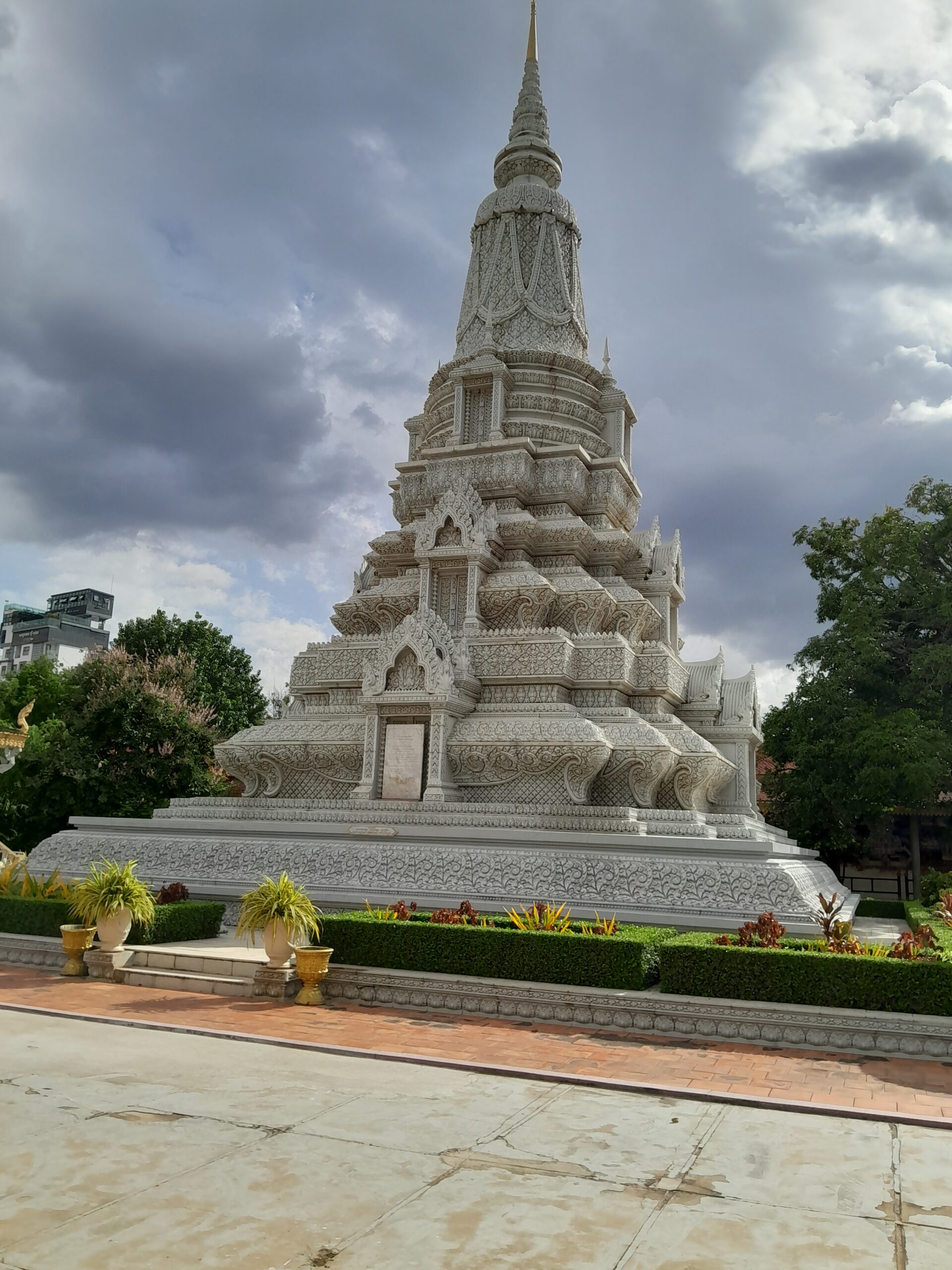
As with all sacred spaces in Cambodia, there are stupas in the compound as well. One is dedicated to King Norodom Suramarit, while the other is dedicated to Kantha Botha, a charity that supports education in Cambodia.
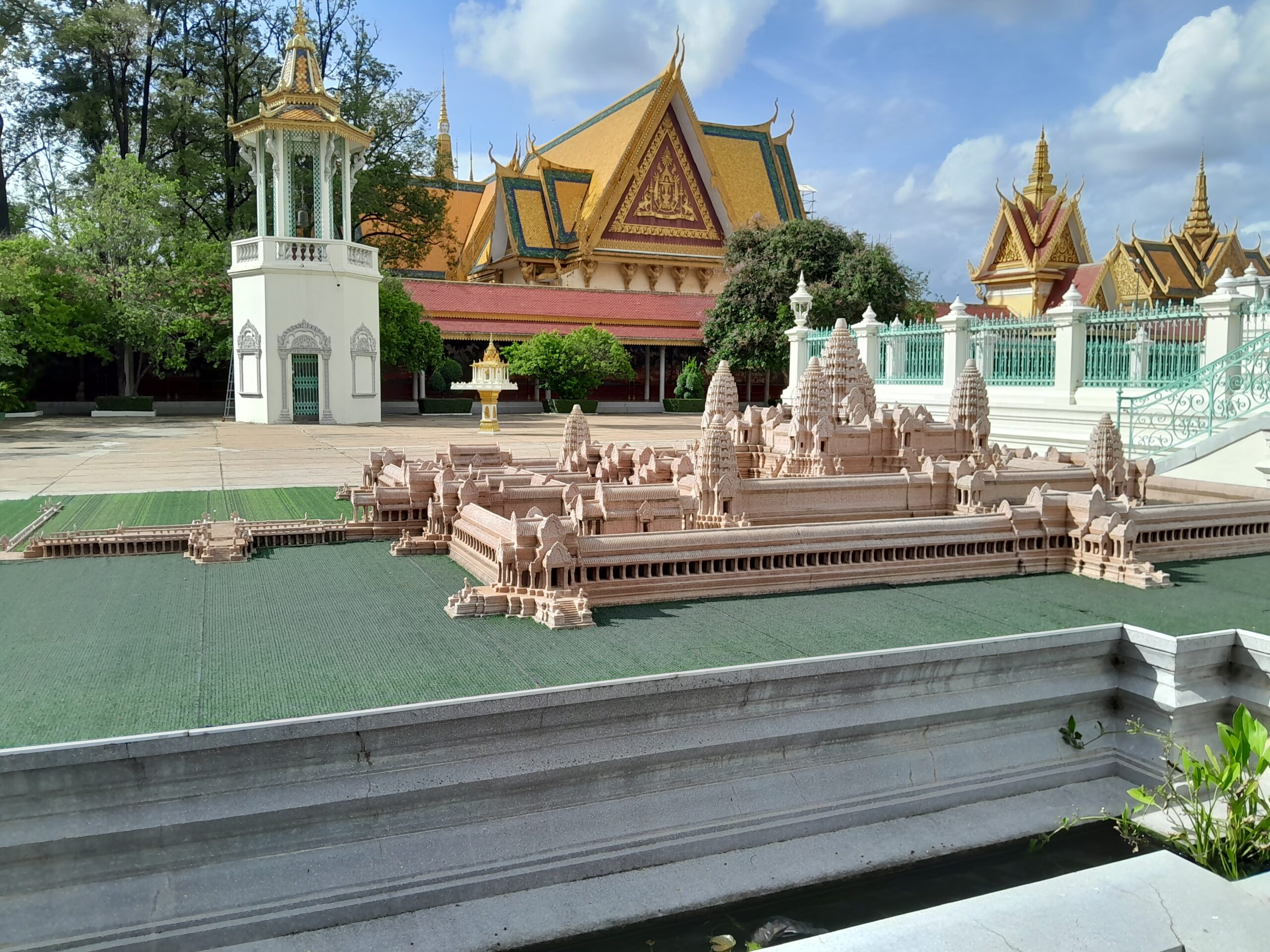
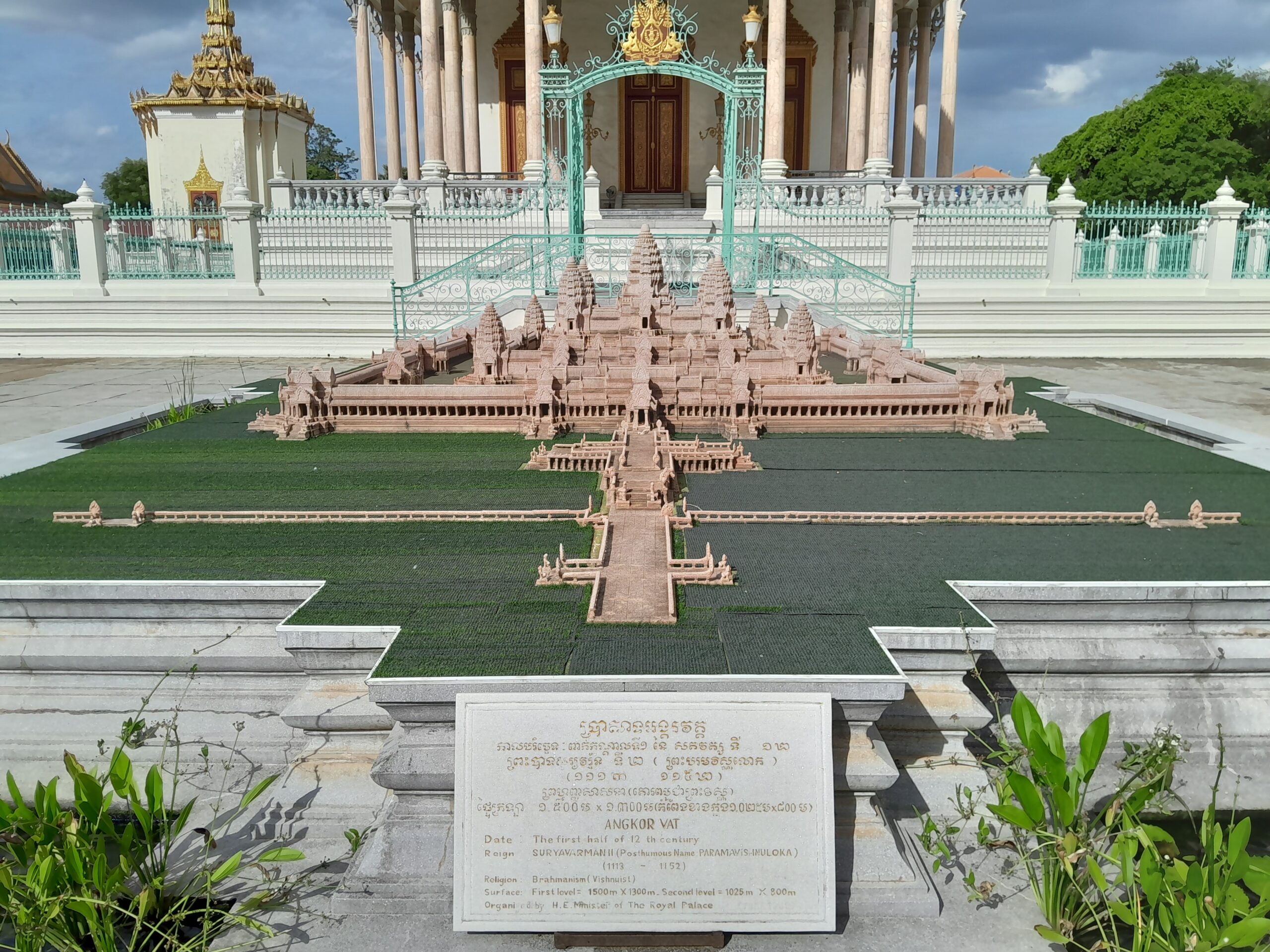
Around the back of the Silver Pagoda I saw a miniature model of Angkor Wat. Angkor Wat was the reason I went to Cambodia in the first place, and this was the first glimpse I’d had of it within the country. Pretty soon I’d be in Siam Reap and finally get to see this wonder. But that’s a story for a future post.