
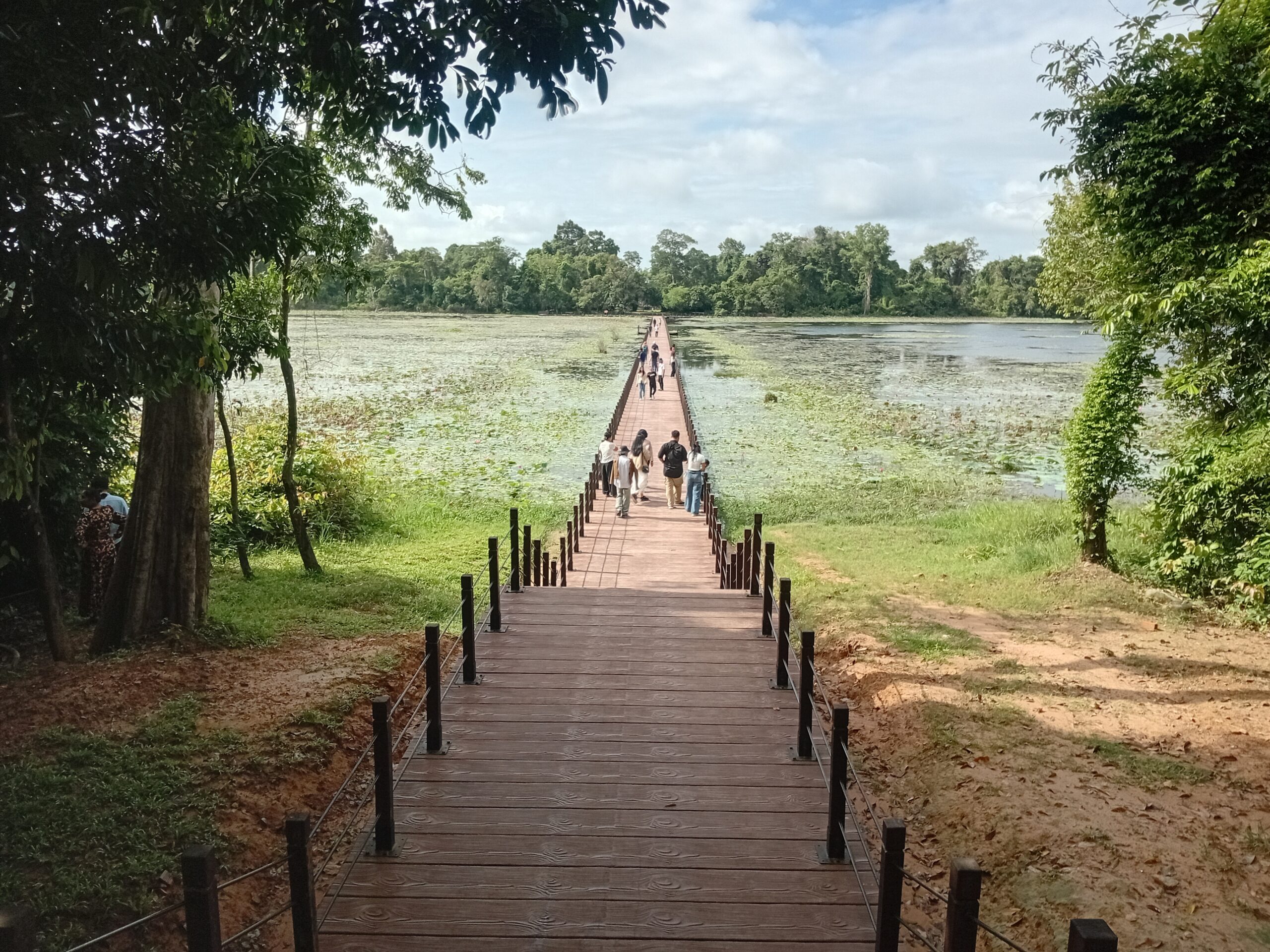
Perhaps the most spectacular island temple in the area, this temple of healing is surrounded by a large moat that needs to be crossed by bridge before you can reach the inner shrine. This was certainly a highlight of my second day exploring Khmer temples near Siem Reap.
The wooden bridge visitors use to access the temple’s shrine is clearly of a modern design. A combination of treated wood and steel, it provides a safe walkway for any and all that come here. As far as I can tell the temple used to only be accessible by boat, but my research into this after the fact is inconclusive.
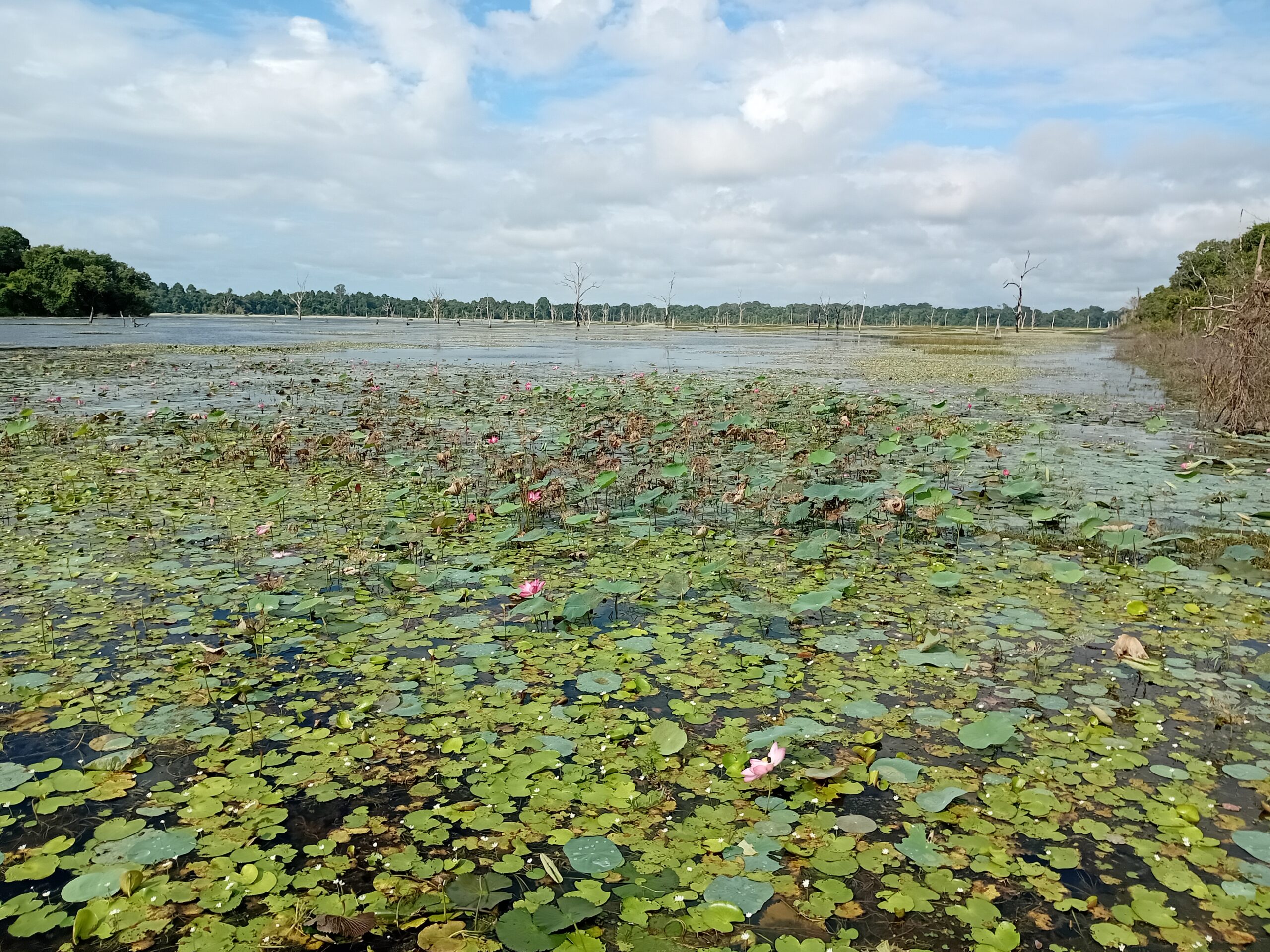
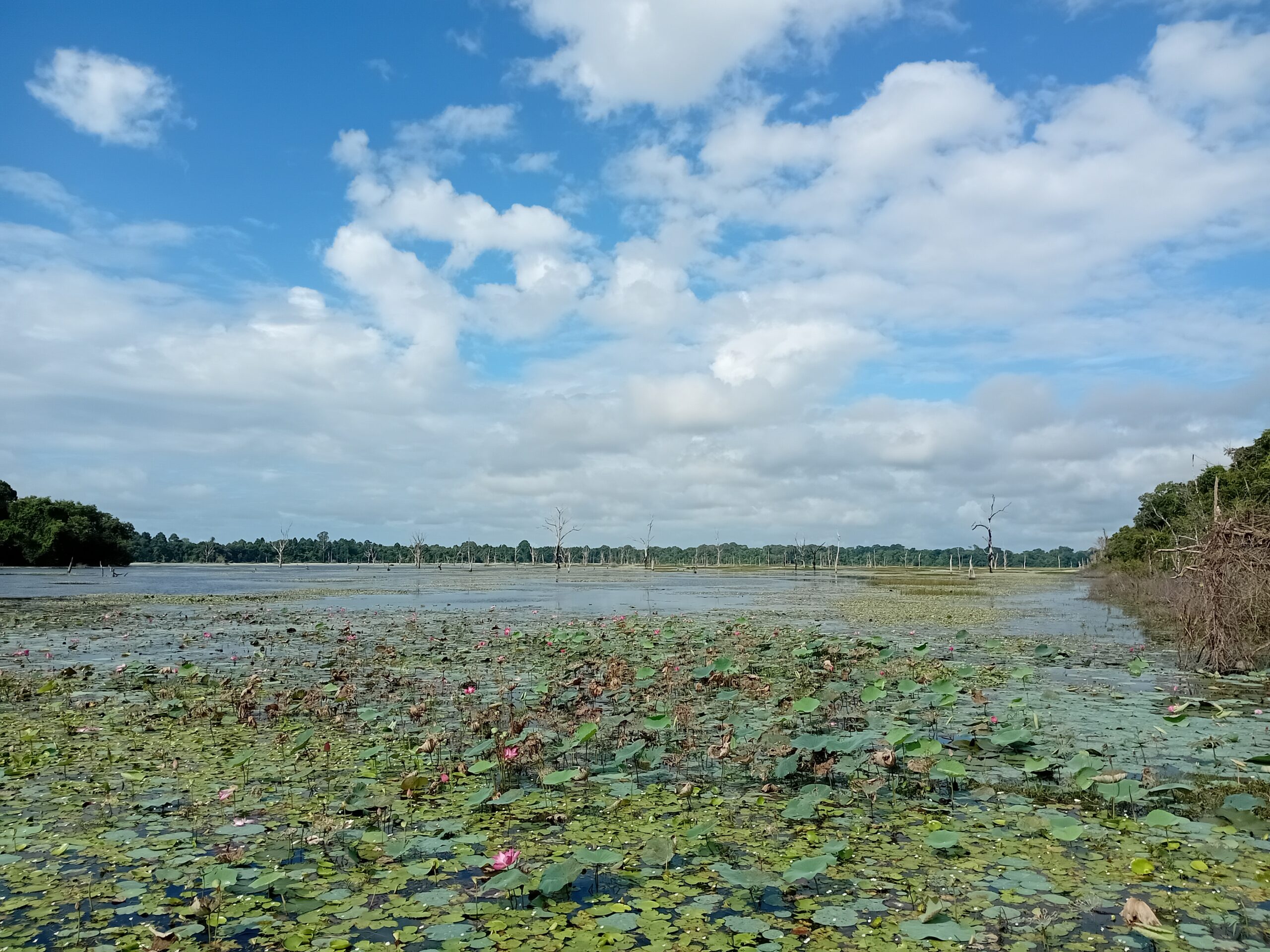
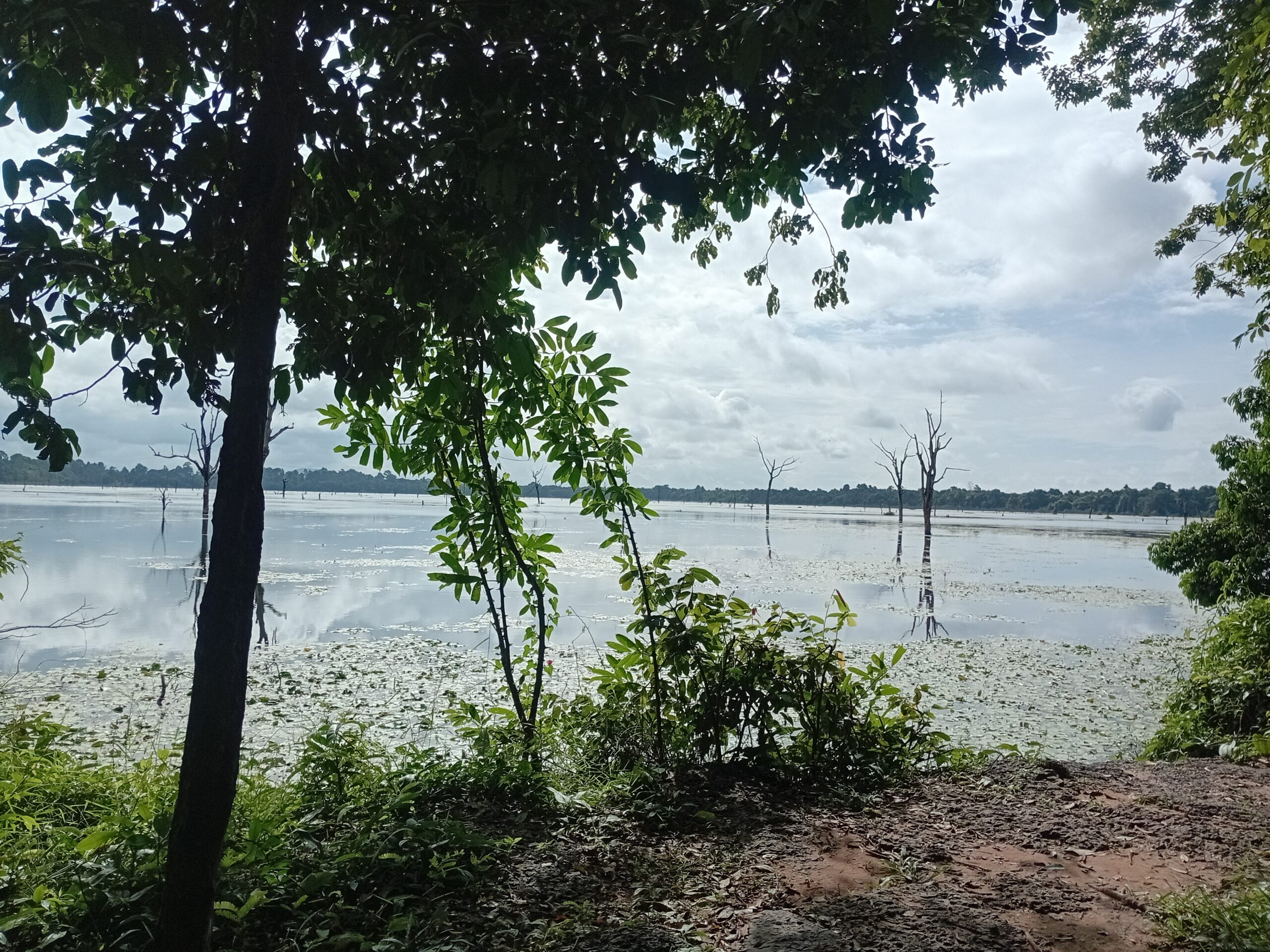
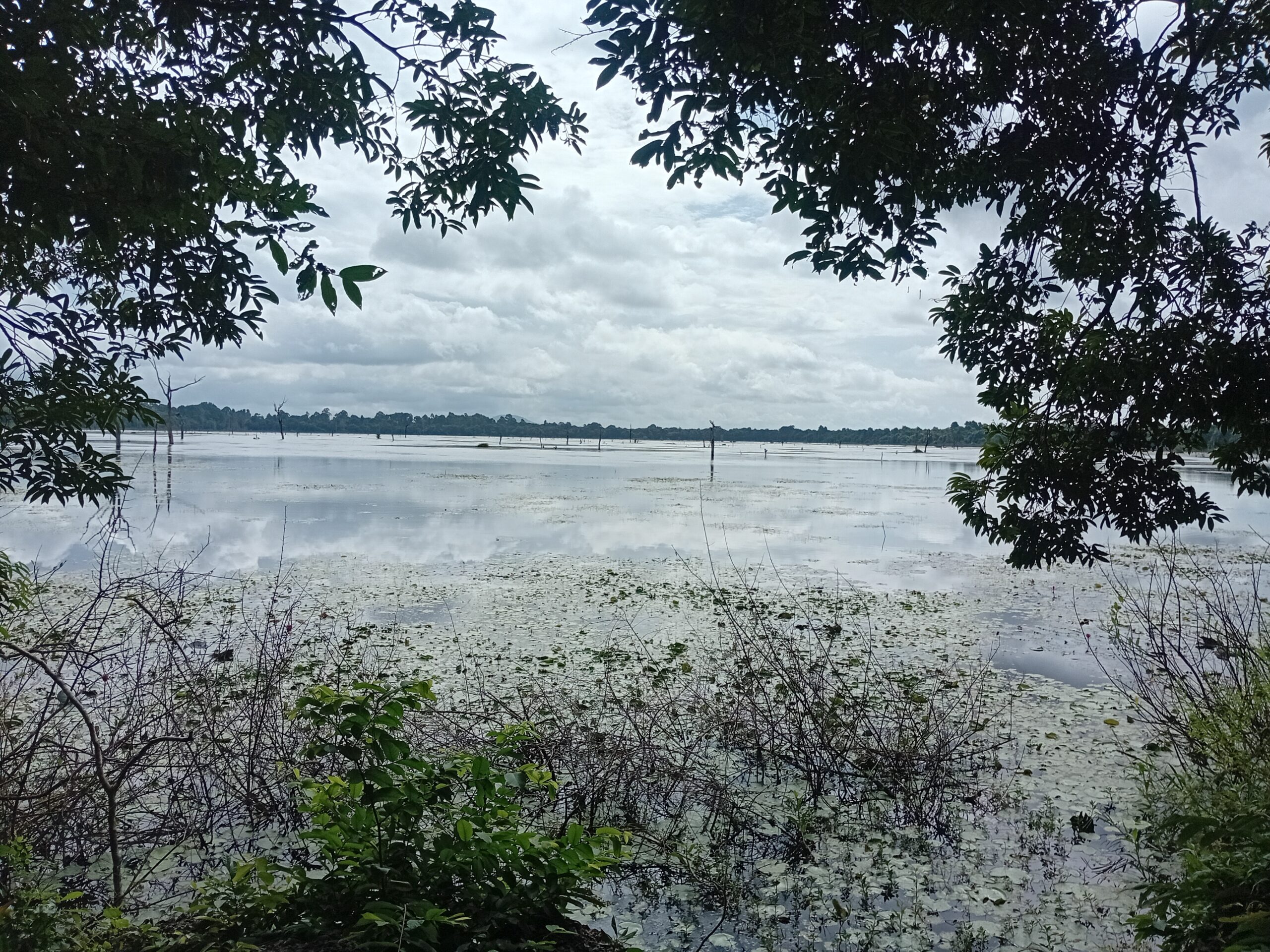
As I crossed the moat I noticed the lilies that covered the water. Some of them had flowered, dotting the scene with pink here and there. Rising from the water were the skeletons of birch trees, seeming consumed and drowned by the waters that surrounded a place of healing.
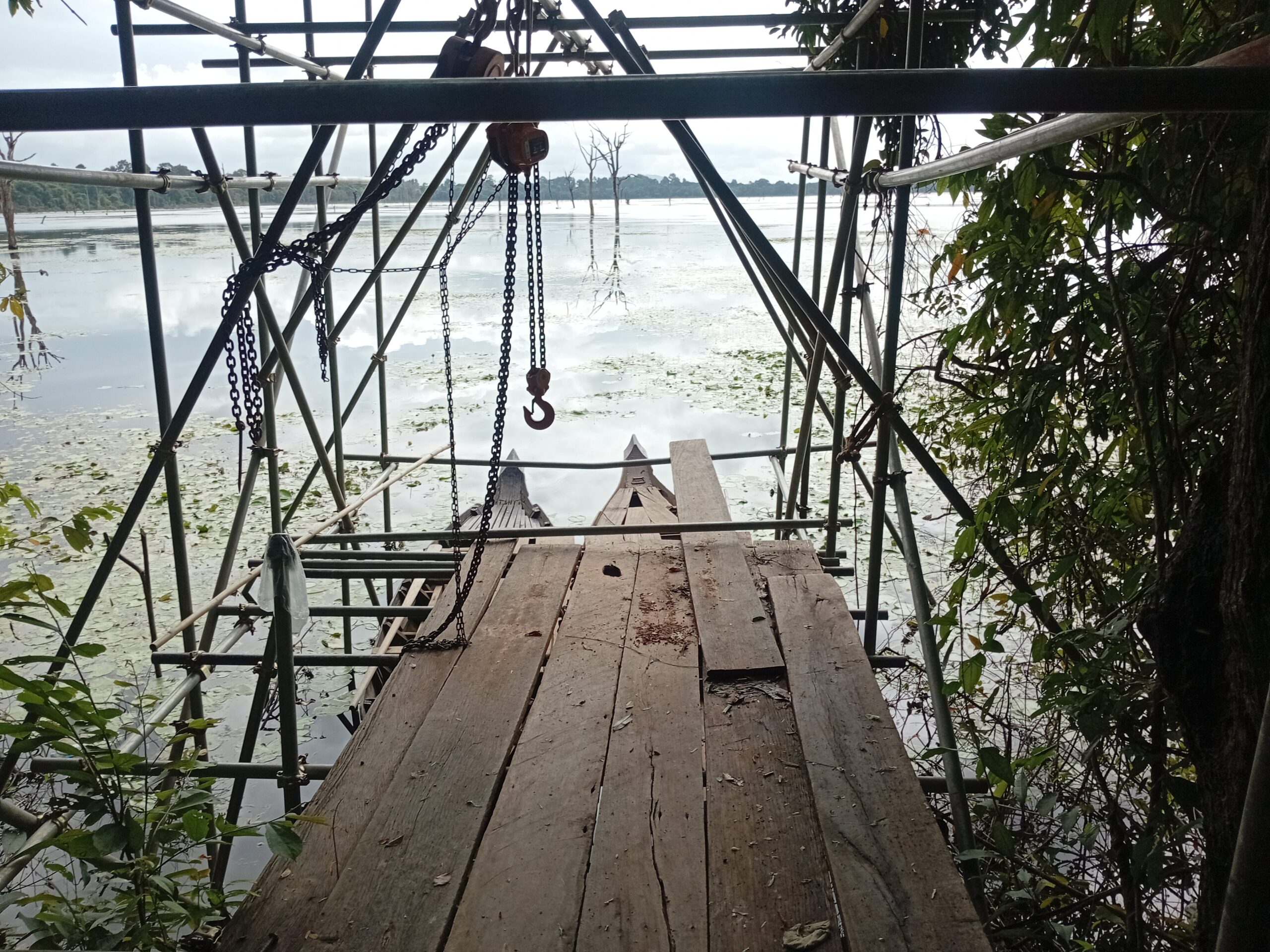
Once I reached the island, I decided to walk around the outside rather than go directly to the shrine. I came across a small wooden pier with a couple of boats docked. It had a pulley system attached. This place is likely used to transport supplies to the island for those who work on maintaining the temple.
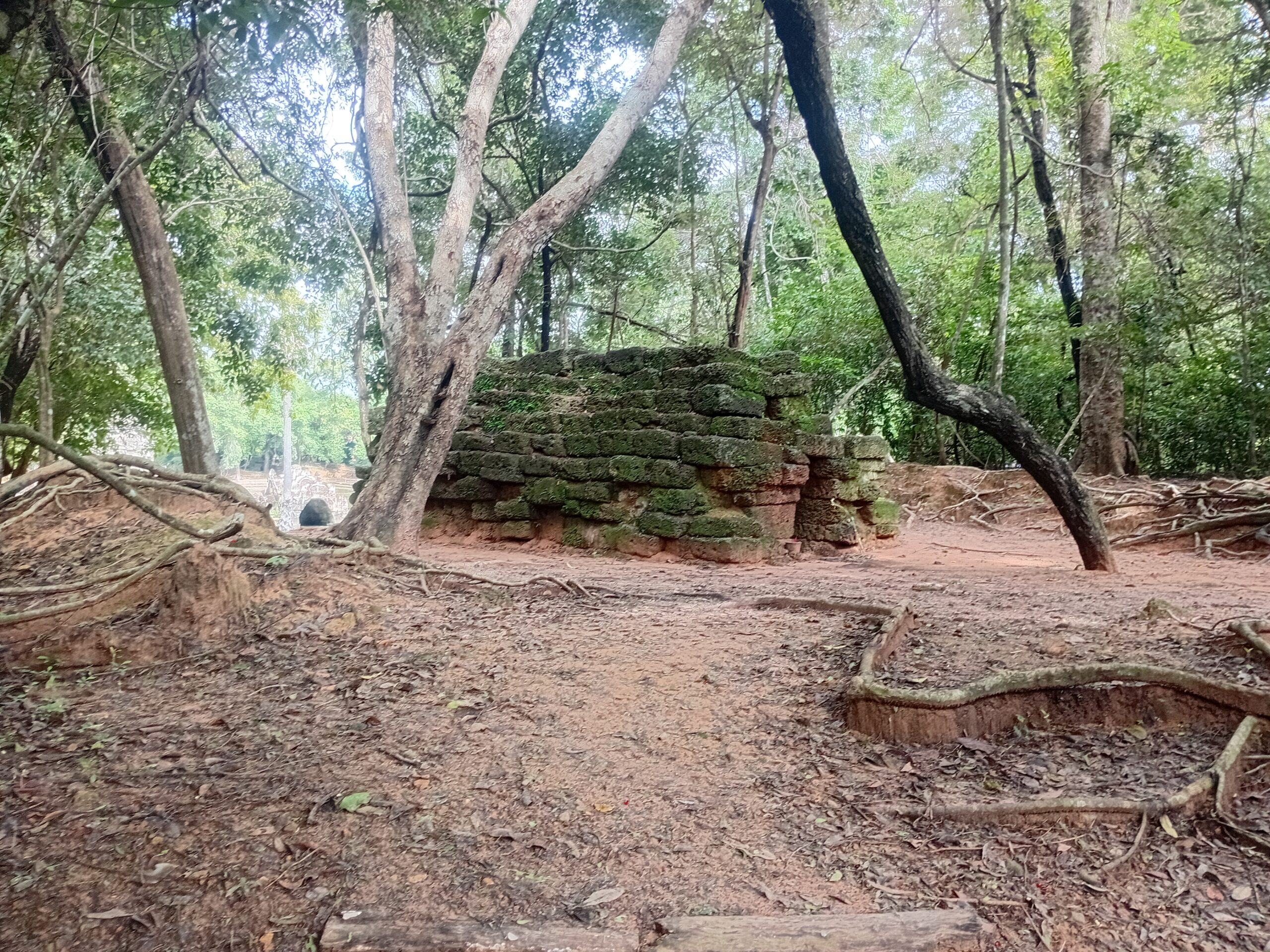
I also found some smaller ruined walls, so there must have been some smaller structures around the shrine that haven’t been restored as much as the central part of the island. Even when the temple was still in use, there still needed to be those around who would tend to and maintain it.
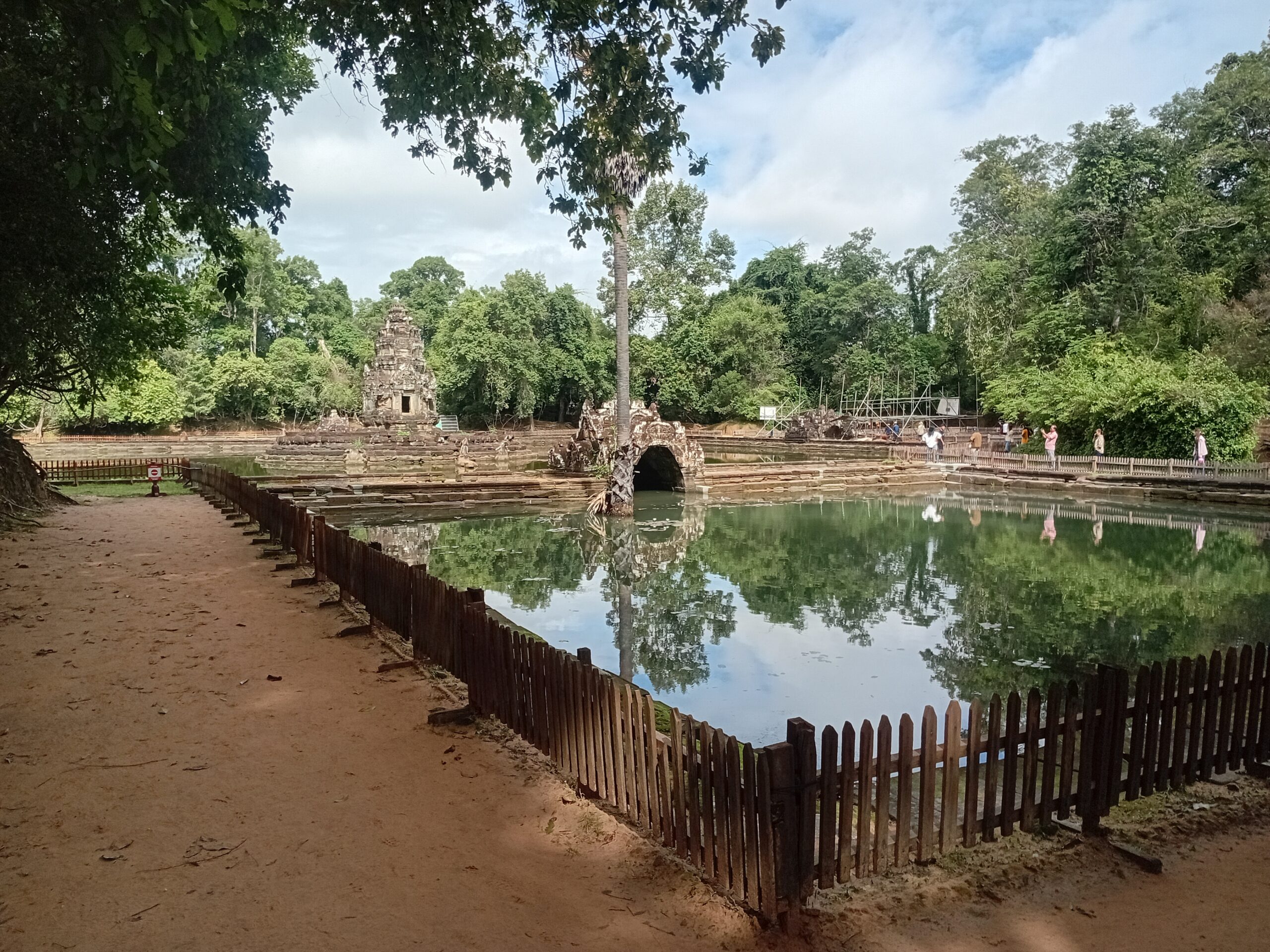
Eventually I made my way to the centre, and to the shrine. A larger square pool surrounded by four smaller pools make up the shrine. The outer pools flow into the central pool which houses a circular sanctuary. These outer pools represent the elements of earth, fire, wind, and water. Small stone bridges allow visitors to pass over these streams. Each bridge bears a sculpture of an animal head representing the element of the pool – Elephant, Human, Horse, and Lion.
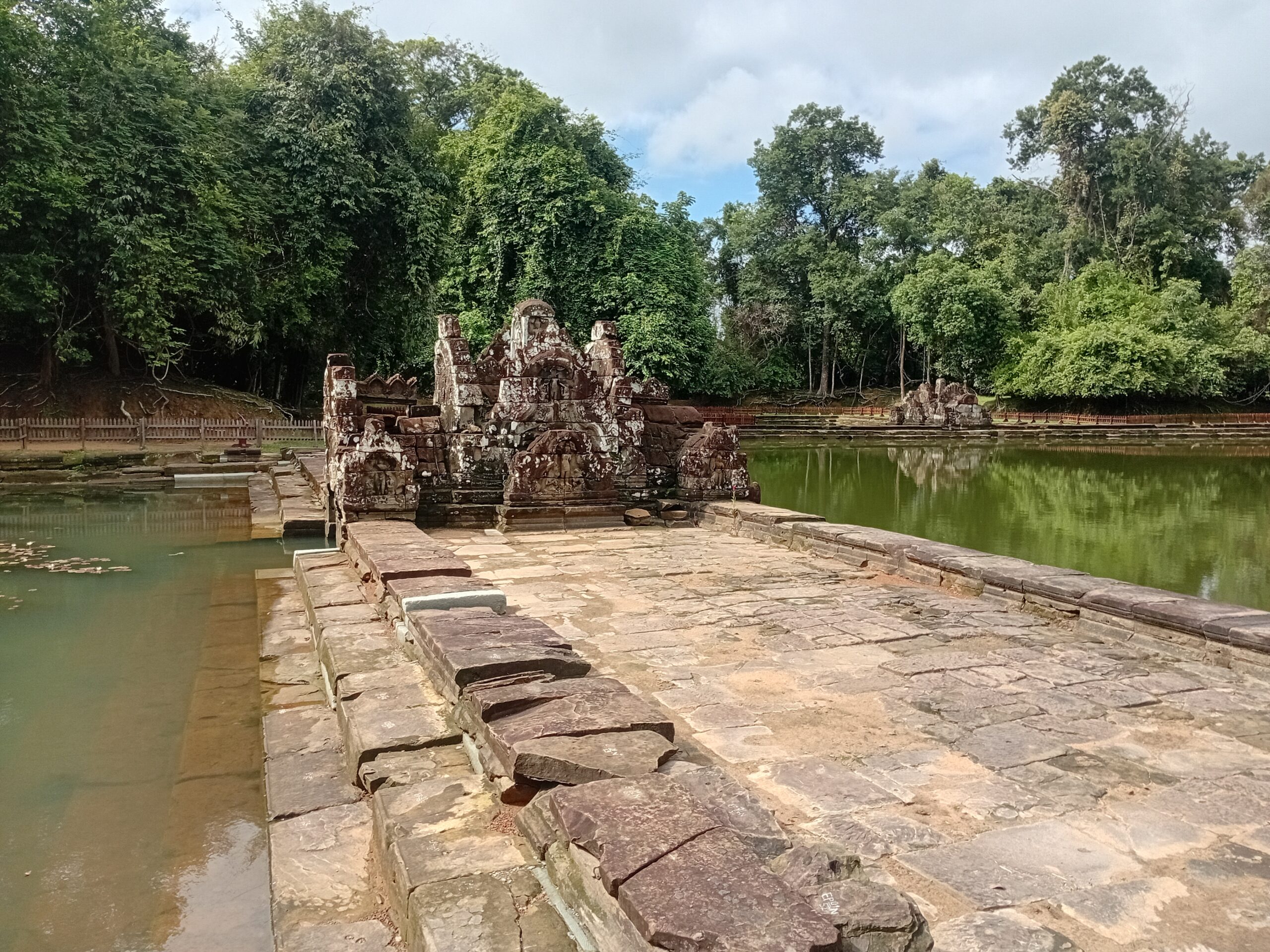
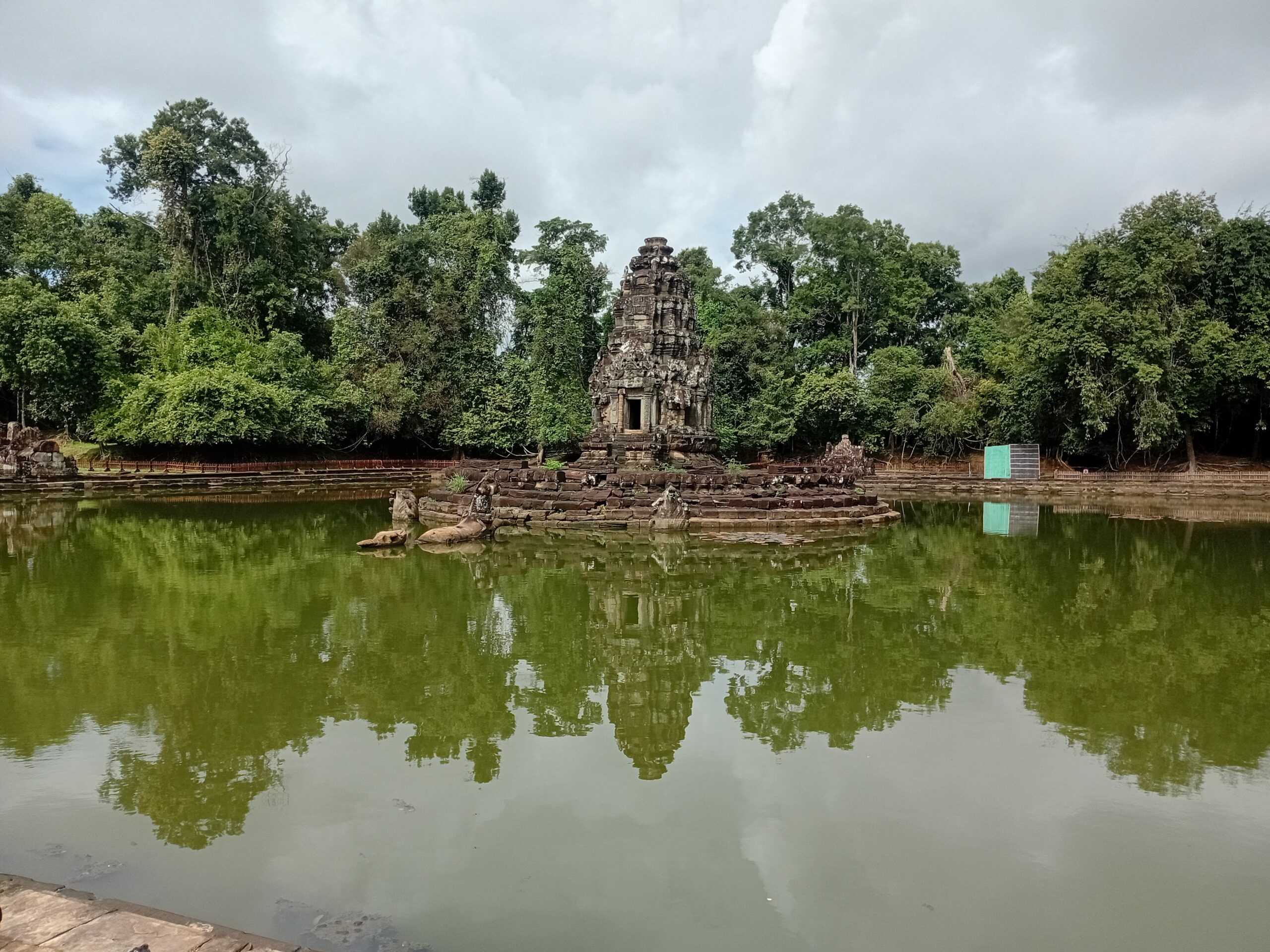
People would come to this shrine and bathe in the outer pools, believing the waters would heal their ailments. It must have been a pilgrimage for many of ill health, and I wonder if there would have been other treatments provided to help the sick and elderly. Or if this was a place people came to for spiritual healing. Either way, what once provided people with restoration is now being restored by the people.