
There is a trope used in many video games that I despise. A cheap way to make things harder that leaves the player feeling cheated out of something they have earned. But what happens when a video game does something you hate, but does it so well you end up loving it?
Trigger Warning
This article will acknowledge the existence of self harm and sexual assault.
Spoiler Warning
This article will spoil the ending of Life is Strange: Chapter 2. If you haven’t played it yet, and don’t want to find out what happens then you can read something else instead.
Cool New Ability
You’re playing a video game and you get a Cool New Ability. You have a lor of fun with Cool New Ability, using it to destroy bad guys or pull off fantastic moves. Then you get to the boss and you are excited to try out Cool New Ability against the boss. Only to find the boss is immune to Cool New Ability or worse, Cool New Ability is taken away from you.
This, to me, is lazy game design. It’s a cheap way to make a boss harder, but it also punishes the player for learning and mastering Cool New Ability. A good game would allow the boss to adapt to Cool New Ability, but still let the player use it against the boss if they can use it well.
But I digress. I’m supposed to be talking about Life is Strange’s second chapter.
Kate
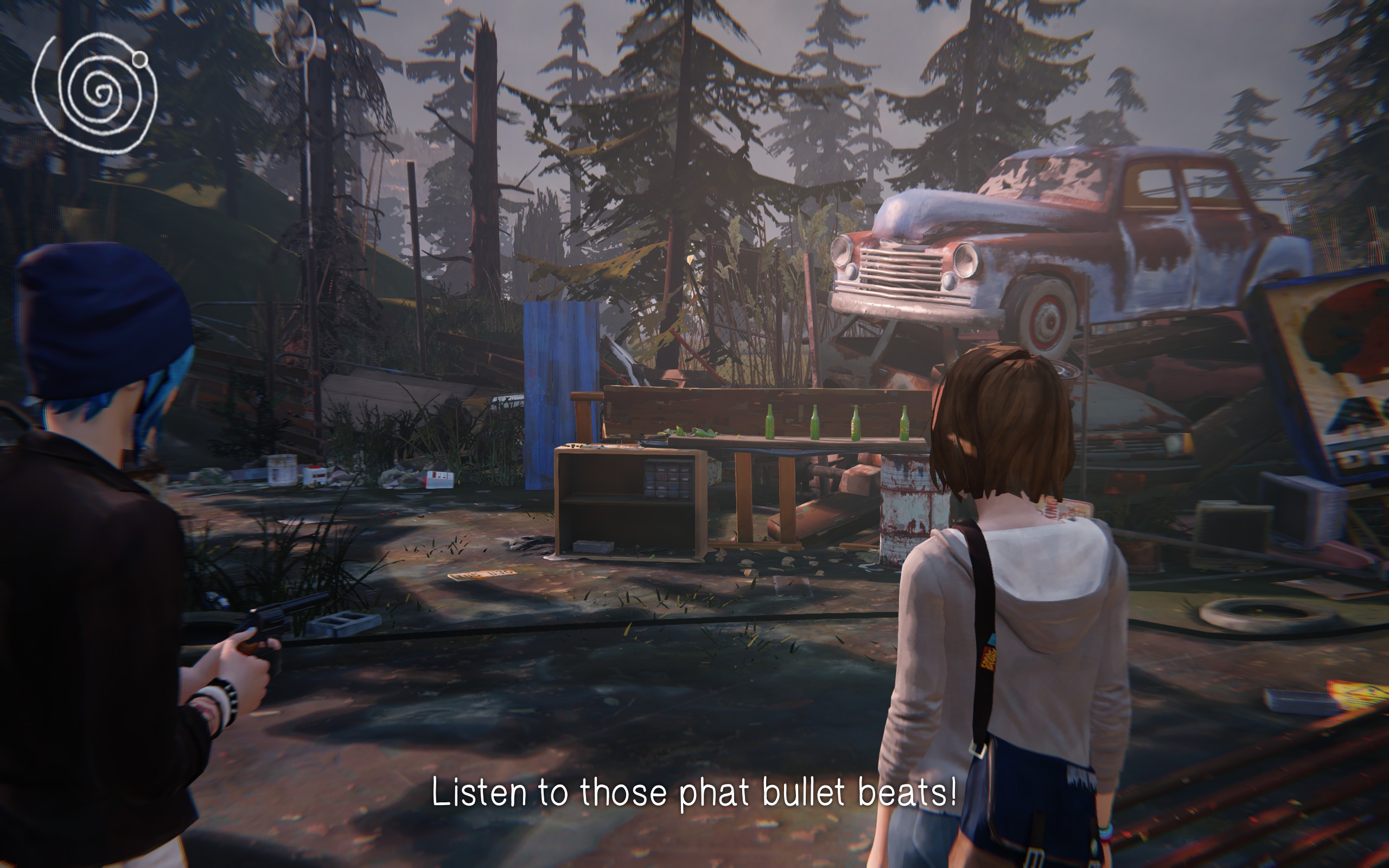
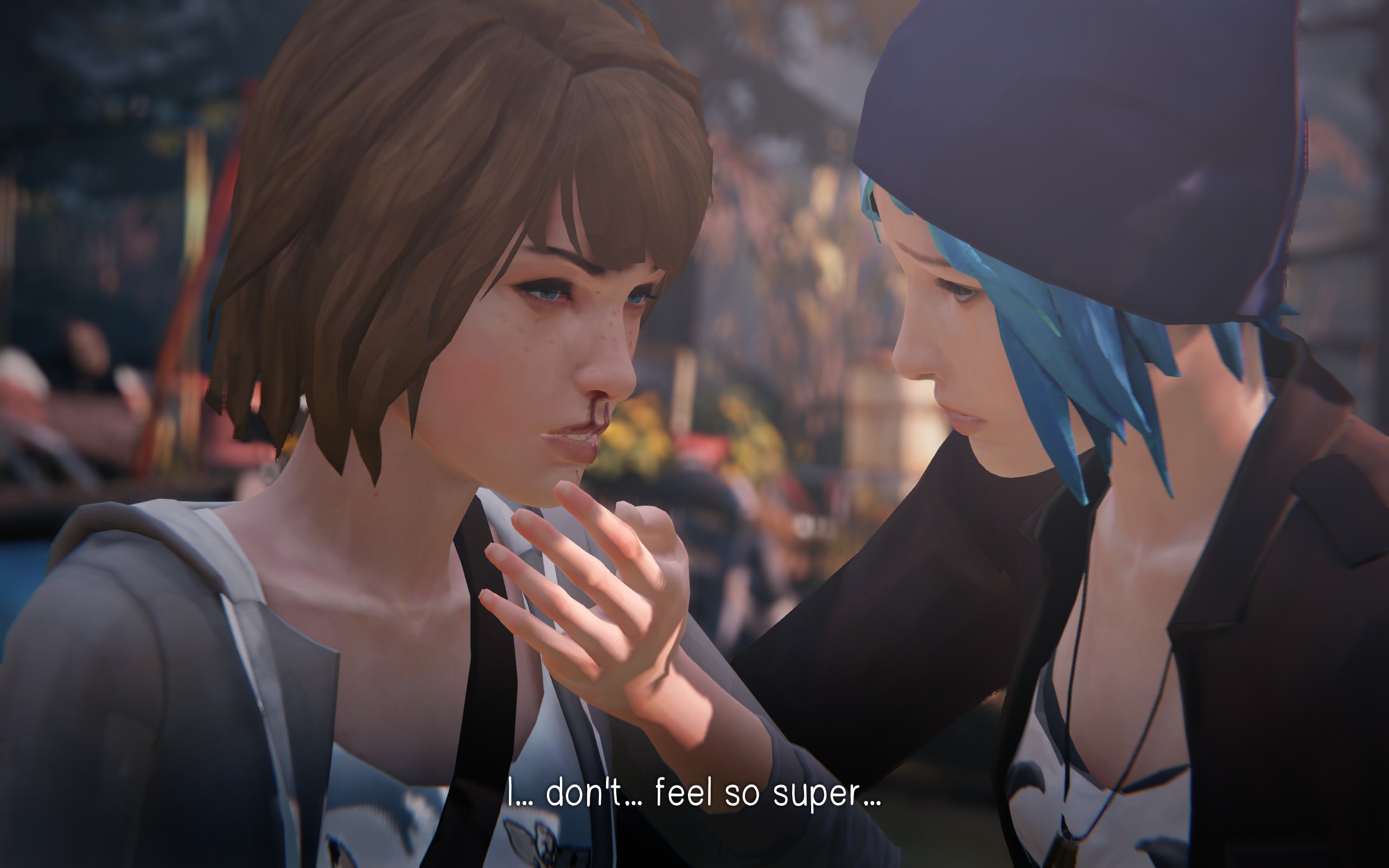
In an early sequence in Chapter 2, Max and Chloe go to a junkyard to test out Max’s ability to reverse time. They shoot at bottles over and over, Max reversing time and giving tips to help Chloe aim better in each loop. Chloe is impressed with Max’s ability to predict the future after moving back and forth through time.
During this sequence Max’s nose starts to bleed. It turns out there are side effects to her powers, and using them too much can take a toll on her. This is reinforced by the next sequence where Max is forced to use her powers to save Chloe’s life. Chloe is saved, but once again Max is bleeding.
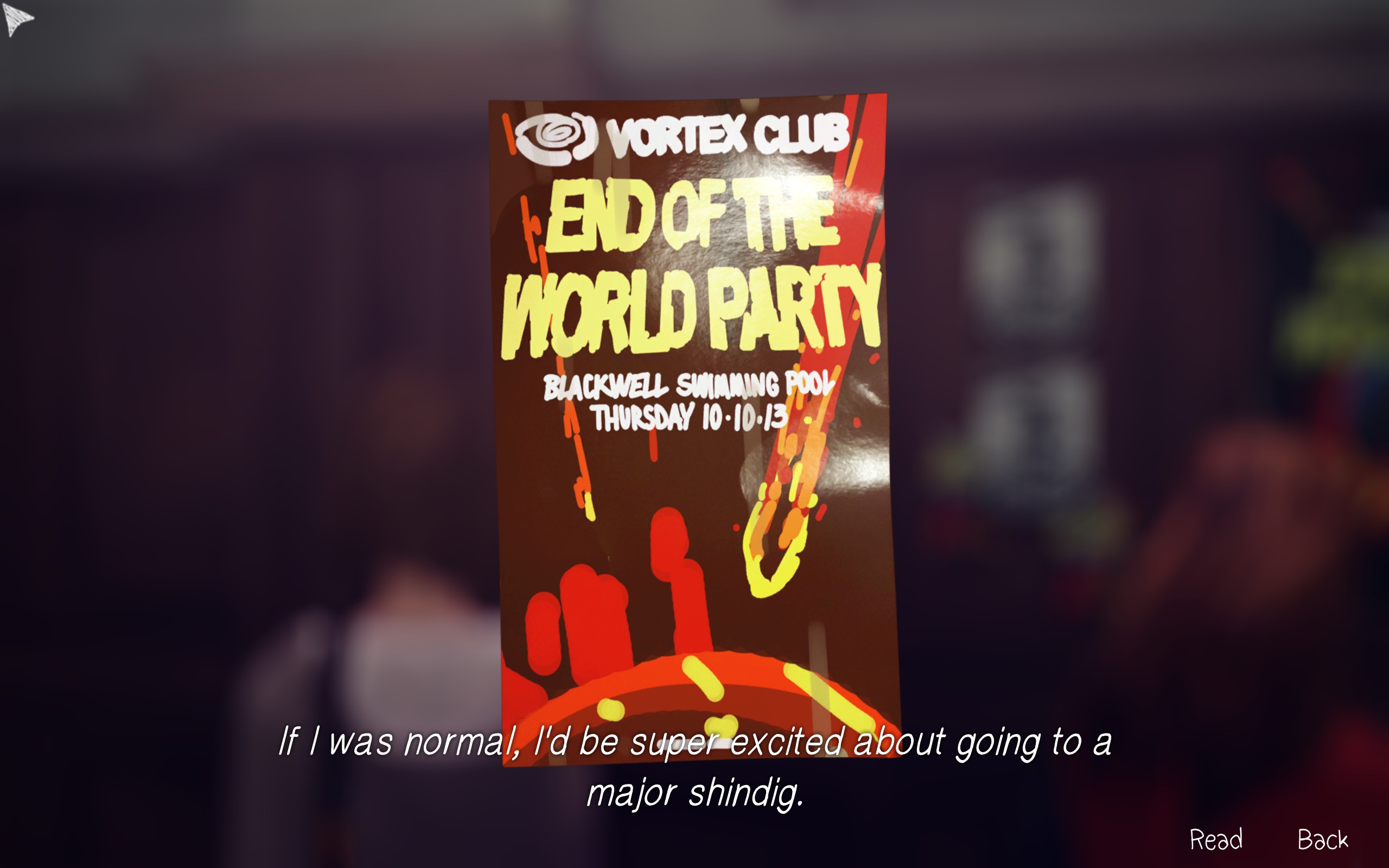
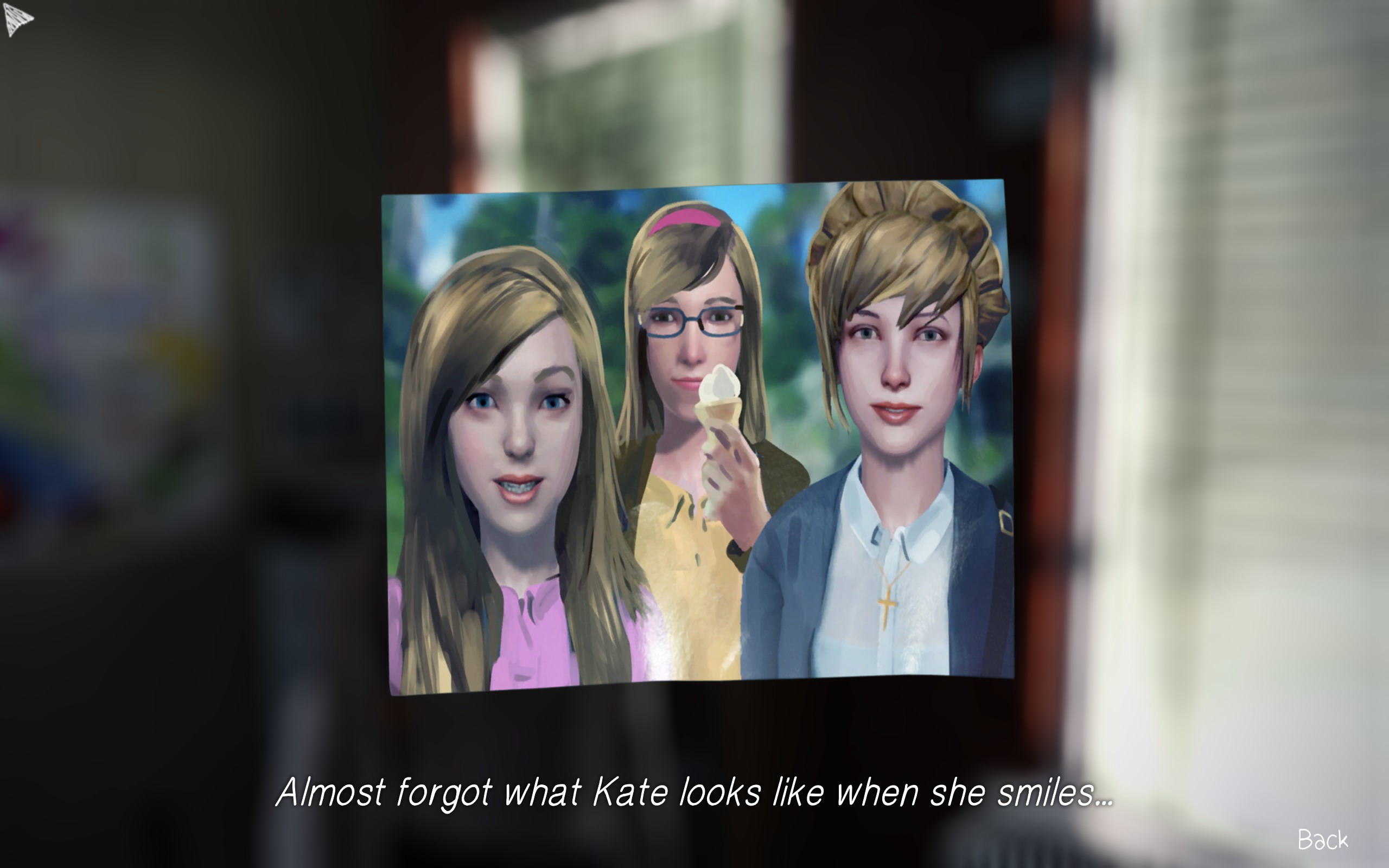
The bulk of the chapter is largely focused on a character called Kate. Kate is a devout Christian who ended up in what the other girls call a “porn tape.” She is relentlessly bullied for this, something which Max doesn’t like.
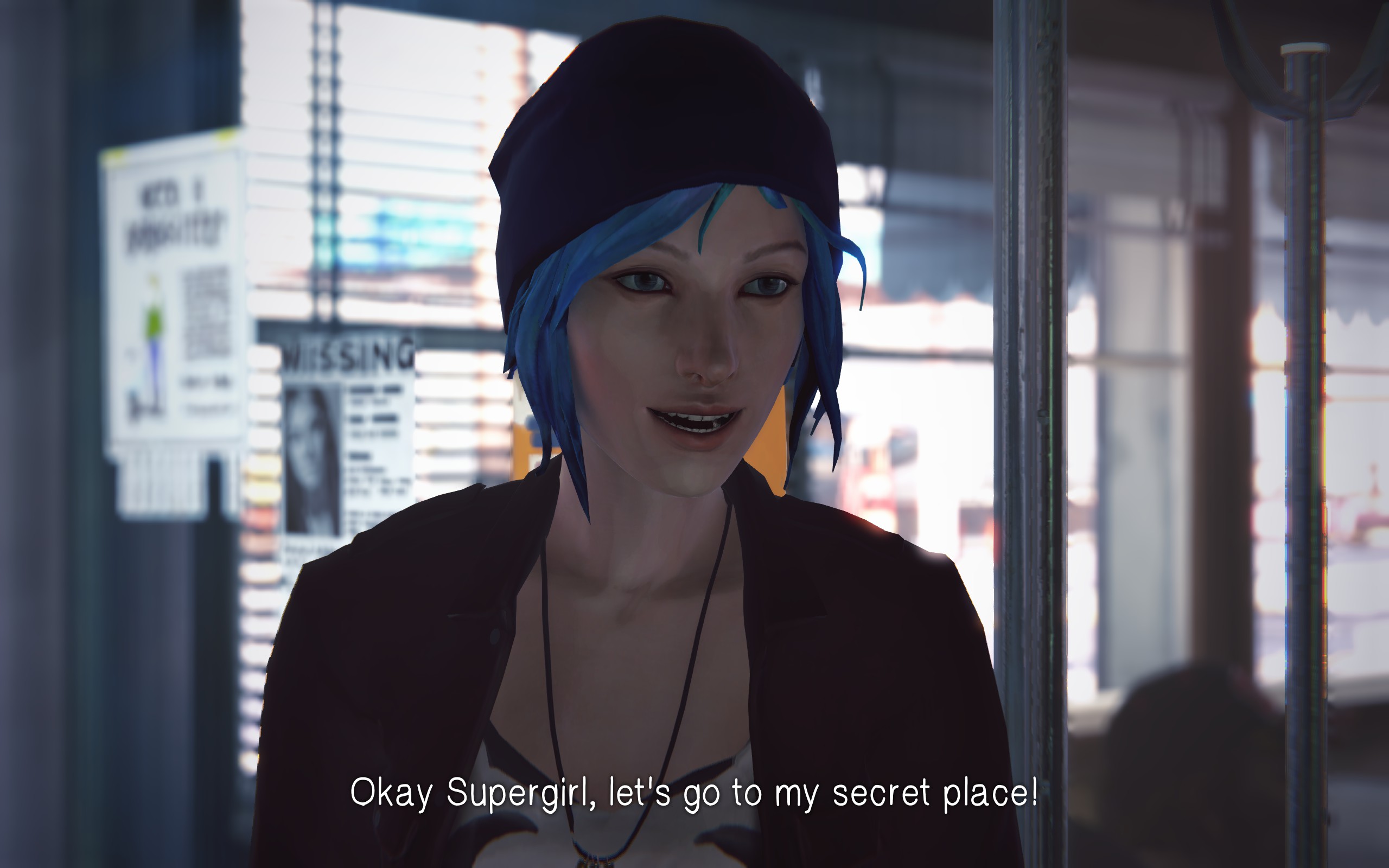
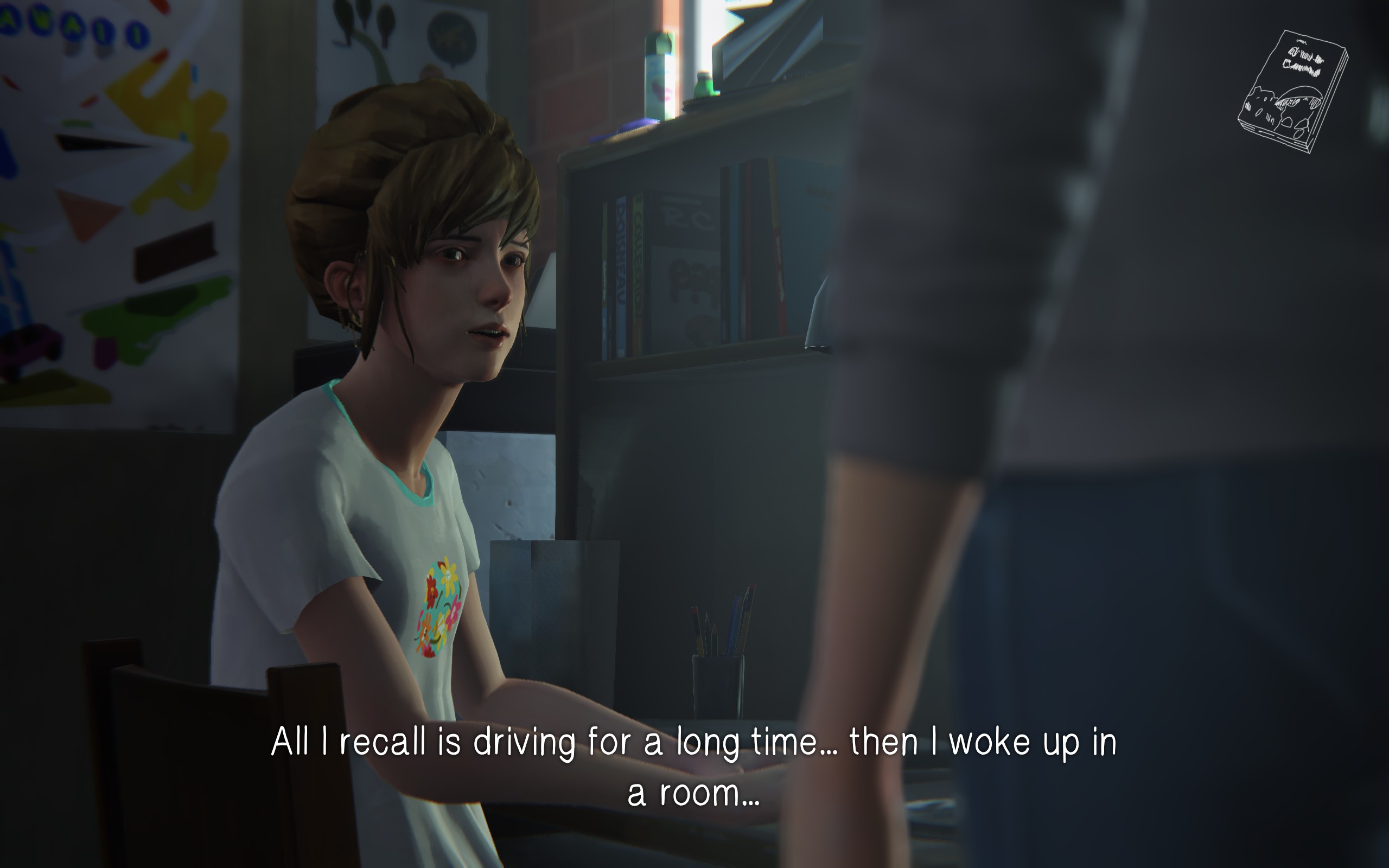
Max interacts with her a lot, and we get to learn a lot about her. How her mother and her aunt have disowned her. The way she just stares into space when she talks. In her room we find her mirror covered up, her clothes all over the floor. She is an obvious picture of suicide, and it is clear what this chapter is heading toward.
As Max, I talk to her a lot. I learn that her “porn tape” was her being drunk (or high) at a party and making out with different guys. I also learn that she only drank half a glass of wine, given to her by Nathan. In the last chapter Chloe confessed that she had been drugged by Nathan.
In Kate’s recounting of events Nathan offers to take her to the hospital, but never does. Instead he takes her somewhere else. The game never explicitly states it, and Kate doesn’t remember enough, but it is likely that Kate was date raped by Nathan.
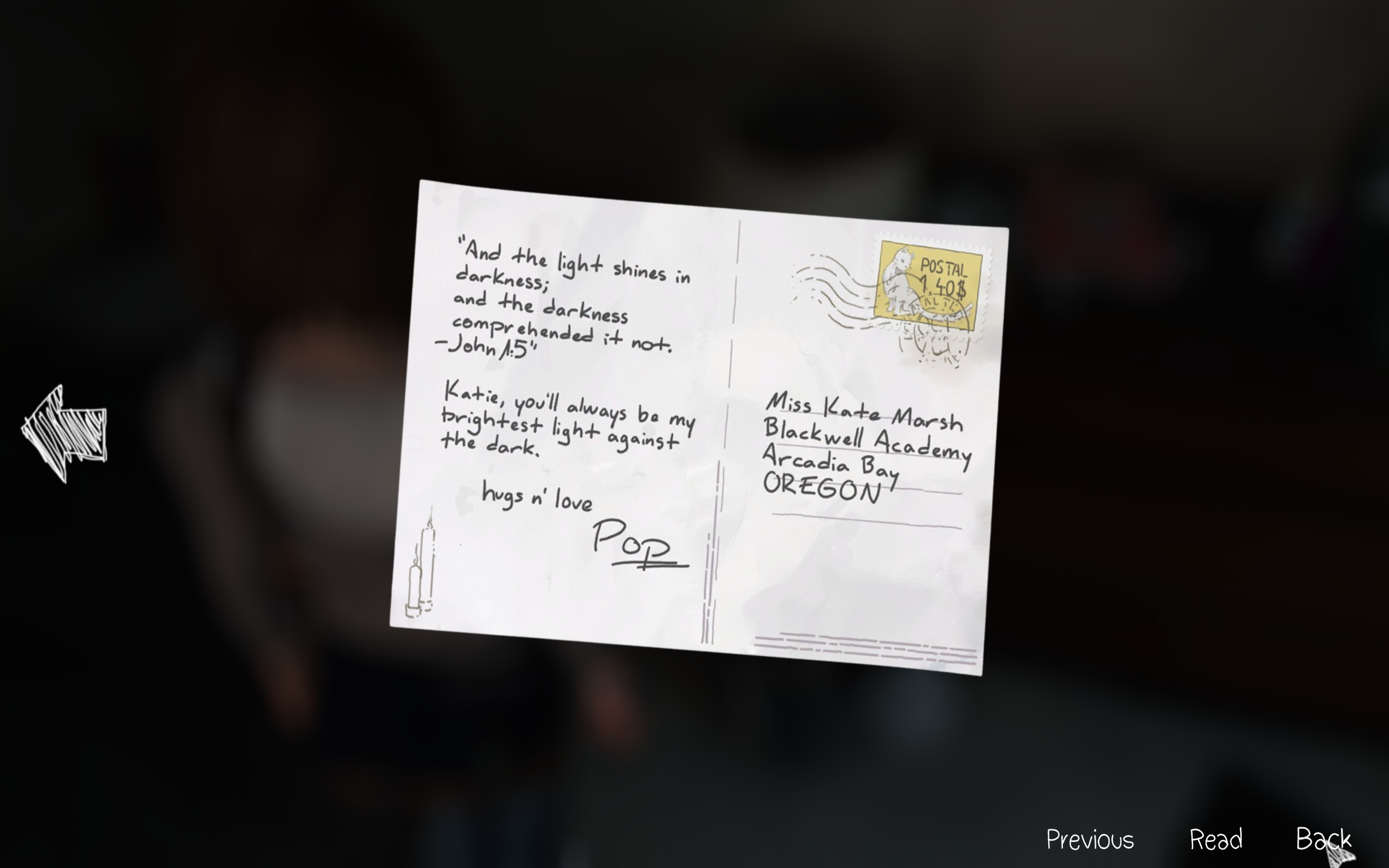
As the chapter closes it reaches its inevitable end. Max joins the onlookers at the women’s dorm to see Kate atop the building. She jumps and…
Max reverses time. Kate is on top of the building again and she jumps and…
Max reverses time. It’s already been established that Max can only revert time a certain amount. Here it is to just before Kate jumps. Max can’t stop her from where she is as an onlooker.
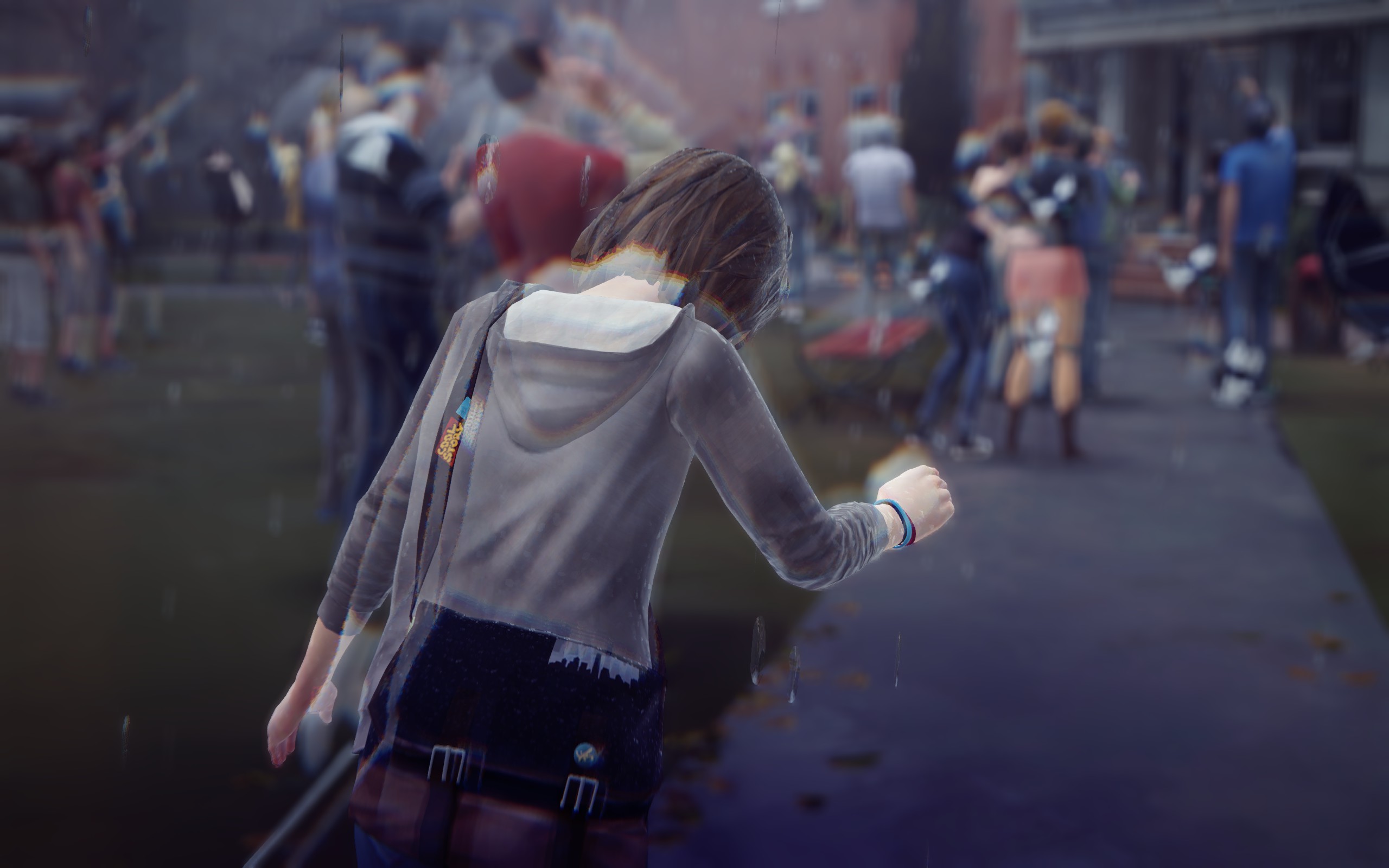
So Max pushes her powers to the limit. Time stops as Max pushes past static people and birds mid-flight, holding things in place until she can get to the top of the building. She makes it to the top, blood pouring from her nose, only to realise she has pushed herself to her limit. She can’t reverse time anymore. She has no other option than to talk.
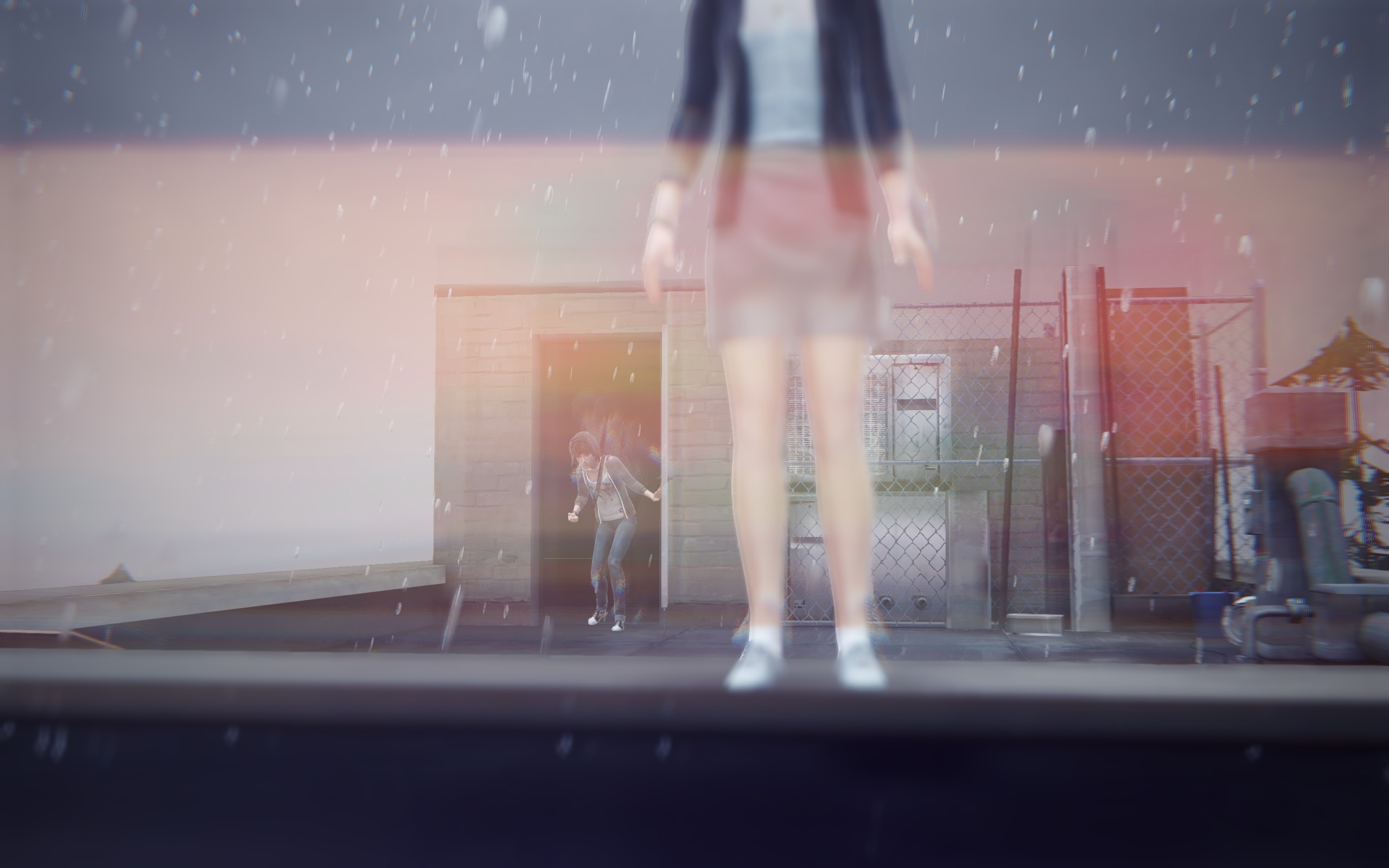
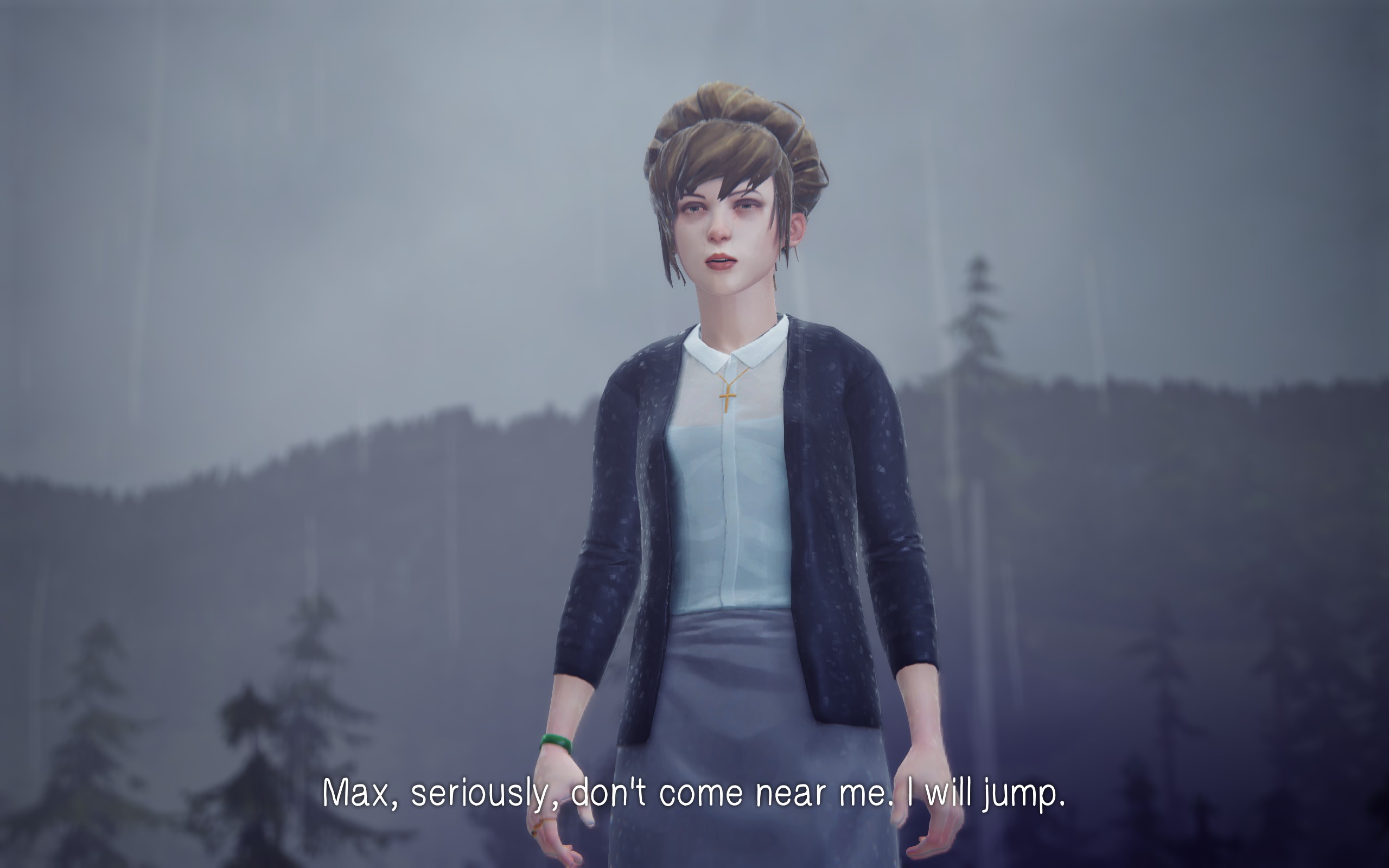
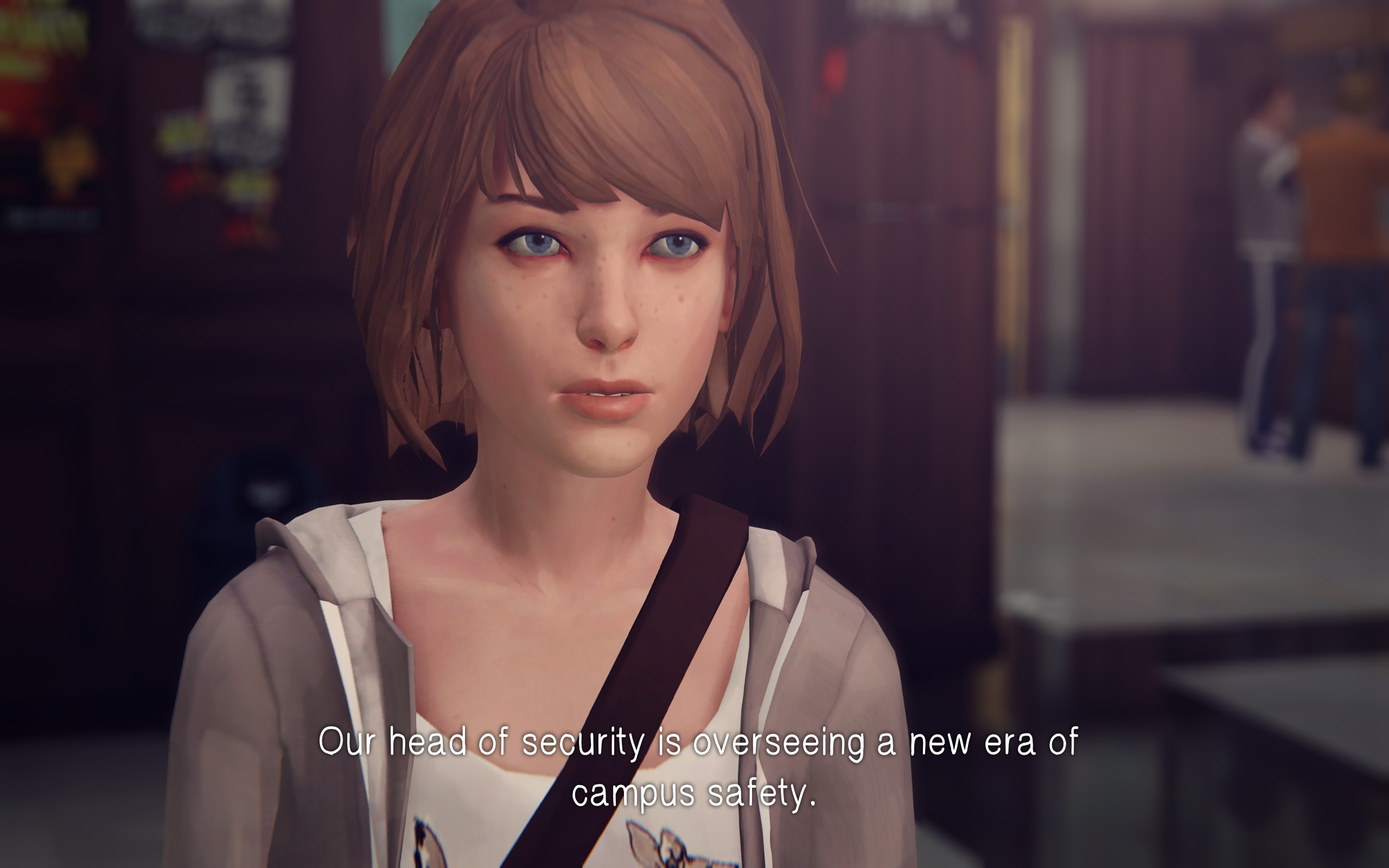
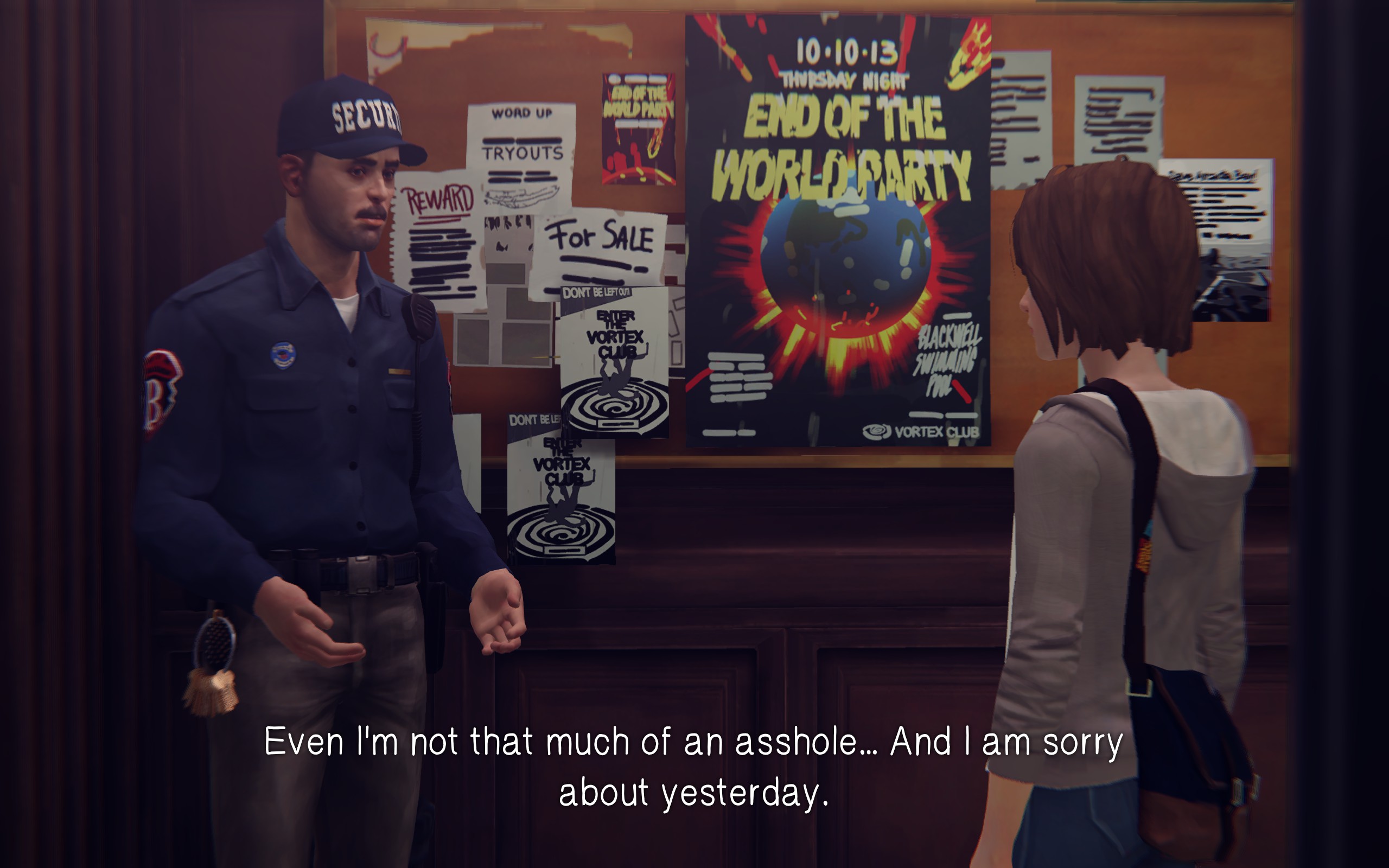
This is the last challenge in this chapter. And in using a trope I hate, it has shown that it can be used to great affect. By taking your power away from you it is telling you how Max feels. There are no quick-saves, no redos, no way to go back and try again. What you say right now matters. And if you say the wrong thing you will have to watch your friend die with no way to save her.
So I choose what I say carefully, using everything I have learned about Kate. Her father is still sympathetic, talk about him. Show her as much support as I can. Show her that I know her. Show her that I care. There is one option I take that I am sure was the wrong one and I panic. Did I just fuck up? Is she going to jump because of that?
Then the conversation comes to a pause. Kate seems to be thinking about everything Max said. It feels like time has stopped.
…
Kate’s hand reaches out. Max takes it, and immediately hugs her. Kate collapses to the ground in tears. I start breathing again. I have, I mean, Max has just saved Kate’s life.
Design Informing Story
This is one of the most intense experiences I have had playing a game. As gamers, we get used to quick-saves, multiple lives, restarts. But by giving you the power to reverse time and taking it away from you, this game forces you to confront the idea that real life doesn’t have these things. That sometimes you just have to do your best and hope that you can save someone.
It’s taken a gameplay trope I usually hate, and shown that it can be used to great effect in the right circumstances. It’s game design informing the story. It sucks you into Max’s mind and makes you feel the way she feels.
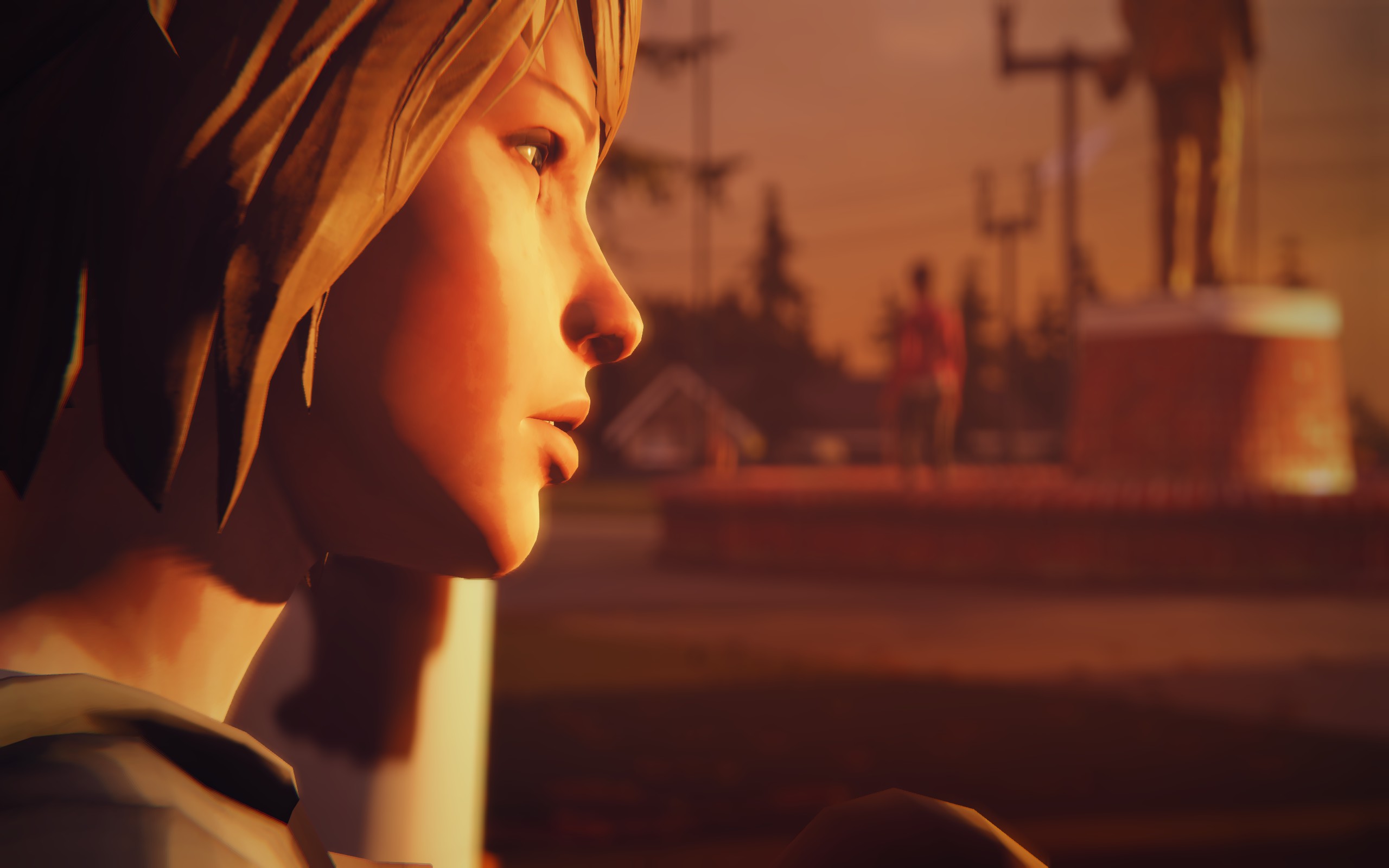

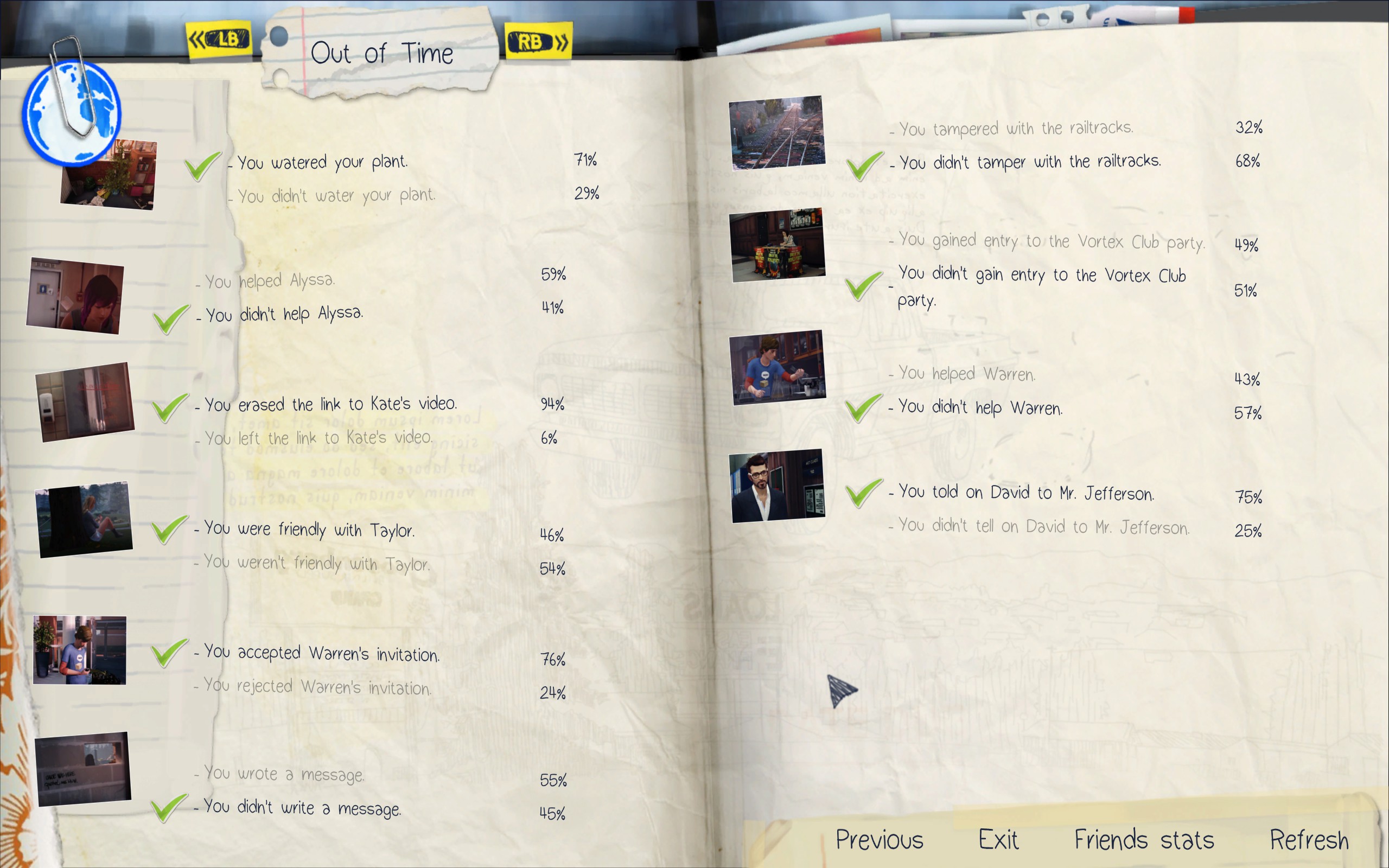
There’s a small addendum to this experience. I wondered if it was actually possible to fail this section, if it was even possible for Kate to die. There have been two sequences where you watch Chloe die, but can only progress by using your abilities to save her life. Was this section the same?
At the end of each chapter you are given global statistics on the choices each player has made. It’s a fun way to compare yourself to other people. 36% of people who played this game Couldn’t save Kate. She could have died. It was real.
My choices actually mattered.